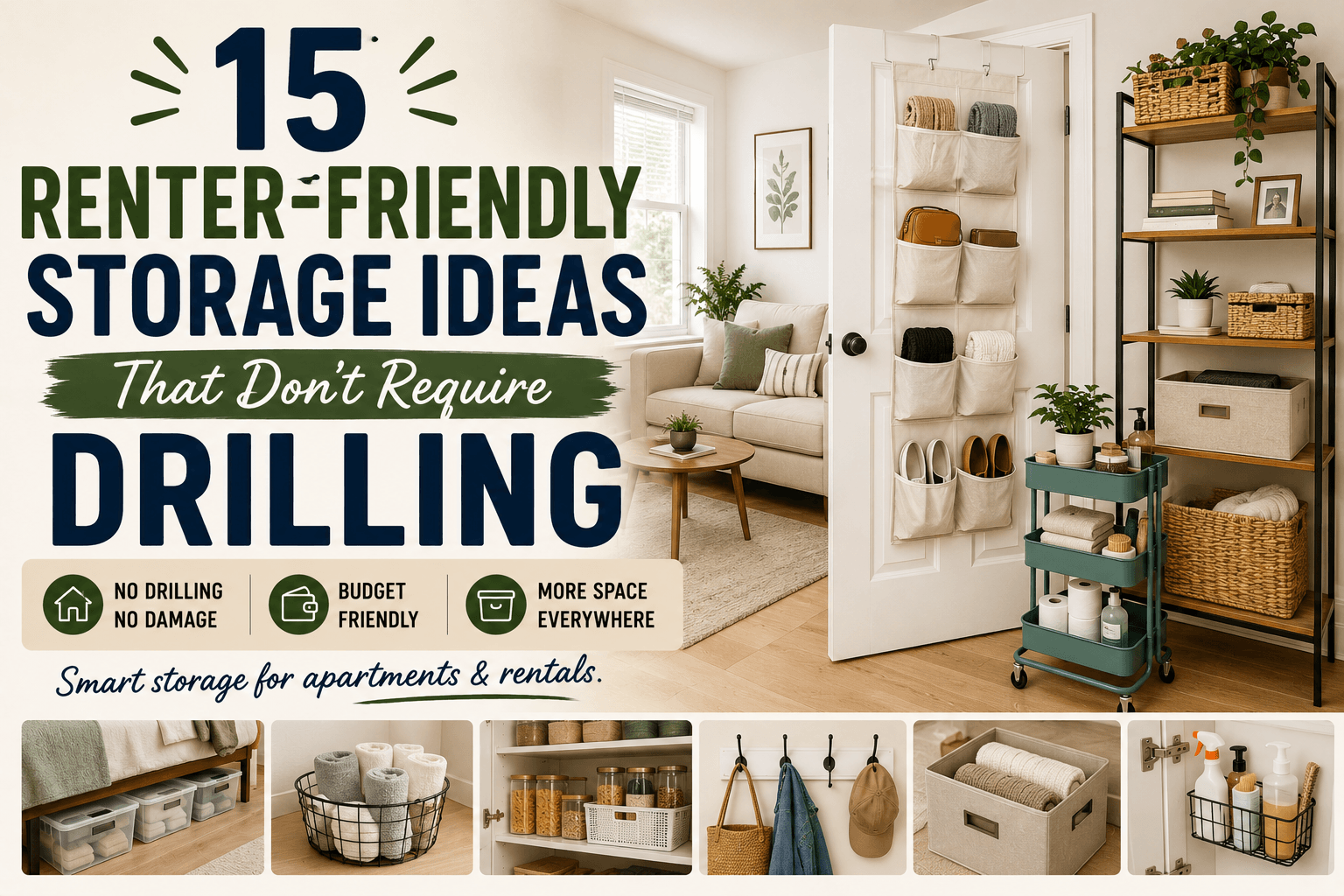
15 Renter-Friendly Storage Ideas That Don’t Require Drilling
Rentals can be frustrating when you need more storage but can’t make permanent changes.
Maybe your apartment has one tiny closet. Maybe the kitchen cabinets are awkward. Maybe the bathroom has no shelves, the entryway has no coat closet, or your bedroom has more stuff than storage. And because you rent, you probably don’t want to drill holes, mount heavy shelves, or do anything that might cost you part of your deposit.
That’s where renter-friendly storage ideas help. These are simple ways to add storage without damaging walls, changing fixtures, or making your landlord nervous.
The goal is not to buy a bunch of bins and call it organized. The goal is to make your space easier to live in. These ideas work for apartments, rental homes, small bedrooms, shared spaces, and normal busy homes where things pile up fast.
Before trying any storage idea, check your lease rules. Some landlords are fine with small removable items. Others are strict about adhesive hooks, wall marks, and anything attached to cabinets or doors.
Table of Contents
Renter-Friendly Storage Ideas for Apartments and Small Homes
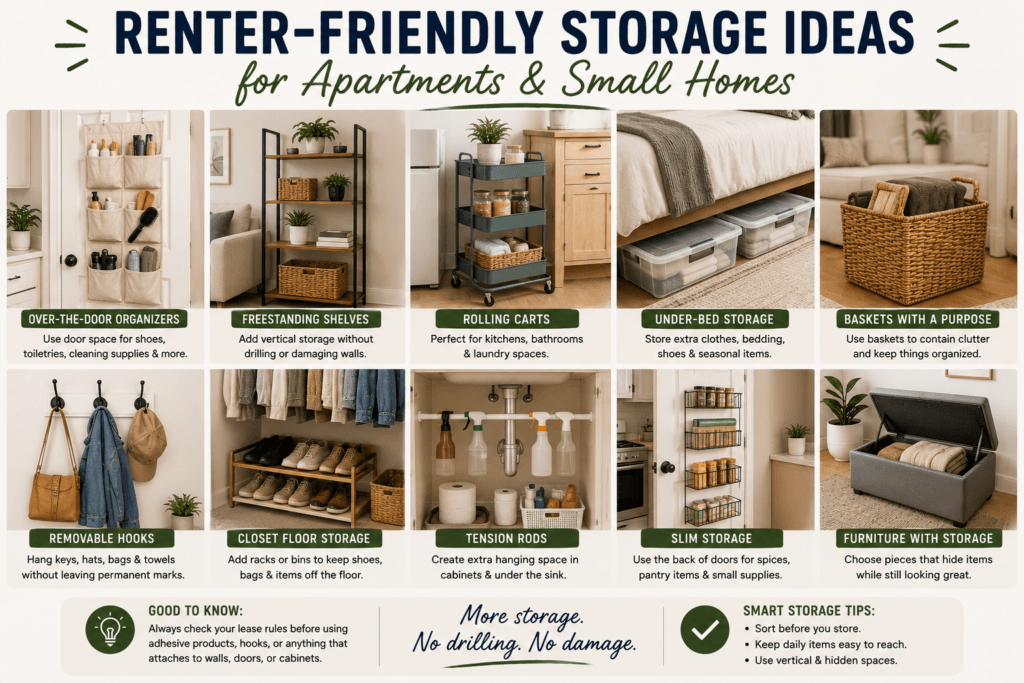
The best renter-friendly storage is easy to remove, useful every day, and simple enough to keep up with.
Before buying anything, look at where clutter collects. Shoes by the door? Toiletries on the bathroom counter? Food bags falling out of the pantry? Clothes piled on a chair? That tells you what storage problem to solve first.
1. Use Over-the-Door Organizers
Over-the-door organizers are one of the easiest rental storage ideas because they don’t require drilling.
Use them for shoes, toiletries, cleaning supplies, hats, scarves, kids’ items, craft supplies, or pantry extras.
Why it works: doors are often wasted space. An organizer adds storage without using floor space.
Example: In a small bathroom, an over-the-door organizer can hold hair tools, extra soap, lotion, washcloths, and backup toiletries.
Small warning: Make sure the door still closes properly. Some hooks can scratch paint, so add felt pads if needed.
2. Add Freestanding Shelves
If you can’t mount shelves, use freestanding ones.
Try a narrow bookshelf, ladder shelf, cube shelf, or slim metal rack depending on the room.
Why it works: freestanding storage gives you vertical space without attaching anything to the wall.
Example: In an apartment kitchen with limited cabinets, a small freestanding shelf can hold cookbooks, baskets, snacks, or small appliances.
Small warning: Tall furniture can tip. If you have kids or pets, ask your landlord about safe anchoring options or choose lower, sturdier pieces.
3. Try Rolling Carts in Tight Spaces
A rolling cart can work in kitchens, bathrooms, laundry areas, offices, and bedrooms.
Why it works: carts add storage that can move when you need the space back.
Example: In a rental bathroom with no linen closet, a slim rolling cart can hold towels, toilet paper, skincare, and cleaning supplies.
Small warning: Don’t overload it. A cart that’s too heavy becomes hard to move and annoying to use.
4. Use Under-Bed Storage
The space under the bed is easy to forget.
Use flat bins, zippered fabric bags, or drawers made for under-bed storage.
Why it works: it uses hidden space without adding furniture.
Example: Store out-of-season clothes, extra sheets, guest blankets, or rarely used shoes under the bed.
Small warning: Don’t store things you need every day under the bed unless the bins are very easy to pull out.
5. Add Baskets With a Real Purpose
Baskets are useful, but only when each one has a job.
Use baskets for blankets, toys, pet items, reusable bags, winter gear, or things that need to go to another room.
Why it works: baskets hide visual clutter while keeping items easy to grab.
Example: In a living room, one basket can hold throw blankets and another can hold kids’ toys.
Small warning: Don’t buy baskets just because they look nice. Too many baskets full of random stuff still equals clutter.
6. Use Removable Hooks Carefully
Removable hooks can add quick storage for lightweight items.
Use them for keys, hats, small bags, towels, measuring spoons, or cleaning cloths.
Why it works: hooks are simple. They make it easy to hang things instead of dropping them on counters or floors.
Example: Add a removable hook near the door for keys or inside a closet for reusable shopping bags.
Small warning: “Removable” doesn’t always mean damage-free. Test first, follow weight limits, and remove slowly according to the instructions.
7. Make Closet Floors Work Harder
Closet floors often become a pile of shoes and bags.
Add a low shoe rack, small cubby, basket, or stackable shelf.
Why it works: closet floors have storage potential, but they need structure.
Example: In a bedroom closet, a two-tier shoe rack can keep daily shoes visible and off the floor.
Small warning: Don’t fill the closet floor so much that you can’t reach hanging clothes.
8. Use Tension Rods for Lightweight Storage
Tension rods are great because they don’t require screws.
Use them under sinks, inside closets, or between cabinet walls for lightweight items.
Why it works: they create hanging space without permanent hardware.
Example: Under the kitchen sink, a tension rod can hold a few spray bottles and free up the cabinet floor.
Small warning: Don’t hang heavy items. If the rod slips, it can damage the cabinet or spill products.
9. Add Slim Storage Behind Doors
The space behind a bedroom, bathroom, pantry, or laundry door can be useful.
Try slim racks, hanging organizers, or narrow baskets.
Why it works: behind-door storage keeps items accessible without taking up visible room space.
Example: Behind a pantry door, use a slim organizer for spices, snacks, foil, sandwich bags, or small pantry items.
Small warning: Measure first. If the organizer is too deep, the door may not close.
10. Use Furniture With Hidden Storage
Choose furniture that stores things while still doing its normal job.
Storage ottomans, benches, coffee tables with shelves, beds with drawers, and side tables with cabinets can all help.
Why it works: small rentals need furniture that earns its space.
Example: In a small living room, a storage ottoman can hold blankets, board games, or kids’ toys while also working as a footrest.
Small warning: Don’t buy bulky furniture just because it has storage. If it crowds the room, it may not be worth it.
11. Create a No-Drill Entryway Zone
Even if your rental has no real entryway, you can create one.
Use a small shoe rack, tray, basket, and removable hooks.
Why it works: keys, shoes, bags, and mail need a home near the door or they’ll spread into the kitchen and living room.
Example: In a studio apartment, place a narrow shoe rack beside the door with a small tray on top for keys and sunglasses.
Small warning: Keep walkways clear. Entryway storage should not create a tripping hazard.
12. Use Cabinet Doors for Small Items
Inside cabinet doors can hold lightweight items.
Use removable hooks, small adhesive bins, or over-cabinet organizers.
Why it works: cabinet doors can store little things that otherwise clutter drawers and counters.
Example: Inside a bathroom cabinet, use small adhesive bins for hair ties, toothbrush covers, or travel-size items.
Small warning: Adhesive products can damage cabinet finishes. Test first and avoid heavy items.
13. Stack Clear Bins on Deep Shelves
Deep shelves can hide things in the back.
Clear bins help you group items and pull them forward.
Why it works: instead of losing things behind other things, you can slide out one bin and see what’s inside.
Example: In a pantry, use clear bins for snacks, baking supplies, breakfast items, or extra pasta.
Small warning: Don’t stack bins too high if you need to access them often. Annoying storage won’t get used.
14. Store Seasonal Items Higher Up
Use higher shelves for things you don’t need every day.
This includes holiday decor, winter hats, extra blankets, swimsuits, or seasonal shoes.
Why it works: easy-to-reach storage should be saved for daily items.
Example: In a small closet, put winter gloves and scarves in a labeled bin on the top shelf during summer.
Small warning: Don’t store heavy bins overhead. Keep heavy items low for safety.
15. Do a Monthly Storage Reset
Renter-friendly storage works best when you maintain it.
Once a month, spend 15 minutes checking baskets, bins, carts, and shelves.
Why it works: small spaces get crowded fast. A quick reset keeps storage from becoming hidden clutter.
Example: Empty the entryway basket, check under-bed bins, toss trash from organizers, and move items back to their real homes.
Small warning: Don’t turn it into a full-day decluttering project. Keep it short so it feels doable.
Common Mistakes to Avoid
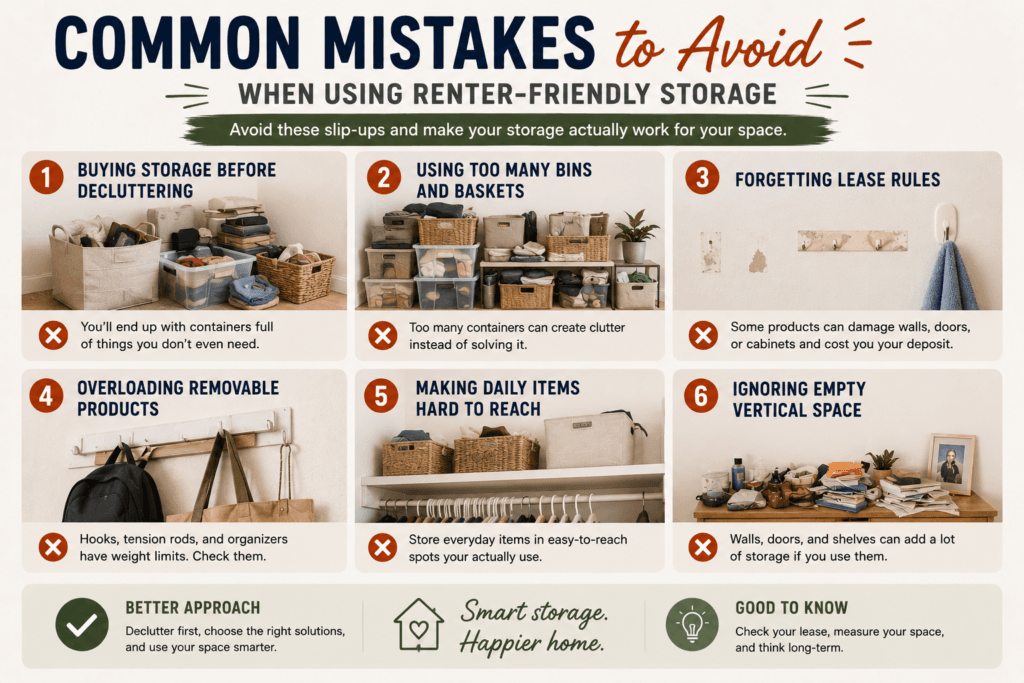
Buying Storage Before Sorting
Storage should come after decluttering, not before. Otherwise, you’re just buying containers for things you may not need.
Using Too Many Bins
Bins help when they have clear categories. Too many bins can make things harder to find.
Forgetting Lease Rules
Check your lease before using adhesive hooks, removable wallpaper, mounted storage, or anything that could damage paint, cabinets, doors, or walls.
Overloading Removable Products
Hooks, tension rods, and door organizers all have limits. Too much weight can cause damage.
Making Daily Items Hard to Reach
Storage only works if it matches real life. Keep everyday items easy to grab and easy to put back.
Ignoring Empty Vertical Space
Small rentals often have unused wall, door, closet, or shelf height. Use vertical space before adding bulky furniture.
Quick Checklist: Renter-Friendly Storage
Use this when your rental feels short on storage:
- Check lease rules first
- Sort before buying storage
- Use over-the-door organizers
- Add freestanding shelves where needed
- Use under-bed storage for seasonal items
- Add baskets only with a clear purpose
- Use removable hooks carefully
- Make closet floors useful
- Try tension rods for lightweight items
- Use cabinet doors for small storage
- Keep daily items easy to reach
- Reset storage once a month
Conclusion
Good renter-friendly storage ideas make your home easier to live in without risking wall damage, cabinet damage, or your deposit.
Start with the area that bothers you most. Maybe it’s the entryway, bathroom, closet, kitchen, or bedroom. Sort first, then add simple storage that fits the way you actually use the space.
You don’t need built-ins or permanent shelves to feel more organized. A few smart, removable, and budget-friendly storage ideas can make a rental feel much more manageable.