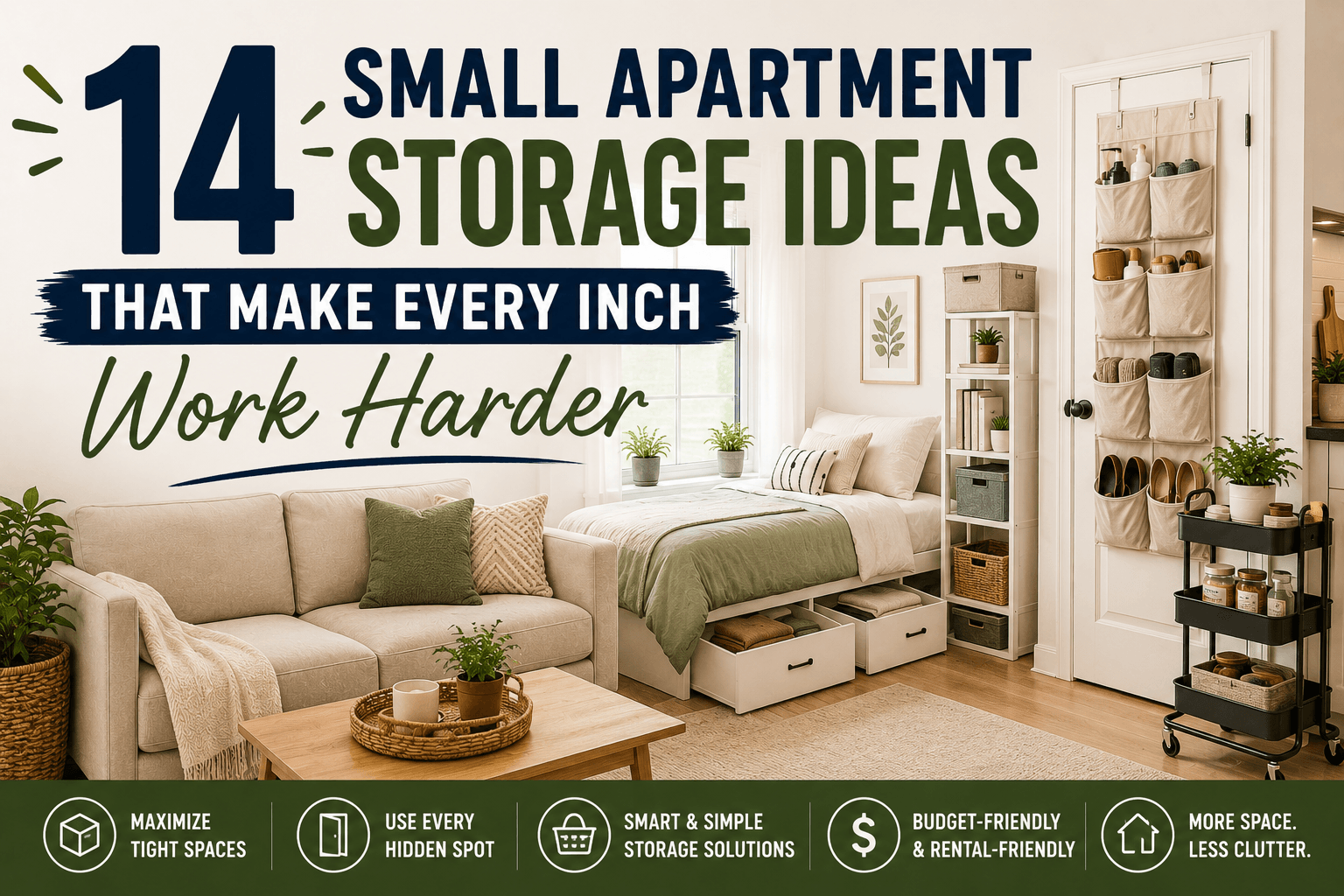
14 Small Apartment Storage Ideas That Make Every Inch Work Harder
Small apartments can feel full even when you don’t own that much stuff.
One closet gets packed. The kitchen cabinets are awkward. Shoes pile up by the door. Cleaning supplies end up under three different sinks. And if you don’t have a garage, basement, laundry room, or extra bedroom, every random item has to live somewhere inside your actual living space.
That’s why good small apartment storage ideas matter. Not fancy built-ins. Not a full set of matching containers. Just smart, realistic ways to use the space you already have without making your apartment feel crowded.
These ideas are budget-friendly, renter-friendly, and practical for studio apartments, older rentals, small bedrooms, shared apartments, and normal homes where storage is always a little tight.
Before drilling, mounting shelves, using strong adhesive hooks, or changing closet hardware, check your lease rules. A storage idea is only helpful if it doesn’t create damage or cost you part of your deposit later.
Table of Contents
Small Apartment Storage Ideas That Actually Help
The best storage in a small apartment is storage you’ll actually use.
If a bin is too hard to reach, you won’t use it. If a shelf blocks a walkway, it’ll annoy you every day. If a basket becomes a dumping spot for random stuff, it’s not really organizing anything.
Start by looking at the areas that cause the most frustration. Entryway, closet, kitchen, bathroom, bedroom, or living room. Then solve one problem at a time.
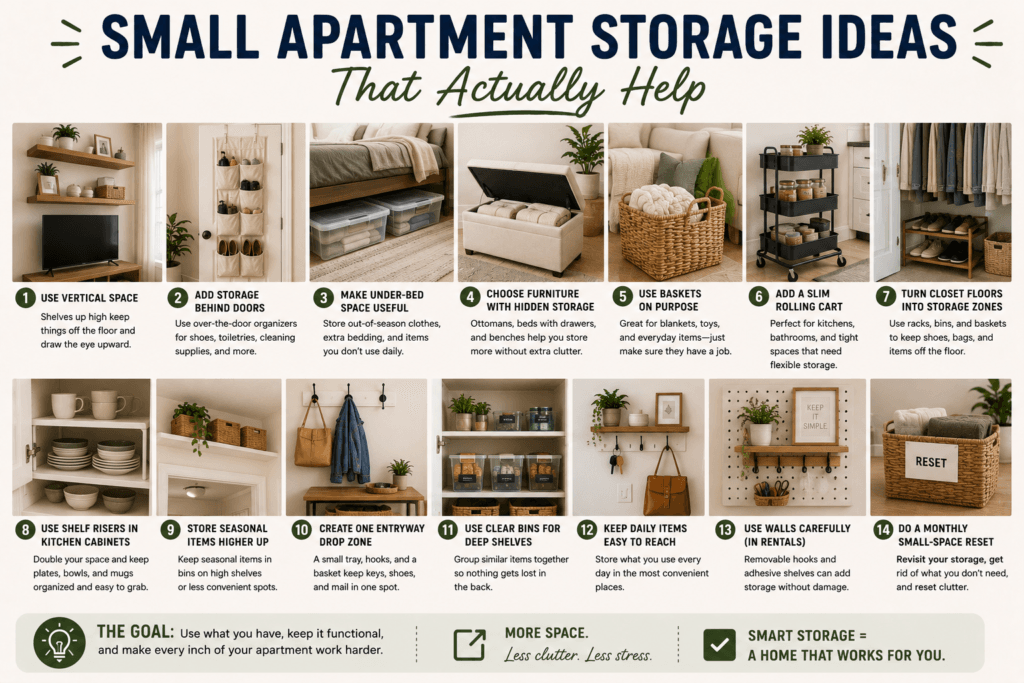
1. Use Vertical Space Before Floor Space
In a small apartment, floor space is precious.
Before adding another cabinet, table, or storage bench, look at your walls, doors, shelves, and closet height.
Why it works: vertical storage gives you more room without making the apartment harder to walk through.
Example: In a small living room, a tall narrow bookshelf can hold books, baskets, decor, office supplies, and extra items without taking up much floor space.
Small warning: Renters should check lease rules before mounting shelves. Tall furniture should be stable, especially if you have kids or pets.
2. Add Storage Behind Doors
Doors are easy to forget, but they can hold a lot.
Use over-the-door organizers for shoes, cleaning supplies, accessories, pantry items, toiletries, hats, scarves, or kids’ items.
Why it works: behind-door storage uses space that usually sits empty.
Example: In a small bathroom, an over-the-door organizer can hold hair tools, lotion, extra soap, towels, and backup toiletries.
Small warning: Make sure the door still closes. Some over-door hooks can scratch paint or trim, so add felt pads if needed.
3. Make Under-Bed Space Useful
The space under the bed is one of the best storage spots in a small apartment.
Use flat bins, fabric storage bags, rolling drawers, or vacuum storage bags for things you don’t need every day.
Why it works: it adds hidden storage without adding furniture.
Example: Store out-of-season clothes, extra sheets, guest blankets, spare towels, or rarely used shoes under the bed.
Small warning: Don’t store daily-use items under the bed unless the bins slide out easily. Annoying storage won’t last.
4. Choose Furniture With Hidden Storage
In a small apartment, furniture should work harder when possible.
Look for storage ottomans, beds with drawers, coffee tables with shelves, benches with cubbies, or side tables with cabinets.
Why it works: one piece does two jobs, so you don’t need as many extra storage pieces.
Example: A storage ottoman can hold blankets, games, kids’ toys, or workout gear while also working as a footrest or extra seat.
Small warning: Don’t buy bulky storage furniture just because it has storage. If it makes the room feel cramped, it may not be worth it.
5. Use Baskets Only Where Clutter Collects
Baskets are useful, but they need a clear purpose.
Use baskets for blankets, toys, pet items, reusable bags, winter gear, or things that need to go to another room.
Why it works: baskets hide everyday clutter while keeping items easy to grab.
Example: In a small living room, one basket beside the couch can hold throw blankets. Another near the entry can hold hats, gloves, or dog-walking items.
Small warning: Too many baskets can become clutter too. If every corner has a basket, the apartment may still feel crowded.
6. Add a Slim Rolling Cart
A rolling cart can work almost anywhere.
Use one in the kitchen, bathroom, laundry area, bedroom, home office corner, or pantry area.
Why it works: it adds flexible storage that can move when you need it out of the way.
Example: In a small kitchen, a slim cart can hold coffee supplies, snacks, paper towels, or extra pantry items. In a bathroom, it can hold towels and toiletries.
Small warning: Don’t overload the cart. A cart that’s heavy and hard to move becomes frustrating fast.
7. Turn Closet Floors Into Storage Zones
Closet floors often become messy because they don’t have structure.
Add a low shoe rack, stackable bin, small drawer unit, or basket.
Why it works: the floor becomes usable storage instead of a pile.
Example: In a small bedroom closet, a two-tier shoe rack can hold daily shoes, while a basket beside it holds small bags or workout gear.
Small warning: Leave enough space to reach your hanging clothes. If the closet floor is packed too high, it becomes hard to use.
8. Use Shelf Risers in Kitchen Cabinets
Small apartment kitchens often have tall cabinet spaces but not enough shelves.
Shelf risers help create an extra layer.
Why it works: they use vertical cabinet space so plates, mugs, bowls, spices, and pantry items don’t have to stack awkwardly.
Example: Use a shelf riser for mugs above plates, canned goods in a pantry cabinet, or small bowls above larger bowls.
Small warning: Measure your cabinets first. A riser that’s too tall or too wide will just create another storage problem.
9. Store Seasonal Items Higher Up
Seasonal items don’t need prime storage space.
Put holiday decor, winter hats, beach towels, extra blankets, or seasonal clothes on higher shelves or in less convenient spots.
Why it works: easy-to-reach storage should be saved for things you use often.
Example: In a small apartment closet, use one labeled top-shelf bin for winter accessories during summer.
Small warning: Don’t store heavy bins overhead. Keep heavy items low so they’re safer to move.
10. Create One Entryway Drop Zone
Even if your apartment doesn’t have a real entryway, make a tiny one.
Use a tray, basket, shoe rack, hooks, or a narrow table near the door.
Why it works: keys, shoes, mail, and bags need a landing spot. Without one, they spread into the kitchen or living room.
Example: In a studio apartment, use a small shoe rack with a tray on top for keys and sunglasses. Add one removable hook nearby for a reusable bag.
Small warning: Don’t block the door or walking path. Entryway storage should make leaving easier, not create a tripping hazard.
11. Use Clear Bins for Deep Shelves
Deep shelves can hide everything in the back.
Clear bins help you group items and pull them forward.
Why it works: you can see what’s inside without opening every container.
Example: In a pantry cabinet, use clear bins for snacks, pasta, baking supplies, or breakfast items. In a closet, use them for extra toiletries or seasonal gear.
Small warning: Don’t stack clear bins too high if you need them often. Keep daily items easy to access.
12. Keep Daily Items Easy to Reach
Small spaces get messy when everyday items are hard to put away.
Keep daily items in simple, reachable places. Save harder-to-reach spots for items you use less often.
Why it works: if putting something away takes too much effort, it usually ends up on a counter, chair, or floor.
Example: If you use a bag every day, keep it on a hook near the door instead of buried in a closet bin.
Small warning: Don’t keep everything out just because it’s convenient. Daily items can be visible. Extras should be stored.
13. Use Walls Carefully in Rentals
Walls can add storage, but renters need to be careful.
Use removable hooks, lightweight shelves if allowed, leaning shelves, or freestanding racks instead of permanent changes.
Why it works: wall storage frees up floors and surfaces.
Example: In a small kitchen, removable hooks inside a cabinet door can hold measuring spoons or lightweight tools. In a bedroom, a leaning ladder shelf can add storage without wall mounting.
Small warning: Adhesive products can still peel paint. Test first, follow instructions, and check your lease.
14. Do a Monthly Small-Space Reset
Small apartments need regular resets because clutter shows quickly.
Once a month, check baskets, bins, closets, shelves, and under-bed storage.
Why it works: storage systems only work if they don’t become hidden clutter.
Example: Empty the entryway basket, check the closet floor, toss expired pantry items, and move out-of-place things back to their real homes.
Small warning: Keep the reset short. If it becomes a huge project, you’ll avoid it next month.
Common Mistakes to Avoid
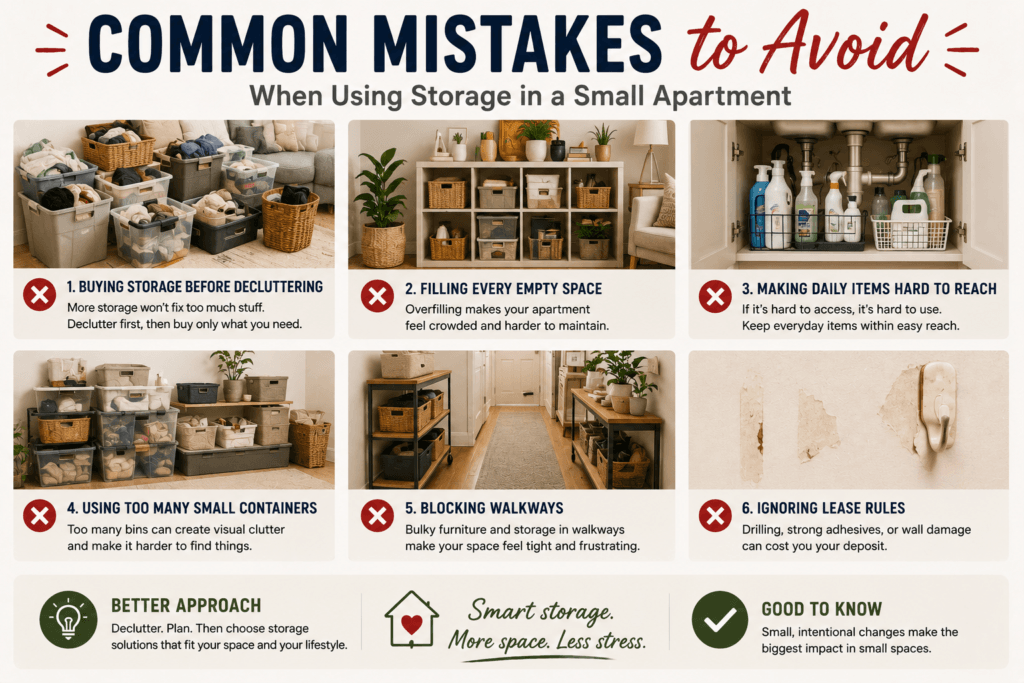
Buying Storage Before Decluttering
More storage won’t fix too much stuff. Sort first, then buy only what solves a real problem.
Filling Every Empty Space
Just because there’s space doesn’t mean it needs to be packed. Small apartments need breathing room.
Making Daily Items Hard to Reach
If you use something every day, don’t store it in the most annoying spot. Easy access matters.
Using Too Many Small Containers
Too many bins and boxes can make storage harder, not easier. Use fewer containers with clear purposes.
Blocking Walkways
Storage that sticks out into walkways makes the apartment feel smaller and more frustrating.
Ignoring Lease Rules
Check your lease before drilling, mounting shelves, using strong adhesive hooks, or changing closet hardware.
Quick Checklist: Small Apartment Storage
Use this when your apartment feels short on space:
- Clear the main walking paths
- Remove items you don’t use
- Use vertical space first
- Add over-the-door storage
- Use under-bed space for seasonal items
- Choose furniture with hidden storage
- Add baskets only where clutter collects
- Make closet floors useful
- Use shelf risers in cabinets
- Create a tiny entryway drop zone
- Keep daily items easy to reach
- Store seasonal items higher up
- Reset storage once a month
Conclusion
Good small apartment storage ideas are not about cramming more stuff into every corner. They’re about making your apartment easier to live in.
Use vertical space. Make doors work harder. Store seasonal items out of the way. Choose furniture that does more than one job. Keep daily items easy to reach and stop buying organizers before you know what problem you’re solving.
A small apartment may not have extra closets or a garage, but with a few smart changes, it can still feel organized, useful, and a lot less crowded.