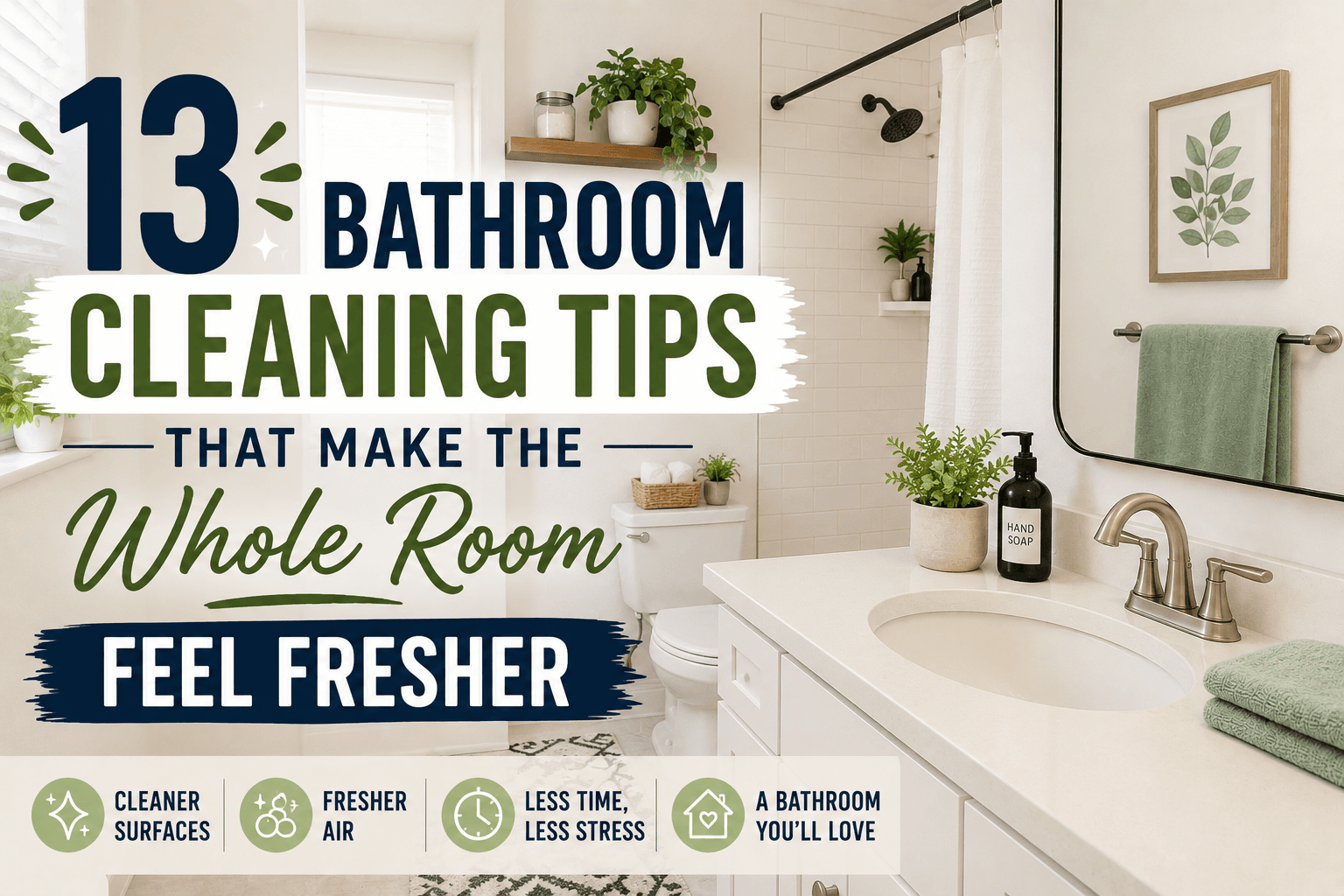
13 Bathroom Cleaning Tips That Make the Whole Room Feel Fresher
Bathrooms can look messy fast, even when the rest of the house is mostly under control.
A few toothpaste spots on the mirror, hair near the sink, soap scum in the tub, water marks on the faucet, and suddenly the whole room feels dirty. That’s why good bathroom cleaning tips are so useful. You don’t always need a full deep clean. Sometimes you just need to hit the spots that make the bathroom feel fresher quickly.
This article is for normal bathrooms. Small apartment bathrooms, older homes with tired tile, rental bathrooms with limited storage, busy family bathrooms, and guest bathrooms that need to look decent without spending the whole afternoon cleaning.
The goal is simple: make the bathroom cleaner, easier to maintain, and less annoying to deal with.
Before using any cleaner, read the label, test it on a hidden area if you’re unsure, and use ventilation when needed. Never mix bleach with vinegar, ammonia, or other cleaners. That’s not a cleaning hack. It’s dangerous.
Table of Contents
Bathroom Cleaning Tips That Make a Big Difference Fast
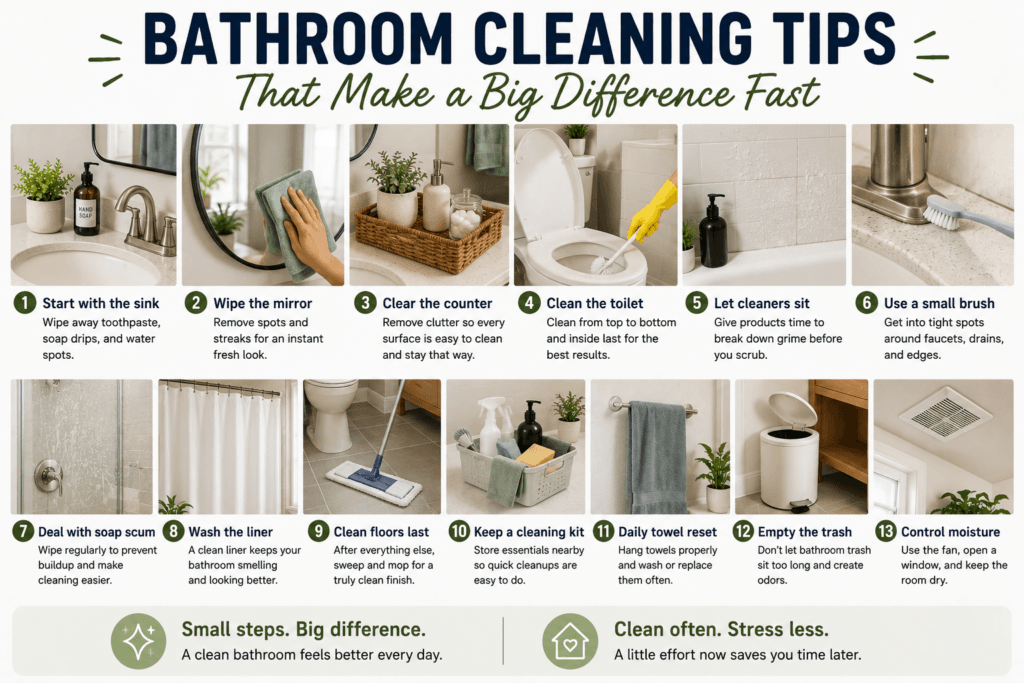
The trick with bathroom cleaning is knowing which areas create the biggest “dirty bathroom” feeling.
Usually, it’s not the whole room. It’s the sink, mirror, toilet, shower edge, floor corners, and anything sitting out on the counter. Clean those first and the bathroom feels better almost immediately.
1. Start With the Sink Because It Shows Everything
The sink area usually gets messy first.
Wipe toothpaste, soap drips, water spots, hair, and makeup residue from the sink bowl, faucet, and counter.
Why it works: the sink is one of the first things people notice. When it’s clean, the bathroom feels cleaner even if you haven’t deep-cleaned the shower yet.
Example: In a busy family bathroom, do a quick sink wipe after everyone brushes their teeth in the morning or evening. It takes less than a minute.
Small warning: Use the right cleaner for your sink material. Some abrasive cleaners can scratch surfaces, especially older sinks or certain countertop materials.
2. Wipe the Mirror Without Overthinking It
A spotted mirror can make the whole bathroom feel messy.
Use glass cleaner or a damp microfiber cloth, then dry it with a clean cloth.
Why it works: mirrors show toothpaste specks, water marks, fingerprints, and streaks easily. A clean mirror instantly makes the bathroom feel fresher.
Example: In a small apartment bathroom, the mirror is often right above the sink, so spots show up fast. Wiping it during a quick bathroom reset helps a lot.
Small warning: Don’t spray cleaner directly near outlets, light fixtures, or wood frames. Spray the cloth instead.
3. Clear the Counter Before Cleaning
Before wiping anything, remove what doesn’t belong on the counter.
Put away hair tools, skincare, makeup, medicine bottles, cups, jewelry, and random items.
Why it works: cleaning around clutter takes longer and never looks as clean. A clear counter is easier to wipe and easier to maintain.
Example: Use a small tray for daily items like hand soap, lotion, and one or two skincare products. Store the rest in a drawer, cabinet, or basket.
Small warning: Don’t store medicine in a humid bathroom if the label recommends a dry place. Heat and moisture can be a problem for some products.
4. Clean the Toilet in the Right Order
Clean the toilet from cleaner areas to dirtier areas.
Start with the handle and tank area, then the seat and lid, then the outside of the bowl, and finally the inside of the bowl.
Why it works: this helps avoid spreading germs from the dirtiest areas to cleaner surfaces.
Example: Spray or wipe the outside first, then use toilet bowl cleaner inside the bowl and scrub last.
Small warning: Use toilet cleaners only as directed. Don’t mix toilet bowl cleaner with bleach, vinegar, or other products.
5. Let Cleaners Sit Before Scrubbing
Many cleaners need a few minutes to work.
Spray the tub, shower, sink, or toilet area, then let the product sit for the time listed on the label before wiping or scrubbing.
Why it works: giving the cleaner time to break down soap scum, grime, or mineral buildup means less scrubbing for you.
Example: Spray the shower walls, then clean the sink and mirror while it sits. Come back and wipe the shower after a few minutes.
Small warning: Don’t let cleaners dry on surfaces unless the label says it’s okay. Some products can leave marks or damage finishes.
6. Use a Small Brush Around Faucets and Edges
A toothbrush-style cleaning brush can help with small bathroom details.
Use it around faucet bases, drain edges, grout lines, toilet hinges, and the edge where the sink meets the counter.
Why it works: grime collects in tiny spots that a cloth can’t reach well.
Example: In an older bathroom, the area around the faucet may look dull even after wiping. A small brush can remove buildup around the base.
Small warning: Use a cleaning brush, not someone’s actual toothbrush. Keep it clearly separate and stored with cleaning supplies.
7. Deal With Soap Scum Before It Builds Up
Soap scum is easier to clean when it’s light.
Wipe shower walls, tub edges, and glass doors regularly instead of waiting until the buildup gets thick.
Why it works: soap residue, body oils, and hard water marks get harder to remove over time.
Example: Keep a squeegee in the shower and use it on glass doors or tile after showers. It takes a few seconds and helps prevent buildup.
Small warning: Check cleaner labels before using acidic products on natural stone or delicate tile. Some surfaces need special care.
8. Wash or Replace the Shower Curtain Liner
A dirty shower curtain liner can make the bathroom feel gross, even if the rest is clean.
Wash it if the care label allows, or replace it when it gets stained, stiff, or mildewed.
Why it works: the liner collects soap residue, moisture, and mildew faster than people realize.
Example: In a rental bathroom with no fancy upgrades, a fresh white liner and clean curtain can make the whole bathroom feel brighter.
Small warning: If mold or mildew is also on the walls, caulk, or ceiling, don’t ignore it. Moisture problems need to be addressed.
9. Clean Bathroom Floors Last
Always clean the floor after the sink, toilet, counter, and shower.
Why it works: dust, hair, and cleaner drips often fall to the floor while you clean. If you mop first, you may have to do it again.
Example: Shake out the bath mat, sweep or vacuum hair and dust, then mop or spot-clean the floor.
Small warning: Use only floor-safe cleaners. Too much water can damage some older flooring, laminate, or poorly sealed edges.
10. Keep a Small Bathroom Cleaning Kit Nearby
Store a few basic cleaning supplies close to the bathroom if you can do it safely.
A small kit might include:
- Microfiber cloths
- Bathroom-safe cleaner
- Toilet bowl cleaner
- Small brush
- Gloves
- Trash bags
Why it works: if supplies are nearby, quick cleaning feels less like a project.
Example: In a guest bathroom, keep a small caddy under the sink so you can do a fast reset before visitors come over.
Small warning: If you have kids or pets, keep cleaners locked or safely out of reach.
11. Use a Daily Towel Reset
Wet towels make bathrooms feel messy and smell stale.
Hang towels properly after use, replace hand towels often, and move damp towels out of piles.
Why it works: towels hold moisture. If they’re bunched up, they dry slowly and can make the bathroom smell less fresh.
Example: In a family bathroom, use hooks for each person’s towel so they don’t end up layered over one towel bar.
Small warning: Don’t hang too many wet towels close together. They need airflow to dry.
12. Empty the Trash More Often Than You Think
Bathroom trash gets unpleasant fast, especially in small bathrooms.
Empty it before it’s packed full.
Why it works: tissues, wipes, packaging, cotton swabs, and personal care items can make the room feel dirty even if surfaces are clean.
Example: Keep a few extra trash bags at the bottom of the bin so replacing the bag is quick.
Small warning: If the bin has no liner, clean it regularly. Small bathroom bins can get dirty inside.
13. Control Moisture After Showers
Moisture is one of the biggest bathroom problems.
Use the exhaust fan if you have one, open a window when possible, leave the shower curtain spread out, and let towels dry fully.
Why it works: less trapped moisture means less mildew, less musty smell, and less buildup over time.
Example: After a shower, pull the curtain closed so it can dry flat instead of bunched up on one side.
Small warning: If your bathroom has ongoing mold, peeling paint, soft walls, or a strong musty smell, that may be more than a cleaning issue. Renters should report it to the landlord.
Common Bathroom Cleaning Mistakes to Avoid
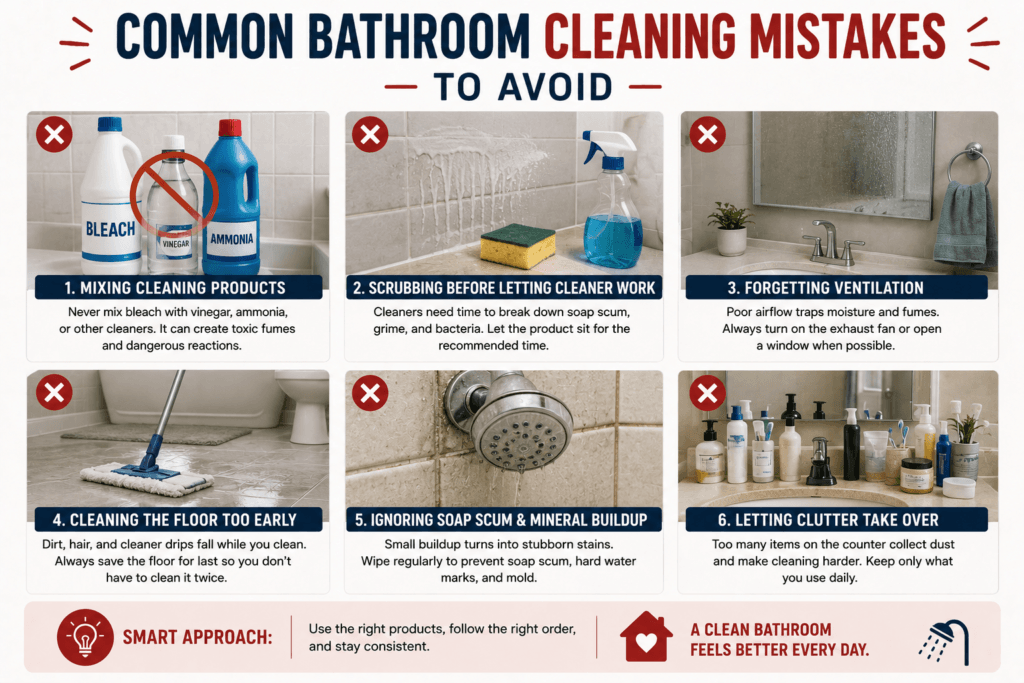
Mixing Cleaning Products
Never mix bleach with vinegar, ammonia, toilet cleaners, or other products. Dangerous fumes can form. Use one product at a time and follow labels.
Scrubbing Before Letting Cleaner Work
If you spray and immediately scrub, you may be doing more work than necessary. Let the cleaner sit for the recommended time.
Forgetting Ventilation
Bathrooms need airflow, especially when using stronger cleaners. Turn on a fan, open a window, or leave the door open if needed.
Cleaning the Floor Too Early
Floors should usually be last because dust, hair, and cleaner drips fall while you clean.
Ignoring Moisture
A bathroom can be clean and still smell musty if moisture is trapped. Dry towels, spread shower curtains, and use fans when possible.
Using Harsh Products on the Wrong Surface
Natural stone, older tile, painted surfaces, and certain countertops can be damaged by the wrong cleaner. Test first when unsure.
Quick Checklist: Bathroom Cleaning Reset
Use this when your bathroom needs to feel fresher fast:
- Clear the counter
- Wipe the sink and faucet
- Clean toothpaste spots from the mirror
- Wipe the toilet exterior
- Scrub the inside of the toilet bowl
- Spray shower or tub areas and let cleaner sit
- Brush around faucet edges and drain areas
- Replace or straighten towels
- Empty the trash
- Sweep or vacuum the floor
- Mop or spot-clean last
- Turn on ventilation or open a window if needed
Conclusion
These bathroom cleaning tips are simple, but they make a real difference because they focus on the areas people notice most: the sink, mirror, toilet, shower, towels, trash, and floors.
You don’t need to deep clean the bathroom every day. A quick reset, better moisture control, and a few smart habits can keep the room feeling fresher between bigger cleanings.
Start with the sink and mirror. Then handle the toilet, shower edges, towels, and floor. Small steps like that can make even a basic bathroom feel cleaner and easier to live with.