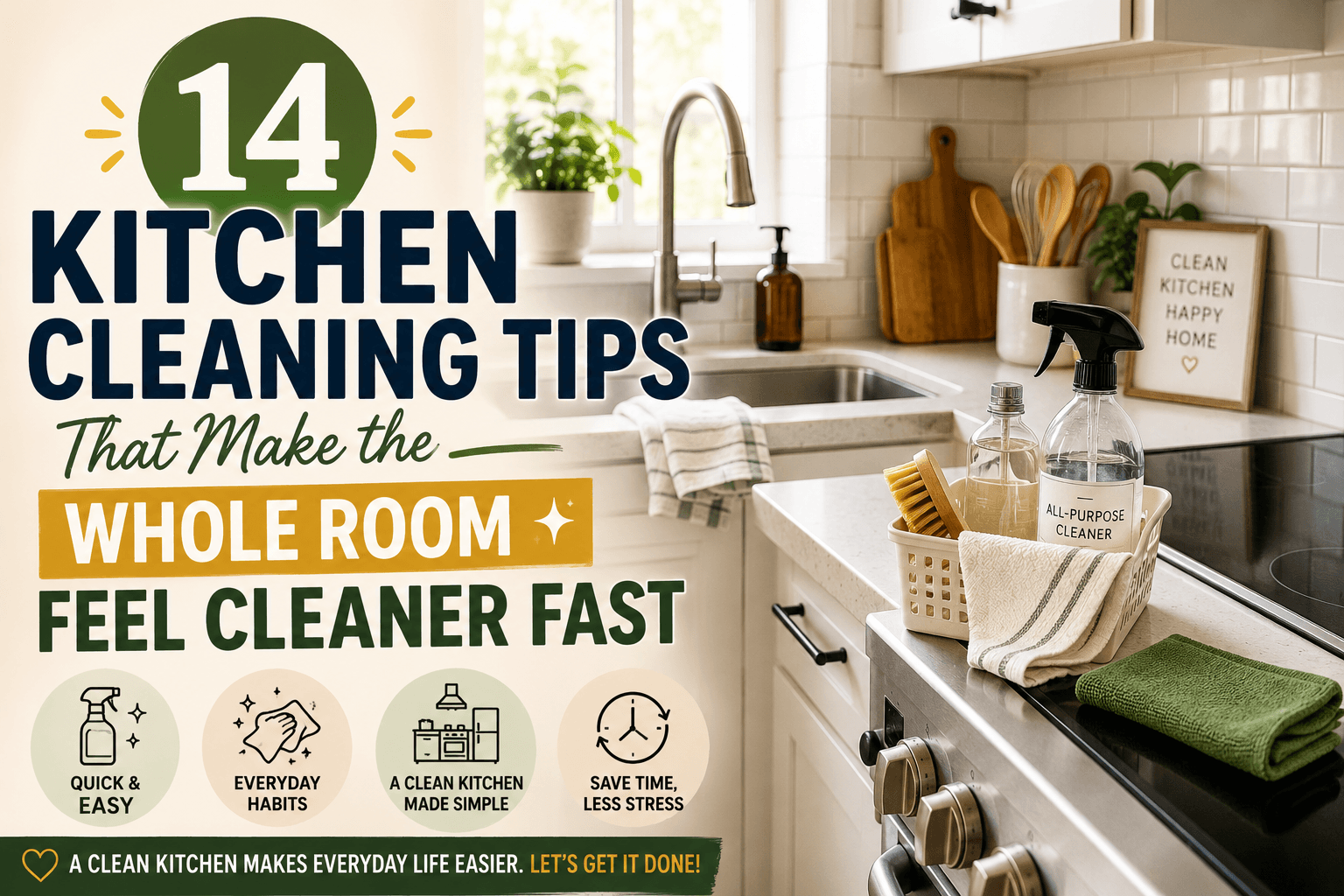
14 Kitchen Cleaning Tips That Make the Whole Room Feel Cleaner Fast
The kitchen is one of those rooms that can feel messy even when you just cleaned it yesterday.
A few dishes in the sink, crumbs on the counter, sticky cabinet handles, a full trash can, and suddenly the whole room feels out of control. That’s why simple kitchen cleaning tips are so useful. You don’t always need a full deep clean. Sometimes you just need to hit the spots that make the kitchen feel cleaner fast.
This is for normal kitchens. Small apartment kitchens, older homes with worn cabinets, rentals with limited counter space, and busy family kitchens where people are constantly grabbing snacks, making coffee, packing lunches, and leaving cups everywhere.
The goal isn’t a perfect kitchen. The goal is a kitchen that feels easier to cook in, easier to wipe down, and less annoying to walk into.
Before using any cleaner, read the label, test it on a hidden area if you’re unsure, and use ventilation when needed. Never mix bleach with vinegar, ammonia, or other cleaners. That can create dangerous fumes.
Table of Contents
Kitchen Cleaning Tips That Make a Big Difference Fast
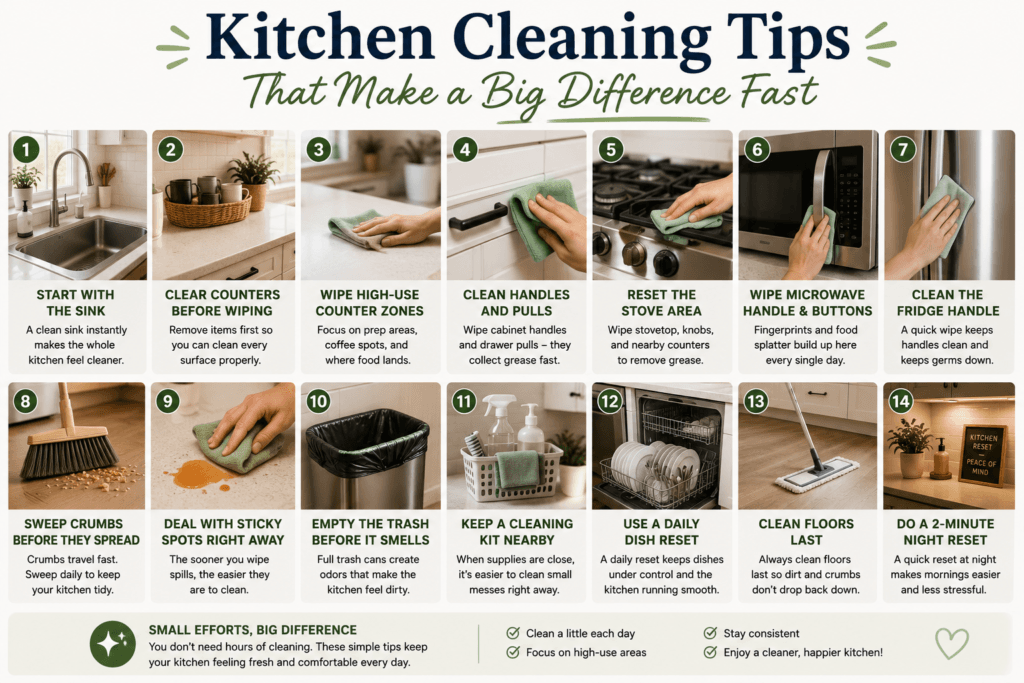
The best kitchen cleaning tips focus on the areas you notice most.
That usually means the sink, counters, stove, handles, trash, and floor. If those areas are decent, the whole kitchen feels cleaner, even if you haven’t cleaned every cabinet or scrubbed the oven.
Start with visible mess first. Deep cleaning can wait.
1. Start With the Sink
The sink makes a huge difference in how clean the kitchen feels.
Load the dishwasher, wash a few dishes, or stack dirty dishes neatly if you can’t finish them all. Then rinse the sink and wipe around the faucet.
Why it works: dishes are one of the biggest “mess signals” in a kitchen. Even a mostly clear sink makes the room feel calmer.
Example: In a small apartment kitchen, one sink full of cups and plates can make the whole kitchen look messy. Clear the cups first, then handle plates and utensils.
Small warning: Don’t let perfection stop you. If you can’t do every dish, do the easiest ones first.
2. Clear Counters Before Wiping
Before spraying or wiping counters, remove what doesn’t belong.
Move mail, keys, school papers, chargers, snack bags, cups, and random items out of the way.
Why it works: cleaning around clutter takes longer and never looks as clean.
Example: In a family kitchen, use one basket for things that need to leave the kitchen later, like toys, receipts, and papers.
Small warning: Don’t turn this into a full organizing session. Just clear the counter enough to wipe it.
3. Wipe the Highest-Use Counter Zones
You don’t always need to wipe every inch of counter space.
Focus on the prep area, coffee area, stove-side area, and the spot where food usually lands.
Why it works: these areas collect crumbs, grease, coffee drips, and sticky spots the fastest.
Example: If you make lunches every morning, wipe that section of counter after packing food so crumbs don’t spread.
Small warning: Use the right cleaner for your counter material. Stone, wood, laminate, and older surfaces may need different care.
4. Clean Cabinet Handles and Drawer Pulls
Cabinet handles get touched constantly.
Wipe handles, drawer pulls, and the area around them with a cleaner that’s safe for the finish.
Why it works: handles collect grease, food residue, fingerprints, and dust. This is one of those little things you don’t notice until it’s fixed.
Example: In an older kitchen, cabinet handles near the stove can feel slightly sticky from cooking grease. A quick wipe makes them feel much better.
Small warning: Don’t use harsh cleaners on painted cabinets or delicate finishes without testing first.
5. Reset the Stove Area
The stove area usually gets messy even from simple cooking.
Wipe the stovetop, knobs, front edge, and nearby counter area.
Why it works: grease and crumbs around the stove make the whole kitchen feel dirty, especially when light hits the surface.
Example: After cooking pasta or eggs, wipe spills before they dry and harden. It saves scrubbing later.
Small warning: Make sure the stove is cool before cleaning. Follow the appliance instructions, especially for glass cooktops.
6. Wipe the Microwave Handle and Buttons
The microwave may not look dirty from far away, but the handle and buttons usually are.
Use a damp cloth or safe cleaner to wipe the outside touch points.
Why it works: fingerprints, sauce, and food residue build up where people touch the microwave every day.
Example: In a busy home, the microwave handle gets touched by kids, adults, and anyone reheating leftovers. A quick wipe makes the appliance look cleaner.
Small warning: Don’t spray cleaner directly into buttons, vents, or openings. Spray the cloth instead.
7. Clean the Fridge Handle
The fridge handle is another high-touch spot.
Wipe it daily or a few times a week, especially if people cook often.
Why it works: hands touch the fridge while cooking, eating, and grabbing drinks, so it collects sticky residue fast.
Example: If someone grabs juice after eating pancakes, syrup or grease can end up on the handle without anyone noticing.
Small warning: Stainless steel and painted finishes can streak or scratch. Use a soft cloth and a cleaner made for the surface.
8. Sweep Crumbs Before They Spread
Kitchen crumbs travel.
They start near the counter, then end up under the table, near the sink, and in the hallway.
Why it works: a quick sweep keeps small messes from becoming whole-room messes.
Example: In an apartment kitchen, sweep under the counter edge, near the stove, and around the dining area after dinner.
Small warning: If you have hard floors that scratch easily, use a soft broom or vacuum attachment made for floors.
9. Deal With Sticky Spots Right Away
Sticky spots get worse when ignored.
Wipe spills from juice, syrup, sauce, coffee, honey, or cooking splatter as soon as you notice them.
Why it works: fresh spills usually wipe up quickly. Dried sticky spots take more effort.
Example: If coffee drips near the machine every morning, wipe that area before it turns into a brown sticky ring.
Small warning: Avoid using too much water on wood, laminate seams, or older counters with damaged edges.
10. Empty the Trash Before It Smells
Kitchen trash can make a clean room smell dirty.
Take it out before it’s overflowing, especially if it contains food scraps, diapers, pet food packaging, or meat packaging.
Why it works: odor changes how clean a kitchen feels, even when surfaces are wiped.
Example: If you cooked fish, chicken, or anything with strong food scraps, take the trash out that night instead of waiting.
Small warning: Clean the inside of the trash can if the bag leaks. A new bag won’t fix a dirty bin.
11. Keep a Small Cleaning Kit Nearby
Store basic kitchen cleaning supplies close to where you use them.
This might include dish soap, microfiber cloths, all-purpose cleaner, a sponge or brush, and trash bags.
Why it works: when supplies are easy to grab, quick cleaning feels less annoying.
Example: Keep a few cloths under the sink and one cleaner that’s safe for your counters.
Small warning: Keep cleaners away from kids and pets. Follow labels, and don’t mix products.
12. Use a Daily Dish Reset
Instead of waiting for dishes to become a huge job, do one daily reset.
Pick a time that works: after dinner, before bed, or after breakfast.
Why it works: dishes pile up quickly, and once the sink is full, the whole kitchen becomes harder to use.
Example: Load the dishwasher after dinner, hand wash pans, or at least stack dishes neatly and clear the sink area.
Small warning: Don’t make the reset too complicated. If it takes too long, it becomes easier to skip.
13. Clean Floors Last
Always clean kitchen floors after counters, stove, sink, and table areas.
Why it works: crumbs, dust, and cleaner drips fall while you clean other surfaces. If you mop first, you may have to do it again.
Example: Wipe the counters, clean the stove, clear the table, then sweep and mop the main walkway last.
Small warning: Use a floor-safe cleaner. Too much water can damage wood, laminate, and older flooring.
14. Do a Two-Minute Night Reset
A short kitchen reset at night can make mornings easier.
Put away food, move dishes to the sink or dishwasher, wipe the main counter, and toss obvious trash.
Why it works: waking up to a semi-reset kitchen feels much better than starting the day with yesterday’s mess.
Example: Before bed, clear the coffee area, wipe crumbs, and make sure the trash isn’t full.
Small warning: Don’t turn this into a deep clean. Two minutes is enough to keep the habit realistic.
Common Kitchen Cleaning Mistakes to Avoid
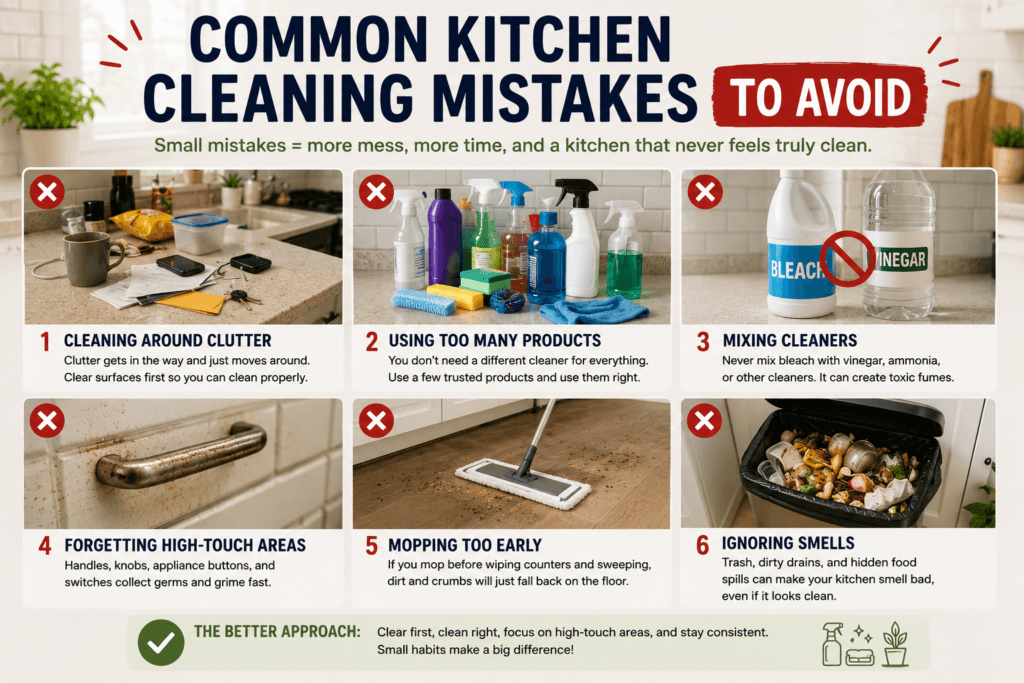
Cleaning Around Clutter
If counters are covered, wiping around everything won’t help much. Clear first, then clean.
Using Too Many Products
You don’t need a different cleaner for every small task. A few safe basics are usually enough for daily cleaning.
Mixing Cleaners
Never mix bleach with vinegar, ammonia, or other cleaners. Follow labels and use one product at a time.
Forgetting High-Touch Areas
Handles, knobs, switches, and appliance buttons get dirty fast. Don’t only clean flat surfaces.
Mopping Too Early
Floors should usually be last. Crumbs and drips fall while you clean the rest of the kitchen.
Ignoring Smells
A kitchen can look clean but still smell bad because of trash, sink drains, old food, or a dirty bin.
Quick Checklist: Kitchen Cleaning Reset
Use this when your kitchen needs to feel cleaner fast:
- Load or stack dishes
- Rinse and wipe the sink
- Clear counter clutter
- Wipe main prep areas
- Clean stove surface and knobs
- Wipe fridge and microwave handles
- Toss old food or obvious trash
- Empty trash if needed
- Sweep crumbs
- Spot-clean sticky areas
- Mop or clean floors last
- Do a quick night reset
Conclusion
Good kitchen cleaning tips don’t have to be complicated. Most of the time, a kitchen feels cleaner when the sink is reset, counters are wiped, handles aren’t sticky, trash is emptied, and crumbs are off the floor.
Start with the areas you notice most. Sink, counters, stove, handles, trash, and floor. Those small jobs can make the whole room feel fresher without spending your whole day cleaning.
A kitchen doesn’t need to look perfect. It just needs to feel usable, calmer, and easier to walk into tomorrow morning.