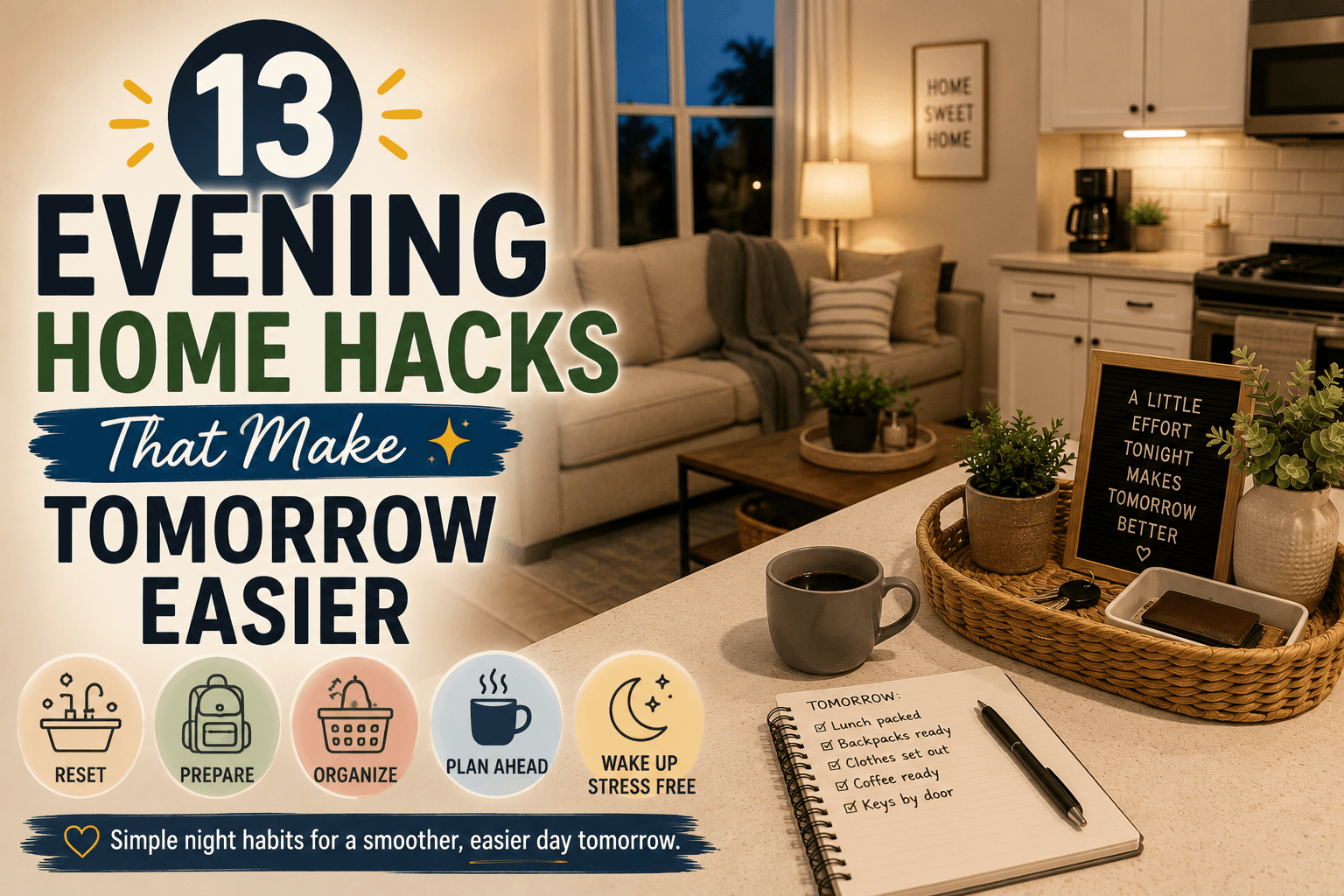
13 Evening Home Hacks That Make Tomorrow Easier
A home doesn’t usually fall apart all at once.
It’s more like little things build up during the day. Dishes sit in the sink. Shoes land by the door. Mail gets dropped on the counter. A blanket stays twisted on the couch. One laundry basket turns into two. By nighttime, the house can feel heavier than it did in the morning.
That’s where evening home hacks help. Not a full cleaning routine. Not a perfect nighttime reset. Just a few small habits that make tomorrow start a little easier.
These ideas work for apartments, rentals, older homes, small spaces, and busy family houses where life gets messy every day. The goal is simple: do a few useful things tonight so tomorrow doesn’t start with yesterday’s mess.
Table of Contents
Evening Home Hacks That Make Daily Life Feel Easier
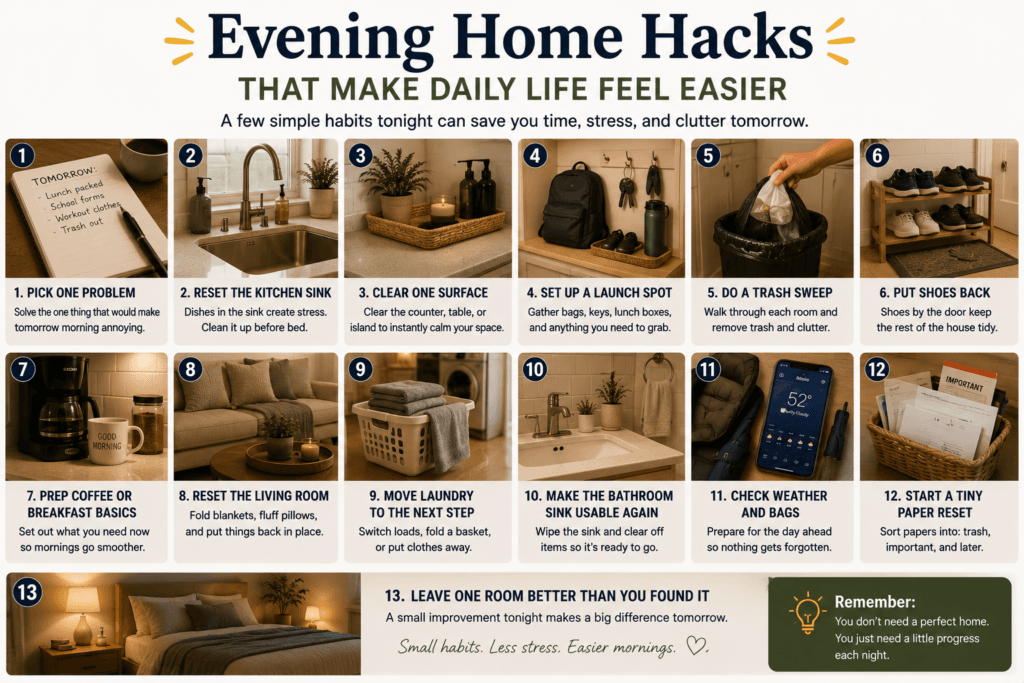
The best evening home hacks are the ones you can do when you’re already tired.
That matters. A routine that only works when you have energy won’t last. Evening habits should be short, obvious, and helpful. Think five to fifteen minutes, not a whole-house cleaning session.
Start with the thing that causes the most stress tomorrow morning. For some homes, it’s dishes. For others, it’s shoes, backpacks, laundry, lunch boxes, or the kitchen counter.
1. Pick One “Tomorrow Problem” to Solve First
Before doing anything, ask one simple question: what would make tomorrow morning annoying?
Maybe it’s a sink full of dishes, missing keys, no clean towel, a messy entryway, or school papers that aren’t ready.
Why it works: this keeps you focused. Instead of trying to fix the whole house, you fix the thing most likely to slow you down tomorrow.
Example: If mornings always fall apart because bags aren’t ready, make the bag station your first evening task.
Small warning: Don’t make a giant list. Pick one problem first. You can always do more if you still have energy.
2. Reset the Kitchen Sink
The kitchen sink is one of the biggest mood changers in a home.
Load the dishwasher, wash the easiest dishes, or stack dishes neatly if you can’t finish everything. Then rinse the sink and wipe around the faucet.
Why it works: waking up to a usable sink makes coffee, breakfast, and lunch packing easier.
Example: In a small apartment, even a few cups and plates can make the whole kitchen feel messy. Clear those first and let bigger pans soak if needed.
Small warning: Don’t let “I can’t do all the dishes” turn into doing nothing. A partial reset still helps.
3. Clear One Main Surface
Pick one surface that makes the home feel calmer when it’s clear.
Good choices include the kitchen counter, dining table, coffee table, bathroom vanity, or entryway table.
Why it works: flat surfaces collect clutter fast. Clearing just one makes the home feel more under control.
Example: If the dining table is covered with mail, toys, cups, and school papers, put dishes in the sink, papers in one pile, toys in a basket, and trash in the bin.
Small warning: Don’t start deep organizing every item. This is a quick reset, not a full decluttering session.
4. Set Up a Morning Launch Spot
Create one place for things that need to leave the house tomorrow.
This might include work bags, backpacks, returns, library books, lunch boxes, sports gear, keys, wallets, or school forms.
Why it works: mornings get easier when important items are already gathered.
Example: In a rental entryway, use a simple basket, tray, or small bench instead of drilling hooks into the wall. If you use removable hooks, check your lease and follow weight limits.
Small warning: The launch spot should be for tomorrow only. If it becomes long-term storage, it stops helping.
5. Do a Quick Trash Sweep
Walk through the main rooms with a small trash bag.
Pick up wrappers, tissues, junk mail, empty cups, snack packaging, receipts, and anything obvious.
Why it works: trash makes rooms feel messier than they really are. Removing it gives a fast visual win.
Example: In a busy family room, snack wrappers and old tissues can make the couch area feel dirty even if nothing else is wrong.
Small warning: Don’t start sorting paperwork or organizing drawers. Trash only.
6. Put Shoes Back Near the Door
Shoes can make an entryway look messy fast.
Put daily shoes back on a rack, mat, tray, or in one basket near the door.
Why it works: shoes need an obvious home. If they don’t have one, they spread into hallways, bedrooms, and living rooms.
Example: In a small apartment, one shoe tray by the door can keep everyday pairs from taking over the floor.
Small warning: Don’t keep every pair near the entrance. Store only daily shoes there and move the rest to a closet.
7. Prep Coffee or Breakfast Basics
Make tomorrow’s first kitchen task easier.
You might set out mugs, fill the coffee maker, place breakfast items together, or prep lunch containers.
Why it works: mornings feel smoother when the first few steps are already done.
Example: Put cereal, bowls, and spoons together for kids, or place coffee filters and a mug near the coffee maker.
Small warning: Don’t leave perishable food out overnight. Keep food safety in mind and store items properly.
8. Reset the Living Room
A quick living room reset can make the whole home feel better.
Fold blankets, straighten pillows, move cups to the kitchen, put remotes in one place, and collect toys or loose items.
Why it works: the living room is often the room you see first in the morning or when you come home. A small reset makes it feel calmer.
Example: Use one basket for blankets and one small tray for remotes so the couch area doesn’t look scattered.
Small warning: Don’t spend ten minutes styling pillows. This is about function, not a photo shoot.
9. Move Laundry to the Next Step
Laundry gets overwhelming when it gets stuck.
Move one load to the dryer, fold one small basket, put clean clothes in bedrooms, or gather dirty laundry into one place.
Why it works: laundry becomes easier when you keep it moving in small steps.
Example: If folding everything feels like too much, just separate clean towels and put them away. That still counts.
Small warning: Don’t start a new load if you know you’ll forget it in the washer overnight.
10. Make the Bathroom Sink Usable Again
The bathroom doesn’t need a full clean every night.
Just wipe toothpaste, move hair tools, toss tissues, and put daily items back in a basket or drawer.
Why it works: a clean-ish sink makes the morning routine easier and less annoying.
Example: In a small rental bathroom, keep a small basket for deodorant, toothbrush items, skincare, and hair products. Pull it out when needed and put it away after.
Small warning: Don’t spray cleaner near outlets or light fixtures. Spray the cloth instead when needed.
11. Check Tomorrow’s Weather and Bags
Take one minute to think about tomorrow.
Do you need jackets, umbrellas, sports clothes, school papers, work items, or reusable grocery bags?
Why it works: small forgotten things cause morning stress. Checking at night gives you time to fix it.
Example: If rain is expected, put umbrellas by the door and move wet-weather shoes to the entryway.
Small warning: Don’t turn this into a full planning session if you’re tired. Just check the basics.
12. Start a Tiny Paper Reset
Paper clutter spreads quickly.
Before bed, sort the visible papers into three groups: trash, important, and later.
Why it works: papers look messy and create mental clutter because they often need decisions.
Example: Toss junk mail, put bills in one tray, and place school papers in the launch spot.
Small warning: Don’t start reading every document or organizing old files. Keep it quick.
13. Leave One Room Better Than You Found It
Pick one room and improve it by a small amount before bed.
It could be the kitchen, bathroom, entryway, bedroom, or living room.
Why it works: this habit is flexible. It works even when every night looks different.
Example: If you’re exhausted, just clear the coffee table. If you have more energy, reset the kitchen sink and entryway.
Small warning: Don’t use this as pressure to clean the whole house. One small improvement is enough.
Common Mistakes to Avoid
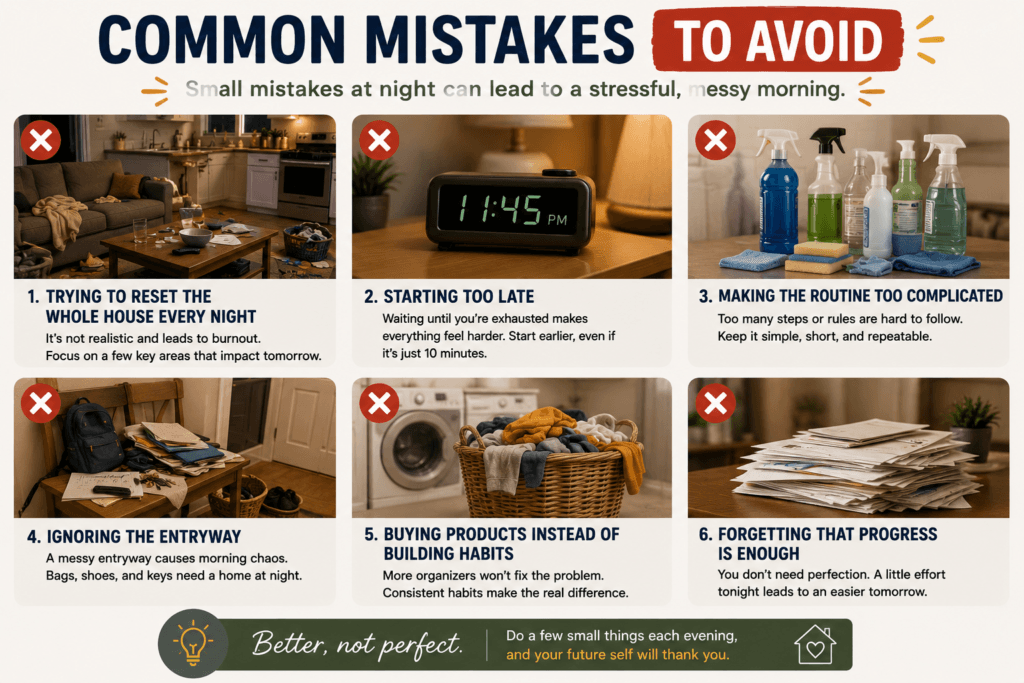
Trying to Reset the Whole House Every Night
That sounds nice, but it’s not realistic for most people. Focus on the areas that affect tomorrow the most.
Starting Too Late
If you wait until you’re already half asleep, everything feels harder. Do one small reset right after dinner or before sitting down for the night.
Making the Routine Too Complicated
A routine with 20 steps won’t last. Keep it simple enough to do on a normal tired evening.
Ignoring the Entryway
Keys, shoes, bags, and papers cause a lot of morning stress. A simple entryway reset can help more than cleaning a random drawer.
Buying Products Instead of Building Habits
You don’t need a cart full of organizers. A tray, basket, shoe rack, and daily habit often do more than extra storage products.
Forgetting Rental Rules
Renters should check lease rules before installing hooks, shelves, command centers, or anything that could damage walls, doors, cabinets, or paint.
Quick Checklist: Evening Home Reset
Use this when you want tomorrow to feel easier:
- Pick one tomorrow problem
- Load or stack dishes
- Rinse the kitchen sink
- Clear one main surface
- Set up a launch spot
- Toss obvious trash
- Put daily shoes back
- Prep coffee or breakfast basics
- Fold blankets and reset pillows
- Move laundry one step forward
- Wipe the bathroom sink
- Sort visible papers
- Leave one room slightly better
Conclusion
Good evening home hacks don’t have to be impressive. They just need to make tomorrow a little easier.
Reset the sink. Clear one surface. Gather what needs to leave the house. Put shoes back. Move laundry one step forward. These small habits can stop yesterday’s mess from becoming tomorrow’s stress.
Start with one evening habit this week. Once that feels easy, add another. A calmer morning usually starts with a few simple choices the night before.