
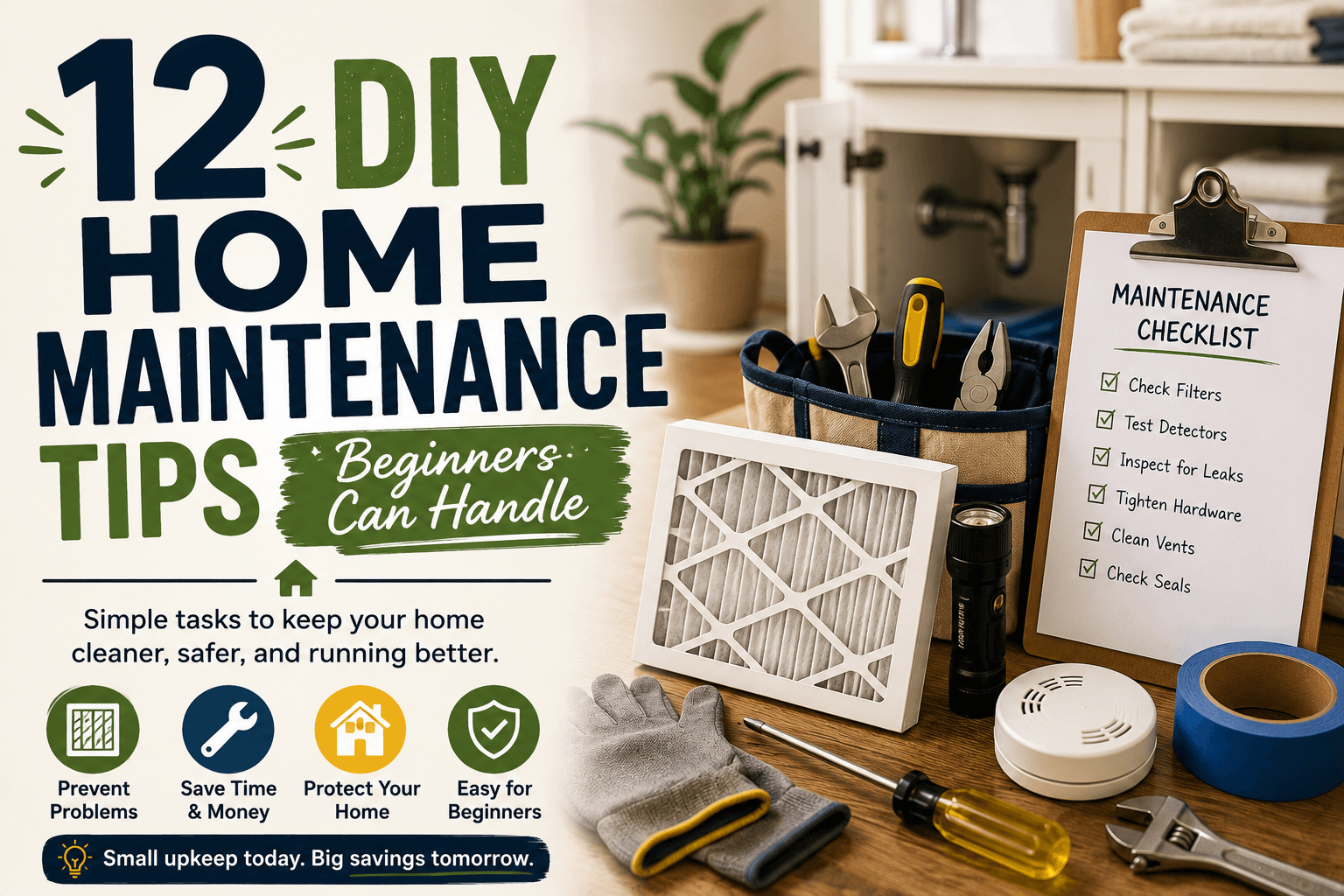
12 DIY Home Maintenance Tips Beginners Can Handle
Home maintenance sounds like one of those serious homeowner things.
But a lot of it is really just small, simple tasks that help your home stay cleaner, safer, and less annoying to live in. You don’t need to be handy. You don’t need a garage full of tools. And you definitely don’t need to start by taking apart plumbing or messing with electrical work.
These DIY home maintenance tips are beginner-friendly and practical for normal homes, apartments, rentals, older houses, and busy family spaces. They’re the little things that are easy to ignore until they become more frustrating later.
A loose handle. A dirty vent. A slow drain. A worn-out filter. A tiny gap around a sink. These small issues don’t always feel urgent, but fixing or checking them can make your home feel more cared for.
For anything involving wiring, gas, major plumbing, structural damage, roof work, mold, or ongoing leaks, call a professional or contact your landlord. And if you rent, check your lease before changing fixtures, drilling, sealing, painting, or doing anything that could affect your deposit.
Table of Contents
DIY Home Maintenance Tips That Keep Small Problems From Growing
The best beginner maintenance tasks are simple and low-risk.
You’re not trying to remodel your home. You’re just checking the spots that quietly collect dust, loosen up, leak a little, or stop working as well as they should.
Start with one task. Do it slowly. Read labels and instructions. If something feels unsafe or confusing, stop.
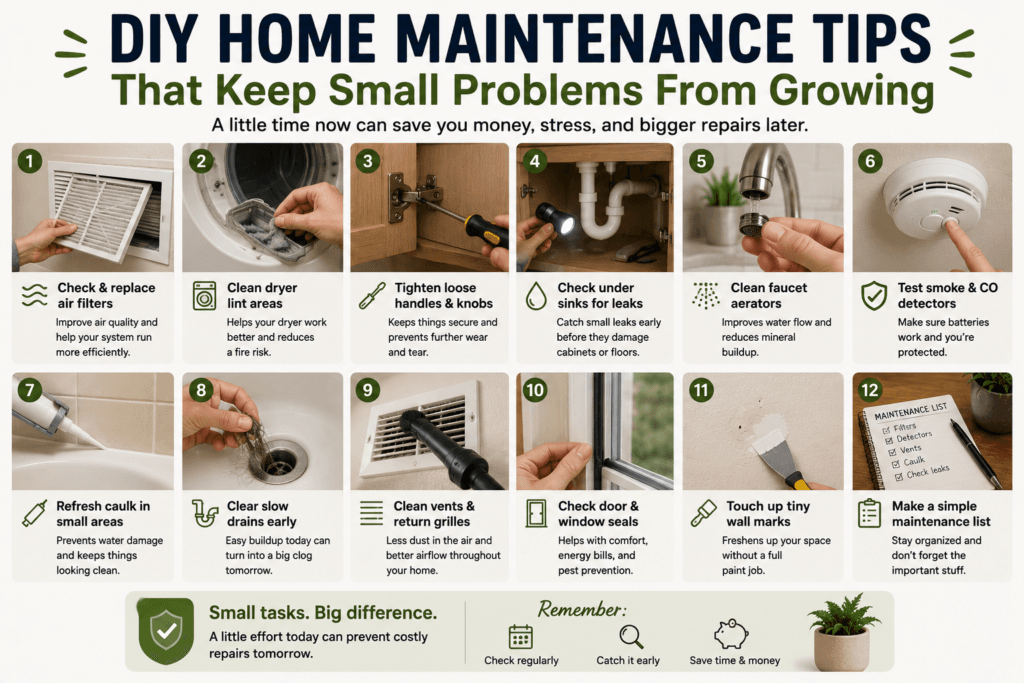
1. Check and Replace Air Filters
If your home has an HVAC system with a replaceable filter, check it regularly.
Look for the filter size printed on the side, buy the same size, and follow the airflow arrow when installing the new one.
Why it works: dirty filters can make airflow weaker and help dust build up faster around the home.
Example: In a family home with pets, filters may get dirty faster than expected. Checking once a month is a simple habit.
Small warning: Follow your system’s instructions. If you rent, ask your landlord or property manager who is responsible for filter changes.
2. Clean Dryer Lint Areas
Empty the lint trap after each dryer load, and occasionally clean around the lint trap area.
Why it works: lint buildup can make the dryer work harder and may create a fire risk if ignored.
Example: If clothes are taking longer to dry than usual, check the lint trap first. Then look for lint around the opening.
Small warning: Don’t take apart dryer vents or move gas dryers unless you know what you’re doing. For deeper vent cleaning, call a professional or ask your landlord.
3. Tighten Loose Handles and Knobs
Check cabinet knobs, drawer pulls, doorknobs, towel bars, and furniture handles.
Use the correct screwdriver or Allen key to tighten anything loose.
Why it works: loose hardware makes a home feel worn out, even when nothing major is wrong.
Example: A kitchen drawer handle that wiggles every time you open it may only need a quick tighten from the inside.
Small warning: Don’t overtighten screws, especially on older cabinets or particleboard furniture. You can strip the hole.
4. Check Under Sinks for Small Leaks
Every so often, look under kitchen and bathroom sinks.
Check for water stains, dampness, musty smells, soft cabinet bottoms, or small drips.
Why it works: small leaks can damage cabinets and flooring if they sit unnoticed.
Example: Put your hand on the cabinet floor under the sink. If it feels damp or smells musty, it needs attention.
Small warning: Don’t ignore ongoing leaks. If you rent, report them. If you own the home and can’t find the source, call a plumber.
5. Clean Faucet Aerators
If water flow from a faucet seems weak or uneven, the aerator may have buildup.
The aerator is the small screen piece at the end of many faucets. Some can be unscrewed by hand or with gentle help from pliers wrapped in a cloth.
Why it works: mineral buildup can block the screen and make water flow strangely.
Example: In an older home with hard water, a bathroom faucet may splash or run unevenly because the aerator is clogged.
Small warning: Be gentle. Don’t scratch the faucet finish or force anything. If the part won’t move, leave it alone or ask for help.
6. Test Smoke and Carbon Monoxide Detectors
Press the test button on smoke detectors and carbon monoxide detectors.
Replace batteries if needed, and pay attention to expiration dates if the unit has one.
Why it works: these devices are easy to forget, but they’re important for home safety.
Example: Add detector testing to your monthly routine, like the first weekend of the month.
Small warning: If a detector keeps chirping or doesn’t test properly after a battery change, replace it or contact your landlord.
7. Refresh Caulk in Small Dry Areas
Caulk around sinks, tubs, and counters can crack or peel over time.
For small, dry, simple areas, remove loose old caulk, clean the surface, let it dry fully, and apply fresh kitchen-and-bath caulk.
Why it works: fresh caulk helps seal small gaps and makes edges look cleaner.
Example: A small gap behind a bathroom sink can make the whole vanity area look older than it is.
Small warning: Don’t caulk over mold, soft drywall, or active water damage. Fix the moisture problem first.
8. Clear Slow Drains Early
A slow bathroom sink or tub drain is easier to deal with before it becomes fully clogged.
Remove visible hair, soap buildup, or debris near the drain opening.
Why it works: many slow drains start with buildup close to the surface.
Example: In a bathroom sink, hair and toothpaste residue can collect around the drain and slow water down.
Small warning: Be careful with chemical drain cleaners. Follow labels exactly, use ventilation, and never mix drain products with other cleaners.
9. Clean Vents and Return Grilles
Dust collects on air vents, return grilles, bathroom fans, and laundry room vents.
Use a vacuum brush attachment or microfiber cloth to remove surface dust.
Why it works: dusty vents make rooms feel dirtier and can spread dust when air moves.
Example: In a bedroom, a dusty vent near the ceiling can make the wall around it look gray over time.
Small warning: Don’t remove covers or reach inside systems unless you know it’s safe. Turn off fans before cleaning around them.
10. Check Door and Window Seals
Look around doors and windows for drafts, gaps, peeling weatherstripping, or worn seals.
Why it works: small gaps can make rooms feel drafty and less comfortable.
Example: In an older home or rental, you might feel cold air near the bottom of a door during winter. A draft stopper can help without permanent changes.
Small warning: Renters should check with the landlord before replacing weatherstripping or making changes to windows and doors.
11. Touch Up Tiny Wall Marks Carefully
Small scuffs, nail holes, and marks can make walls look tired.
For tiny marks, try a gentle cleaning sponge or cloth first. For small nail holes, lightweight spackle may help if allowed.
Why it works: little wall marks add up visually, especially in hallways, bedrooms, and entryways.
Example: A few small nail holes above a dresser can make a wall look messy after you move frames around.
Small warning: Renters should check lease rules before patching or painting. Also test cleaning methods so you don’t remove paint.
12. Make a Simple Seasonal Maintenance List
Create a short checklist for spring, summer, fall, and winter.
Keep it simple. Include tasks like checking filters, testing detectors, cleaning vents, looking under sinks, and checking outdoor areas if you have them.
Why it works: maintenance is easier when you don’t rely on memory.
Example: A fall list might include checking weatherstripping, replacing air filters, testing detectors, and cleaning dryer lint areas.
Small warning: Don’t make the list too long. A checklist you never use won’t help.
Common Mistakes to Avoid
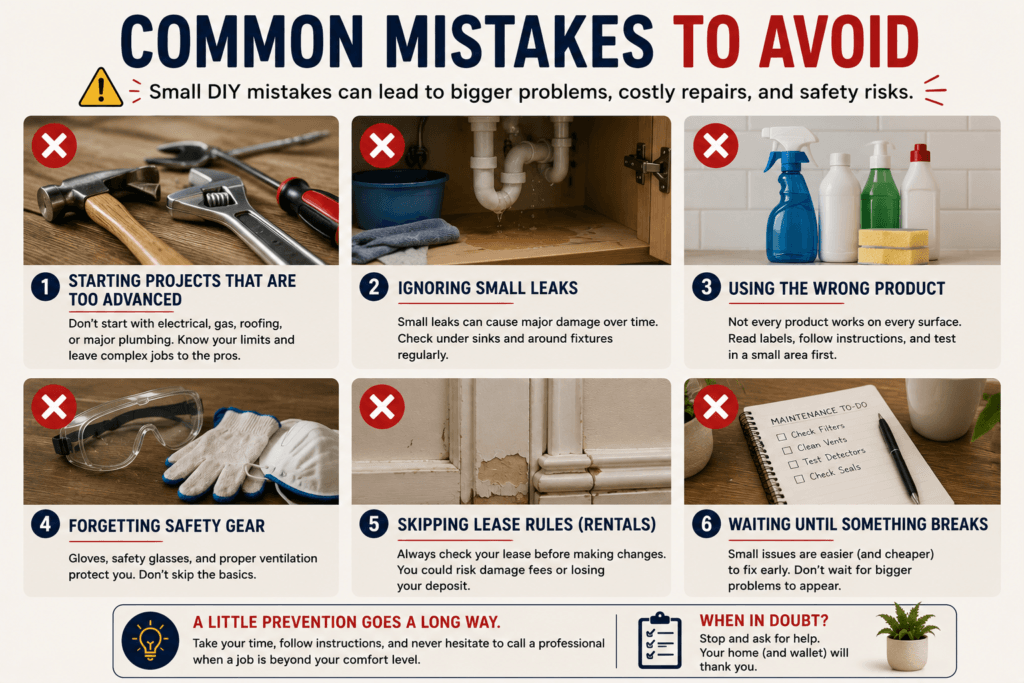
Starting With Projects That Are Too Advanced
Don’t start with electrical work, gas appliances, major plumbing, roof repairs, or structural problems. Beginner maintenance should feel safe and manageable.
Ignoring Small Leaks
Small leaks rarely fix themselves. Water damage can get expensive, so deal with leaks early.
Using the Wrong Product
Not every cleaner, caulk, adhesive, or tool works on every surface. Read labels and test first when needed.
Forgetting Safety Gear
Gloves, safety glasses, ventilation, and a sturdy step stool matter more than people think.
Skipping Lease Rules
Renters should check before patching walls, replacing parts, changing fixtures, sealing gaps, or using adhesive products.
Waiting Until Something Breaks
Maintenance is easier when it’s preventative. A five-minute check now can prevent a bigger headache later.
Quick Checklist: Beginner Home Maintenance
Use this once a month or seasonally:
- Check air filters
- Empty dryer lint trap
- Look under sinks for leaks
- Tighten loose handles
- Clean faucet aerators if flow is weak
- Test smoke detectors
- Test carbon monoxide detectors
- Check caulk for cracks
- Clear visible drain buildup
- Dust vents and grilles
- Look for drafts around doors
- Check window seals
- Touch up tiny marks if allowed
- Update your seasonal checklist
Conclusion
These DIY home maintenance tips are simple, but they can make a real difference in how your home feels and functions.
Start with the basics. Check filters. Test detectors. Tighten loose handles. Look under sinks. Clean vents. Clear small drain buildup before it turns into a bigger problem.
You don’t need to become a repair expert. You just need a few steady habits that help keep your home from slowly getting harder to manage.