
15 Budget Dining Room Decor Ideas That Make Meals Feel More Special
A dining room doesn’t have to be fancy to feel nice.
For a lot of homes, the “dining room” is really a corner of the kitchen, a small table in an apartment, a breakfast nook, or a dining table that also handles homework, mail, bills, and random stuff that doesn’t have a home yet.
That’s exactly why budget dining room decor ideas can make such a big difference. You don’t need a new table, expensive chairs, or a full makeover. A few small changes can make meals feel calmer, the room feel more pulled together, and the table feel like a place people actually want to sit.
The goal is not to create a formal dining room nobody uses. It’s to make your real eating space feel warmer, cleaner, and a little more intentional without spending too much.
Table of Contents
Budget Dining Room Decor Ideas That Make the Space Feel Finished
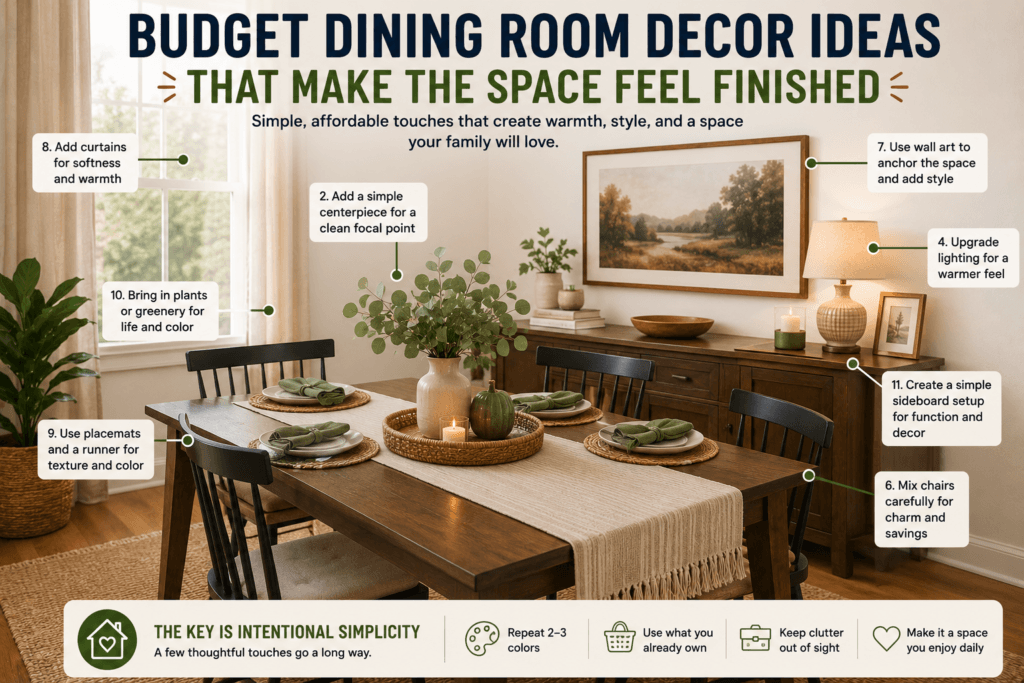
Before buying anything, look at what makes the dining area feel unfinished.
Is the table always cluttered? Is the light too harsh? Are the walls empty? Does the table look plain? Are the chairs mismatched in a bad way? Once you know what feels off, you can fix that first instead of buying random decor that doesn’t help.
1. Clear the Table Before Decorating
Start by removing everything that doesn’t belong on the dining table.
Move mail, chargers, keys, school papers, receipts, toys, and random kitchen items somewhere else.
Why it works: decor looks better when it isn’t sitting on top of clutter. A clean table instantly makes the dining area feel more intentional.
Example: In a busy family home, use one small tray or basket nearby for papers instead of letting them spread across the table.
Small warning: Don’t just move clutter from the table to the counter. Give it a real place, even if it’s just a temporary paper tray.
2. Add a Simple Centerpiece
A centerpiece can make a dining table look finished without much effort.
Use a vase, candle, bowl, small plant, tray, or seasonal item.
Why it works: one simple focal point makes the table feel styled, even if the rest of the room is plain.
Example: A wooden bowl with fruit, a vase with faux stems, or one candle on a tray can work for a small apartment dining table.
Small warning: Keep it low enough that people can still see each other across the table. Tall centerpieces are annoying during meals.
3. Use a Table Runner Instead of a Full Tablecloth
A table runner adds texture without covering the whole table.
It works well on wood, laminate, glass, or thrifted tables that need a little softness.
Why it works: a runner makes the table feel more decorated but still practical for everyday use.
Example: Use a neutral linen-look runner on a small kitchen table, then add a bowl or candle in the center.
Small warning: If you have young kids, choose something washable. Pretty fabric that can’t handle spills won’t last long.
4. Upgrade the Lighting if You Can
Dining areas often feel flat because the lighting is too harsh or too dim.
Try a warmer bulb, a plug-in pendant, a floor lamp nearby, or a small lamp on a sideboard.
Why it works: softer lighting makes meals feel warmer and the whole room feel more inviting.
Example: In a rental dining nook, a floor lamp near the table can make dinner feel cozier without changing the ceiling fixture.
Small warning: Renters should check lease rules before replacing light fixtures. Always follow wattage limits and electrical safety.
5. Add a Rug Only if It Makes Sense
A rug can help define the dining area, especially in open spaces.
Why it works: rugs add warmth, texture, and a clear boundary between the dining area and living room or kitchen.
Example: In an open apartment, a rug under the dining table can make the table area feel like its own zone.
Small warning: Dining room rugs need to be practical. If you have kids, pets, or lots of spills, choose washable or easy-clean options. Also make sure chairs can slide without catching.
6. Mix Chairs Carefully
Mixed chairs can look charming if they feel intentional.
Try keeping chairs similar in color, material, shape, or style.
Why it works: mixed seating can save money because you can use thrifted chairs, extra chairs, or different pieces you already own.
Example: Four different wood chairs can still look good if they’re all painted the same color or have similar seat cushions.
Small warning: Don’t mix chairs that are uncomfortable or the wrong height. Dining chairs need to work for eating, not just photos.
7. Use Wall Art to Anchor the Table
Empty walls around a dining table can make the space feel unfinished.
Add one larger piece of wall art, two matching frames, a small gallery wall, or a framed print.
Why it works: wall art gives the dining area a visual anchor, especially if the table is against a blank wall.
Example: In a small breakfast nook, one framed botanical print or simple landscape above the table can make the area feel calmer.
Small warning: Renters should check lease rules before making holes. Removable strips may help, but they can still damage paint if removed incorrectly.
8. Add Curtains or Softer Window Coverings
If your dining area has a window, curtains can make the space feel warmer.
Even simple panels can soften blinds and plain walls.
Why it works: fabric adds texture and makes a room feel less bare.
Example: In an older home or rental, light-filtering curtains near the dining table can make the room feel more cozy during breakfast and dinner.
Small warning: Measure before buying. Renters should use no-drill curtain options or ask before installing rods.
9. Use Placemats for Color and Texture
Placemats are an easy way to make a dining table look nicer without setting a full table.
Why it works: they add structure, color, and texture while protecting the table from daily wear.
Example: Woven placemats can warm up a white table. Simple striped or neutral placemats can make a small table feel more styled.
Small warning: Don’t buy placemats that are hard to clean if you use the table daily. Washable or wipeable options are better for real life.
10. Bring in a Plant or Simple Greenery
A small plant or faux greenery can make a dining area feel fresher.
Why it works: greenery adds life and softness without needing a lot of decor.
Example: Put a small plant in the center of the table, on a windowsill, or on a nearby shelf.
Small warning: Some real plants are toxic to pets. Check before bringing new plants into a home with cats or dogs.
11. Create a Small Sideboard Setup
If you have space, a sideboard, console table, cart, or small cabinet can make the dining area more useful.
Why it works: it gives you storage for napkins, candles, serving bowls, placemats, and extra dining items.
Example: In an apartment, a small rolling cart can hold napkins, a fruit bowl, extra mugs, and a plant.
Small warning: Don’t add furniture that blocks walkways. A dining area needs enough room for people to pull out chairs and move around.
12. Use Baskets for Dining Room Clutter
Dining areas often collect things that don’t belong there.
Use one basket for items that need to move elsewhere, or baskets on a shelf for napkins, kids’ supplies, or table linens.
Why it works: baskets hide visual clutter while keeping things easy to access.
Example: If your dining table doubles as a homework spot, keep pencils, markers, and papers in one basket that can be moved during meals.
Small warning: Don’t let baskets become permanent junk storage. Empty them regularly.
13. Repeat Two or Three Colors
A dining area feels more put together when colors repeat.
Choose two or three colors and use them in small ways through art, placemats, curtains, chair cushions, plants, or a runner.
Why it works: repeated colors create connection, even if the furniture isn’t expensive or perfectly matched.
Example: Use warm wood, cream, and sage green in the runner, wall art, plant, and placemats.
Small warning: Don’t match everything exactly. A little variation keeps the space from feeling stiff.
14. Make the Table Useful Every Day
Decor should not make the table harder to use.
Keep the table easy to clear for meals, homework, work, crafts, or whatever your home actually needs.
Why it works: a dining area that works for daily life stays neater because people aren’t fighting the setup.
Example: Use a tray for centerpiece items so you can move everything at once when it’s time for dinner.
Small warning: If decor has to be moved constantly and has nowhere to go, it may be too much.
15. Decorate With Things You Already Own
Before shopping, check your home for useful decor.
Look for bowls, trays, candles, jars, baskets, vases, books, framed prints, fabric, or extra plants.
Why it works: moving items around can refresh a space for free.
Example: A tray from the living room can become a dining table centerpiece. A framed print from a hallway may look better above the table.
Small warning: Don’t move clutter into the dining room and call it decor. Choose items that actually make the space feel better.
Common Mistakes to Avoid
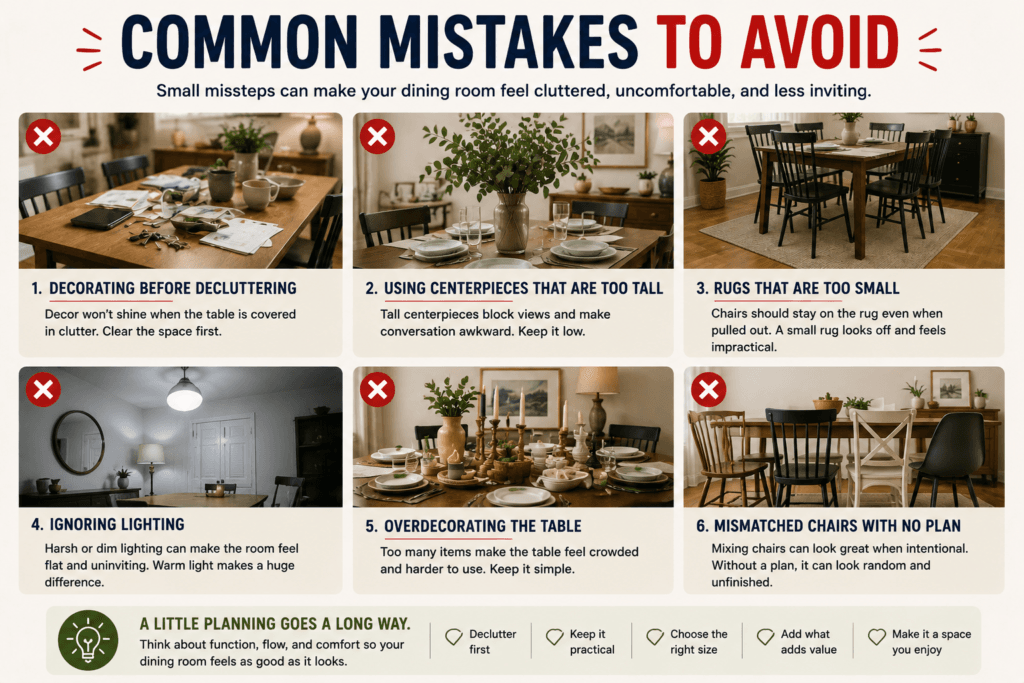
Decorating Before Clearing the Table
If the table is covered with papers and random items, decor will only add more clutter. Clear first.
Choosing Decor That Gets in the Way
Tall centerpieces, too many candles, or oversized trays can make meals annoying. Keep decor easy to move.
Ignoring Lighting
Lighting changes how a dining area feels. A warmer bulb or nearby lamp can make a bigger difference than new decorations.
Buying a Rug That’s Too Small
Dining rugs need to fit the table and chairs. If chairs slide off the rug every time someone sits down, it’s too small.
Overcrowding a Small Dining Area
Small spaces need breathing room. Don’t add a sideboard, cart, rug, and extra chairs if the room can’t handle them.
Forgetting Rental Rules
Renters should check lease rules before hanging art, installing curtains, swapping light fixtures, drilling, or using adhesive products.
Quick Checklist: Budget Dining Room Refresh
Use this before buying anything new:
- Clear the dining table
- Remove papers and random clutter
- Add one simple centerpiece
- Try a table runner or placemats
- Check the lighting
- Add wall art if the wall feels empty
- Use curtains if the window feels bare
- Repeat two or three colors
- Use baskets only where needed
- Make sure chairs are comfortable
- Keep walkways clear
- Use decor that’s easy to move
- Shop your home first
Conclusion
Good budget dining room decor ideas don’t have to be expensive. A cleaner table, softer lighting, a simple centerpiece, useful baskets, and a few repeated colors can make the whole space feel more inviting.
Start with what bothers you most. Maybe it’s clutter, blank walls, harsh lighting, or a table that never feels ready for meals.
A dining area doesn’t need to be formal to feel special. It just needs to be comfortable, useful, and a little more intentional than it was yesterday.