

18 Budget Decor Ideas That Make Your Home Feel More Put Together
Decorating your home doesn’t have to mean buying new furniture or spending a whole paycheck at a home store. Some of the best budget decor ideas are small changes that make a room feel calmer, warmer, and more intentional.
Most normal homes don’t need a full makeover. They need a few things adjusted. A bare wall that feels forgotten. A coffee table that always looks messy. A dark corner. A couch that needs help. A bedroom that technically works, but doesn’t feel finished.
This is where affordable home decor really helps. You can make a rental, apartment, older home, or busy family space feel better without doing anything dramatic. The goal is not perfection. It’s making your home feel more pulled together in a way that still fits real life.
Here are 18 simple, realistic, and renter-friendly decor ideas that can make your home feel more finished without spending a lot.
Table of Contents
Budget Decor Ideas That Make Your Home Feel More Put Together

Before buying anything, look at the room and ask one simple question: what makes this space feel unfinished?
Sometimes it’s not a lack of decor. Sometimes it’s too much stuff, harsh lighting, mismatched colors, or furniture pushed into awkward spots. A few clever changes can do more than a cart full of random decorations.
1. Start by Clearing Visual Clutter
Before adding decor, remove the things that make the room look busy.
Clear the coffee table, kitchen counter, nightstand, entryway table, or dresser top. Keep only what you use or what actually looks good there.
Why it works: clutter makes even nice decor disappear. When surfaces are calmer, the whole room feels more intentional.
Example: In a small apartment living room, a coffee table with remotes, mail, cups, and random toys can make the whole room feel messy. Put remotes in a small box, toss trash, and keep one simple decor item like a candle or plant.
Small warning: Don’t confuse decluttering with throwing everything away. The goal is to make the space easier to look at, not empty and cold.
2. Use One Tray to Make Surfaces Look Styled
A tray is one of the easiest budget decor tools.
Use it on a coffee table, bathroom counter, kitchen counter, dresser, or entry table. Put a few items on it, like a candle, small plant, book, jar, or soap bottle.
Why it works: a tray groups loose items so they look intentional instead of scattered.
Example: On a bathroom counter, place hand soap, lotion, and a small plant on a tray. It instantly looks neater, even if the bathroom is basic.
Small warning: Don’t overload the tray. If it becomes a parking lot for random stuff, it stops looking decorative.
3. Add Throw Pillow Covers Instead of New Pillows
If your couch or bed feels dull, try new pillow covers instead of buying full pillows.
Why it works: covers are cheaper, easier to store, and let you change the look of a room without replacing everything.
Example: A beige couch can feel warmer with textured pillow covers in soft green, rust, navy, cream, or warm brown.
Small warning: Check pillow insert sizes before ordering covers. A cover that’s too loose can look flat and messy.
4. Hang Curtains Higher and Wider
Curtains can make a room feel taller and more finished.
Hang the curtain rod a few inches above the window frame and wider than the window if possible. Let the curtains frame the window instead of covering too much glass.
Why it works: higher and wider curtains make windows look larger and allow more light into the room.
Example: In an older home with small windows, this trick can make a bedroom feel brighter and less cramped.
Small warning: Renters should check lease rules before drilling. Tension rods or no-drill curtain brackets may be better options.
5. Use Lamps to Soften Harsh Lighting
Overhead lights can make a room feel cold, especially at night.
Add a table lamp, floor lamp, or small plug-in wall light where the room feels too harsh or dark.
Why it works: layered lighting makes a home feel warmer and more relaxed.
Example: In a living room, use one lamp near the couch instead of only relying on the ceiling light. It makes the space feel more comfortable in the evening.
Small warning: Don’t overload outlets or hide cords under rugs. Use safe cord management and check lamp wattage recommendations.
6. Add a Washable Rug to Define a Space
A rug can make a room feel more finished, even if the furniture is simple.
Use rugs in living rooms, bedrooms, entryways, kitchens, or under a dining table if it makes sense for your home.
Why it works: rugs define zones and add texture, color, and warmth.
Example: In an open apartment, a rug under the couch and coffee table can separate the living area from the dining or kitchen space.
Small warning: Use a rug pad if the rug slides. In homes with kids, pets, or lots of spills, washable rugs are usually more practical.
7. Create a Simple Gallery Wall
You don’t need expensive art to fill a blank wall.
Use family photos, printable art, thrifted frames, postcards, kids’ drawings, or simple black-and-white prints.
Why it works: a gallery wall adds personality and makes a blank wall feel planned.
Example: In a hallway, use matching black frames with simple prints or family photos. It can make a plain hallway feel like part of the home instead of just a pass-through.
Small warning: Plan the layout on the floor first. Random nail holes can get annoying fast, especially in rentals.
8. Use Peel-and-Stick Wallpaper in Small Areas
Peel-and-stick wallpaper can add style without painting a whole room.
Use it inside a bookshelf, behind a desk, on one small wall, inside a closet, or behind open shelves.
Why it works: small doses of pattern can make a space feel decorated without overwhelming it.
Example: In a rental entryway, peel-and-stick wallpaper behind a hook rail can create a cute drop zone.
Small warning: Not all peel-and-stick wallpaper removes cleanly. Test a hidden spot first and check your lease before using it.
9. Style Shelves With Fewer Items
Shelves often look messy because they have too many tiny things.
Remove some items and group what’s left. Mix books, baskets, framed photos, plants, and one or two decorative objects.
Why it works: empty space helps shelves look styled instead of crowded.
Example: On a living room bookshelf, stack a few books sideways, add a small plant, and use a basket to hide remotes or cords.
Small warning: Don’t fill shelves with decor that has no meaning or use. That’s how budget decor turns into clutter.
10. Add Plants or Realistic Faux Greenery
Greenery makes a room feel more alive.
Use real plants if you enjoy caring for them, or realistic faux plants if your home has low light or you don’t want maintenance.
Why it works: plants add color, texture, and softness without needing a big decor budget.
Example: A small plant on a nightstand, bathroom shelf, or kitchen windowsill can make the area feel fresher.
Small warning: Some real plants are unsafe for pets. Check before bringing plants into a home with cats or dogs.
11. Upgrade Small Hardware
Changing small hardware can refresh a room without a major project.
Swap cabinet knobs, drawer pulls, curtain rods, hooks, or towel rings.
Why it works: hardware is small, but you touch and see it every day. New hardware can make old furniture or cabinets feel updated.
Example: In a bathroom, replacing dated knobs on a vanity can make the whole area feel cleaner and newer.
Small warning: Measure hole spacing before buying pulls. Renters should keep the original hardware so it can be put back later.
12. Use Baskets That Also Hide Clutter
Baskets are both useful and decorative.
Use them for blankets, toys, shoes, pet items, toilet paper, magazines, or extra pillows.
Why it works: baskets add texture while hiding everyday mess.
Example: In a family living room, a large basket beside the couch can hold throw blankets and a few toys without making the room look messy.
Small warning: Don’t buy too many baskets. If every corner has a basket full of random things, the room will still feel cluttered.
13. Add Texture With Blankets and Fabric
A room can feel flat when everything has the same texture.
Add a throw blanket, linen curtains, woven baskets, a soft rug, or textured pillow covers.
Why it works: texture makes a room feel warmer and more layered, even if the colors are simple.
Example: A basic gray couch can feel more inviting with a chunky knit throw and two textured pillows.
Small warning: Avoid fabrics that are too delicate if you have kids, pets, or lots of daily use. Pretty but stressful is not helpful.
14. Refresh Old Frames With Paint
Old frames can look new with a small amount of paint.
Use spray paint or craft paint to make mismatched frames feel more coordinated.
Why it works: matching or coordinated frames make art and photos look more intentional.
Example: Thrifted frames in different shapes can look like a set if you paint them all black, white, brass, or soft wood-tone brown.
Small warning: Paint in a ventilated area and follow product labels. Let frames dry fully before bringing them inside.
15. Use Mirrors to Brighten Small Rooms
Mirrors can help small rooms feel lighter.
Place a mirror across from a window, near a dark corner, or above a console table.
Why it works: mirrors reflect light and create the feeling of more space.
Example: In a narrow apartment entryway, a mirror above a small table can make the area feel more open and useful.
Small warning: Secure mirrors properly. Heavy mirrors need the right hardware, and renters should avoid mounting anything that could damage the wall unless allowed.
16. Make the Bed Look More Finished
A bedroom feels better when the bed looks put together.
You don’t need a fancy setup. Use clean bedding, two sleeping pillows, maybe two decorative pillows, and a throw blanket folded near the bottom.
Why it works: the bed is usually the biggest thing in the room. When it looks neat, the whole bedroom feels cleaner.
Example: In a small bedroom, a simple white comforter with one textured throw can make the room feel calmer without adding more furniture.
Small warning: Don’t add so many pillows that making the bed becomes annoying. Keep it realistic.
17. Decorate With Everyday Items
Some useful items can also be decor.
Wood cutting boards, pretty mugs, glass jars, cookbooks, blankets, towels, and baskets can look nice when displayed neatly.
Why it works: decorating with useful items saves money and avoids adding clutter.
Example: In a kitchen, lean two wood cutting boards against the backsplash and keep utensils in a simple crock. It looks styled, but everything still works.
Small warning: Don’t leave out items you never use just because they look cute. Counters still need breathing room.
18. Repeat Colors So Rooms Feel Connected
Choose two or three colors and repeat them in small ways.
Why it works: repeating colors makes a home feel more connected, even if the furniture doesn’t match perfectly.
Example: If your living room has navy, cream, and warm wood tones, repeat those colors in pillows, frames, baskets, or curtains.
Small warning: Don’t force everything to match. A home can feel coordinated without looking like a showroom.
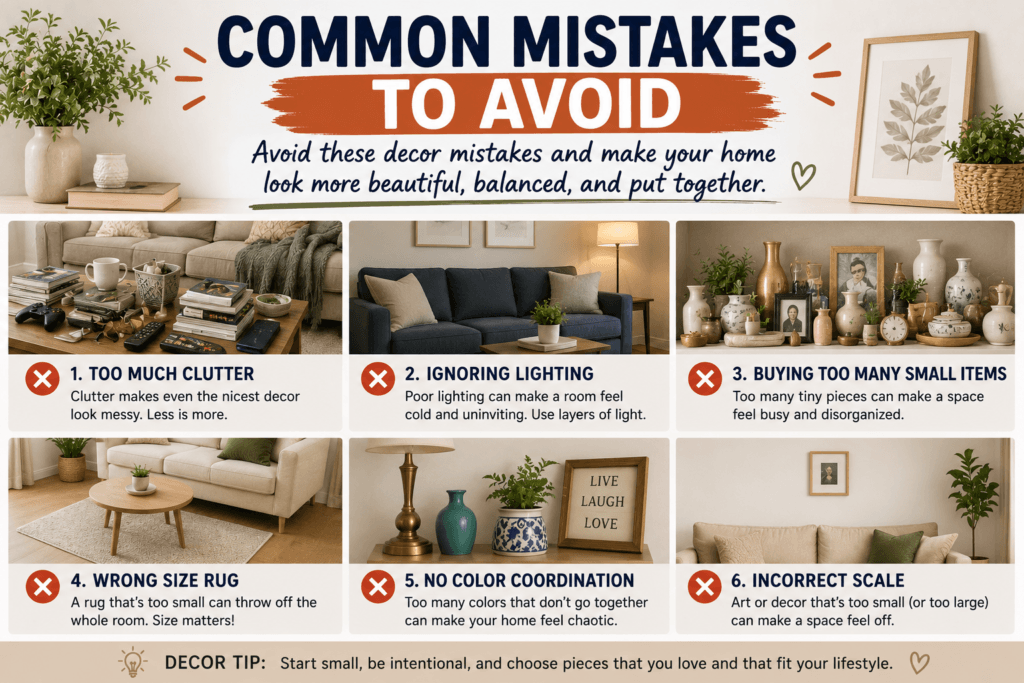
Common Mistakes to Avoid
Buying Too Much Small Decor
Tiny decor pieces can make a room feel cluttered fast. Fewer, slightly larger items usually look better.
Ignoring Lighting
Decor looks different under harsh lighting. Before buying more decor, try improving the lighting with lamps or warmer bulbs.
Choosing Pretty Over Practical
If something looks good but gets in the way every day, it’s not the right fit. Decor should make your home easier to enjoy, not harder to live in.
Forgetting Scale
A tiny picture on a large wall can look awkward. A rug that’s too small can make a living room feel unfinished.
Copying a Style That Doesn’t Fit Your Life
Some decor looks great in photos but doesn’t work with kids, pets, rentals, small apartments, or busy schedules.
Not Checking Rental Rules
Renters should check lease rules before painting, drilling, adding peel-and-stick wallpaper, or mounting heavy decor.
Quick Checklist: Budget Decor Refresh
Use this quick checklist before buying anything new:
- Clear visible clutter first
- Pick one room or corner to improve
- Check lighting
- Use what you already own
- Add texture with fabric, baskets, or rugs
- Repeat two or three colors
- Choose useful decor when possible
- Measure before buying rugs, curtains, or frames
- Check lease rules if you rent
- Avoid buying too many small decor pieces
Conclusion
Good budget decor ideas don’t have to be expensive or complicated. A tray, a lamp, a few pillow covers, better curtains, a basket, or a simple mirror can make a room feel more put together.
Start with the space that bothers you most. Clear the clutter, improve the lighting, and add one or two affordable touches that make the room feel warmer.
You don’t need a perfect home. You just need a home that feels a little more comfortable to live in.
Learn about more budget decor ideas here.