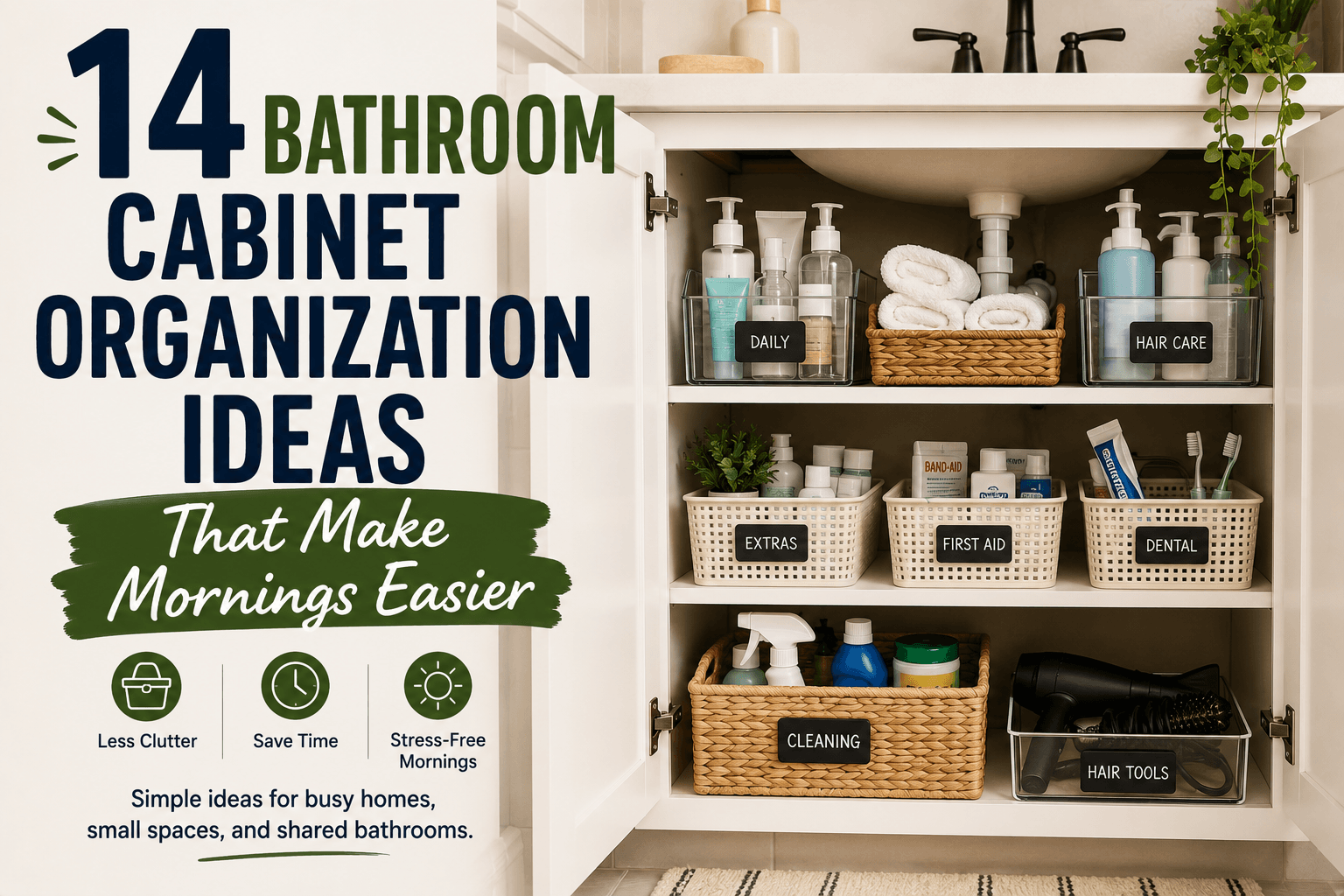
14 Bathroom Cabinet Organization Ideas That Make Mornings Easier
Bathroom cabinets can get messy in a very quiet way.
At first, it’s just an extra shampoo bottle, a few hair products, a backup toothpaste, and some cleaning supplies. Then one day you open the cabinet and everything is stacked, leaking, falling over, or hiding behind something else.
That’s where good bathroom cabinet organization ideas can make everyday life easier. You don’t need a perfect bathroom or a matching set of expensive bins. You just need simple zones so your daily items, extras, towels, medicine cabinet overflow, and cleaning supplies aren’t all fighting for the same space.
This is especially helpful in small apartments, rentals, older bathrooms with awkward cabinets, shared bathrooms, and busy family homes where everyone uses the same sink area.
The goal is not to make your cabinet look like a store shelf. The goal is to make mornings less annoying.
Table of Contents
Bathroom Cabinet Organization Ideas That Actually Work
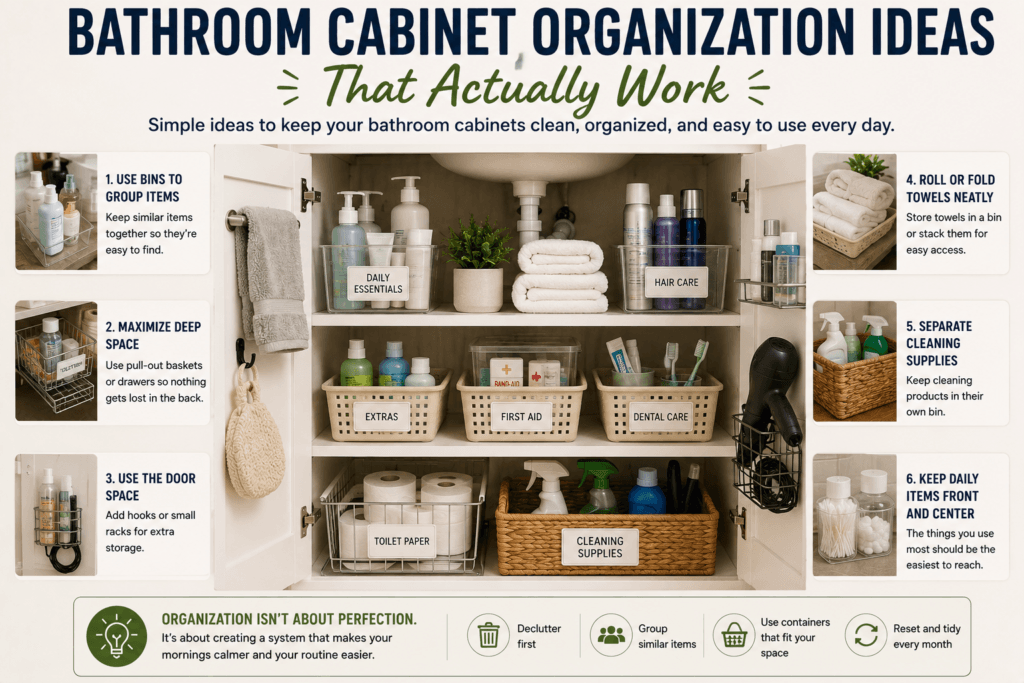
Before you organize, look at how the cabinet is used.
Is it mostly for daily skincare? Extra towels? Cleaning supplies? Hair tools? Kids’ bath items? Toilet paper? Backup products from bulk shopping?
A bathroom cabinet can hold different things in different homes. The problem starts when everything gets mixed together with no clear zones.
1. Empty the Cabinet Before Organizing
Take everything out first.
Yes, it looks worse for a few minutes. But it’s the only way to really see what’s hiding in the back.
Why it works: bathroom cabinets collect duplicates, old products, empty bottles, travel items, and things nobody uses anymore. Emptying the cabinet shows you what you actually have.
Example: You may find three half-used lotions, old sunscreen, expired medicine, dried-up nail polish, and a shampoo bottle that leaked onto the shelf.
Small warning: Don’t start this if you only have five minutes. Give yourself enough time to sort and put things back.
2. Toss Expired and Empty Products
Check dates on medicine, sunscreen, skincare, first aid items, and anything that smells or looks different than it should.
Throw away empty bottles, dried products, broken razors, old toothbrushes, and anything you know you won’t use.
Why it works: expired and empty products take up prime cabinet space and make it harder to find what you need.
Example: In a shared family bathroom, old cold medicine, travel toothpaste, and almost-empty lotion bottles can fill a whole shelf without anyone noticing.
Small warning: Dispose of medicine properly. Don’t just dump medication down the drain unless the label or local guidance says it’s okay.
3. Sort Everything by Real-Life Use
Group items by how you actually use them.
Common categories include:
- Daily skincare
- Hair care
- Dental care
- First aid
- Backup toiletries
- Cleaning supplies
- Towels or washcloths
- Kids’ bath items
- Shaving supplies
- Travel items
Why it works: categories make it easier to find things and easier to put them back.
Example: Put all dental extras together: toothpaste, floss, toothbrush heads, mouthwash, and replacement toothbrushes.
Small warning: Don’t make too many tiny categories. If the system is too detailed, nobody will keep it up.
4. Keep Daily Items in the Easiest Spot
Daily-use items should be the easiest to grab.
Put them near the front of the cabinet, in a top drawer, or in a small bin you can pull out.
Why it works: if something is used every morning, it shouldn’t be buried behind backup soap and old towels.
Example: Keep deodorant, face wash, moisturizer, hairbrush, and toothpaste in one daily basket under the sink.
Small warning: Don’t keep every product in the “daily” zone. If you use it once a week, it can go farther back.
5. Use Small Bins for Loose Toiletries
Small products fall over and disappear easily.
Use bins or baskets for items like razors, floss, cotton swabs, travel bottles, hair ties, nail tools, and backup skincare.
Why it works: bins stop small things from spreading across the cabinet floor.
Example: Use one small bin for shaving supplies and another for travel-size toiletries.
Small warning: Don’t buy bins before measuring the cabinet. Under-sink plumbing can make the space awkward.
6. Add a Pull-Out Basket if the Cabinet Is Deep
Deep bathroom cabinets are tricky because things get lost in the back.
A pull-out basket or sliding bin can help.
Why it works: instead of reaching around pipes and bottles, you can pull the whole basket forward.
Example: In an older bathroom vanity, use a sliding basket for extra shampoo, conditioner, body wash, and soap.
Small warning: Measure around pipes first. Pull-out organizers don’t fit every under-sink cabinet.
7. Keep Cleaning Products Separate
If cleaning supplies live in the bathroom cabinet, keep them in their own bin or section.
Why it works: cleaners can leak, smell strong, or create safety issues if they’re mixed with toiletries and towels.
Example: Use one labeled bin for bathroom cleaner, toilet cleaner, gloves, sponges, and microfiber cloths.
Small warning: Keep cleaners away from kids and pets. Follow product labels and never mix bleach with vinegar, ammonia, or other cleaners.
8. Use the Cabinet Door Carefully
The inside of a cabinet door can add storage for lightweight items.
Try small adhesive bins, removable hooks, or over-cabinet organizers if your space allows it.
Why it works: cabinet doors can hold small items that otherwise clutter shelves.
Example: Use a small door bin for hair ties, floss picks, cotton rounds, or a small brush.
Small warning: Adhesive products can damage cabinet finishes. Renters should check lease rules and test carefully.
9. Store Backup Products in One Zone
Backups are useful, but they can take over.
Create one backup zone for extra toothpaste, soap, shampoo, toilet paper, razors, and body wash.
Why it works: when backups are together, you can see what you have before buying more.
Example: Keep all unopened products in one bin labeled “extras” or “backups.”
Small warning: Don’t keep buying backups just because they’re on sale. Storage space is limited too.
10. Keep Hair Tools Easy but Contained
Hair dryers, curling irons, straighteners, brushes, and cords can make a cabinet messy fast.
Use a heat-safe storage method and keep cords wrapped loosely.
Why it works: hair tools are bulky and awkward. Containing them keeps them from taking over the cabinet.
Example: Use a basket for hair tools or a door organizer made for them if it fits safely.
Small warning: Let hot tools cool fully before putting them away. Don’t store hot tools near plastic bins or towels.
11. Use Clear Containers Only Where They Help
Clear containers can be useful, but they’re not always necessary.
Use them for items you need to see quickly, like first aid supplies, travel items, or backup toiletries.
Why it works: clear containers make it easier to know what’s inside without opening everything.
Example: A clear first aid bin can hold bandages, ointment, thermometer covers, and small medical supplies.
Small warning: Clear containers can still look messy if they’re packed full. Don’t overfill them.
12. Label Shared Bathroom Items
Labels help when more than one person uses the cabinet.
They can be simple: “hair,” “dental,” “extras,” “first aid,” “cleaning,” or “kids.”
Why it works: labels make it easier for everyone to put things back where they belong.
Example: In a family bathroom, label one bin for kids’ bath items and another for adult skincare.
Small warning: Don’t over-label every tiny item. Simple labels work better.
13. Leave Space for Things to Move
A cabinet packed to the edge will get messy again quickly.
Leave a little open space so items can be pulled out and put back without everything falling.
Why it works: breathing room makes the system easier to maintain.
Example: Instead of stuffing every backup bottle under the sink, keep only what fits neatly and store extras elsewhere.
Small warning: If the cabinet is always packed, the issue may be too many products, not too little organization.
14. Do a Quick Monthly Reset
Once a month, take two to five minutes to reset the cabinet.
Straighten bins, toss empty bottles, wipe leaks, check products, and move items back to their zones.
Why it works: small resets stop the cabinet from becoming a full project later.
Example: After cleaning the bathroom, open the cabinet and quickly check for empty bottles or products that got shoved into the wrong spot.
Small warning: Don’t turn every reset into a full declutter. Keep it quick so you’ll actually do it.
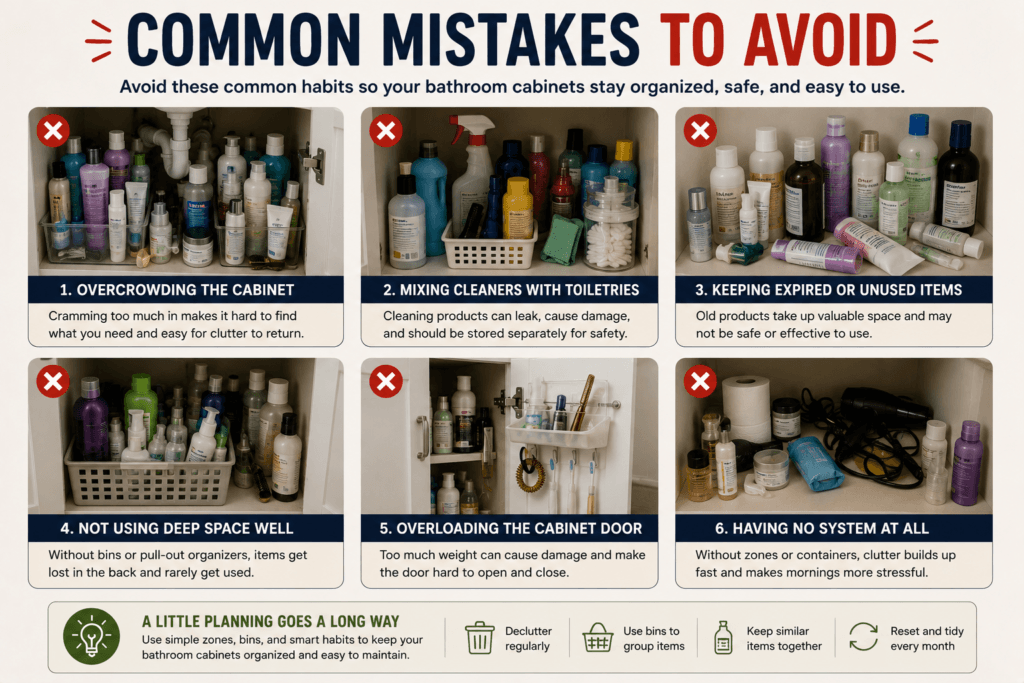
Common Mistakes to Avoid
Buying Organizers Before Sorting
Organizers should solve a real problem. Sort first, then buy only what fits and helps.
Keeping Too Many Backups
Extra products are useful, but too many can fill the whole cabinet. Keep a realistic amount.
Mixing Cleaners With Toiletries
Cleaning products should be separate, safe, and clearly contained.
Ignoring Leaks
Under-sink cabinets can hide leaks. If you see moisture, stains, soft wood, or a musty smell, deal with it quickly.
Overfilling Every Bin
A full bin is hard to use. Leave enough room to see and grab what you need.
Forgetting Rental Rules
Renters should check lease rules before adding adhesive bins, hooks, mounted organizers, or anything that could damage cabinet doors or finishes.
Quick Checklist: Bathroom Cabinet Organization
Use this when your bathroom cabinet feels messy:
- Empty the cabinet
- Toss expired or empty products
- Wipe shelves before putting things back
- Sort items by category
- Keep daily items near the front
- Use bins for small loose items
- Separate cleaning supplies
- Store backups in one zone
- Contain hair tools and cords
- Label shared items
- Leave some open space
- Check under the sink for leaks
- Reset the cabinet monthly
Conclusion
Good bathroom cabinet organization ideas don’t have to be complicated. Most cabinets work better when daily items are easy to reach, backups are in one place, cleaners are separate, and small products are contained.
Start by emptying the cabinet and tossing what you don’t use. Then build simple zones that match your real routine.
A bathroom cabinet doesn’t need to look perfect. It just needs to stop making mornings harder than they already are.