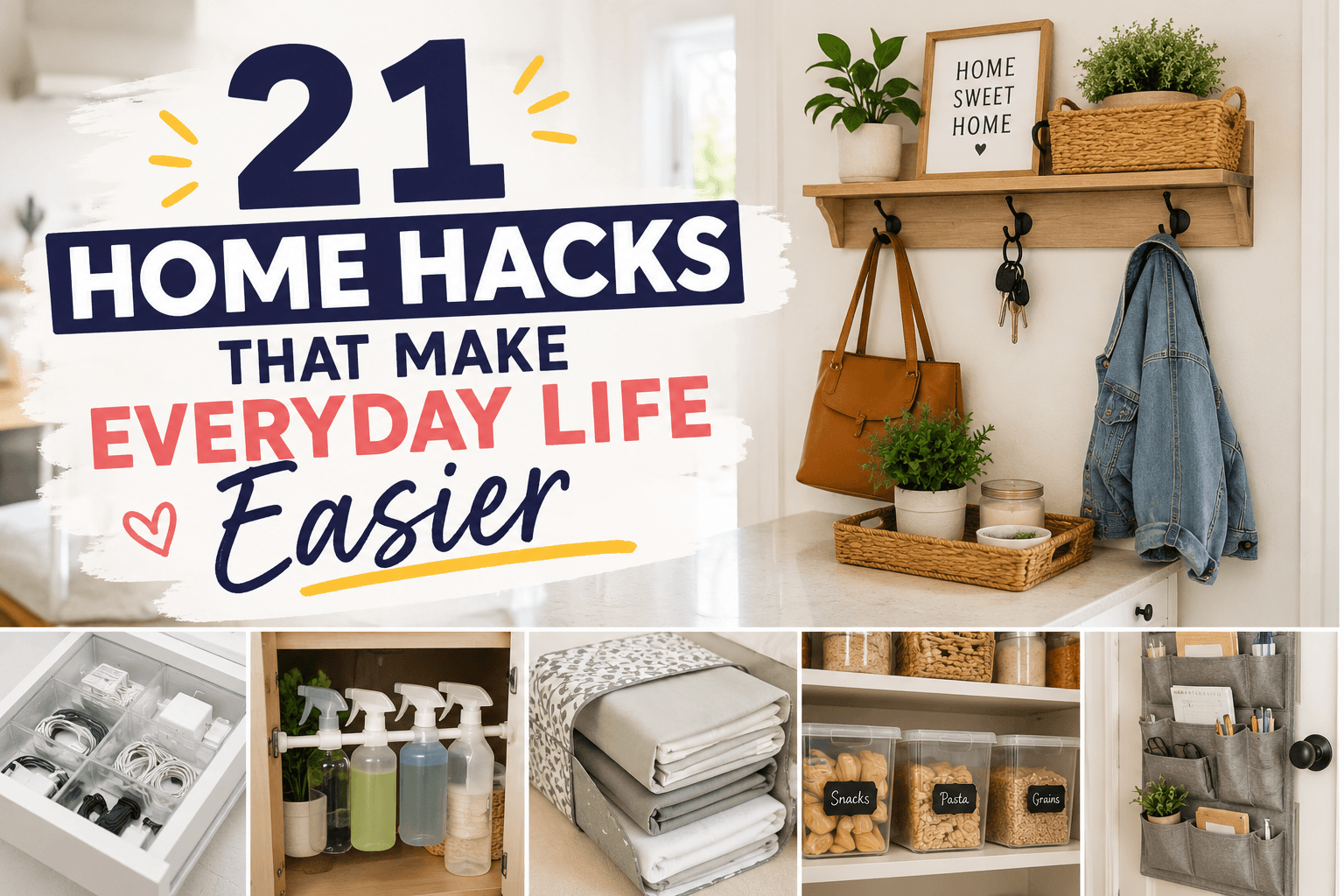
21 Home Hacks That Make Everyday Life Easier
The best home hacks aren’t the fancy ones that require a cart full of new products. They’re the little fixes that make normal daily life less annoying.
You know, the kind of stuff that helps when the kitchen counter keeps turning into a drop zone, the entryway is always full of shoes, or the bathroom never feels organized for more than two days. Most homes don’t need perfection. They need small systems that actually work on a regular Tuesday.
These household hacks are simple, affordable, and realistic for apartments, older homes, rentals, and busy family homes. Some help with storage. Some help with cleaning. Some just make your day run a little smoother.
Here are 21 practical home tips and tricks that can make your space feel easier to live in.
Table of Contents
Home Hacks That Make Everyday Life Easier
Before you start changing things around, look at where your home gets annoying every day. That’s usually where the best clever home hacks are hiding.
If shoes pile up near the door, solve that. If mail takes over the counter, solve that. If bathroom supplies disappear right when you need them, solve that.
Small changes work best when they fix a real problem.
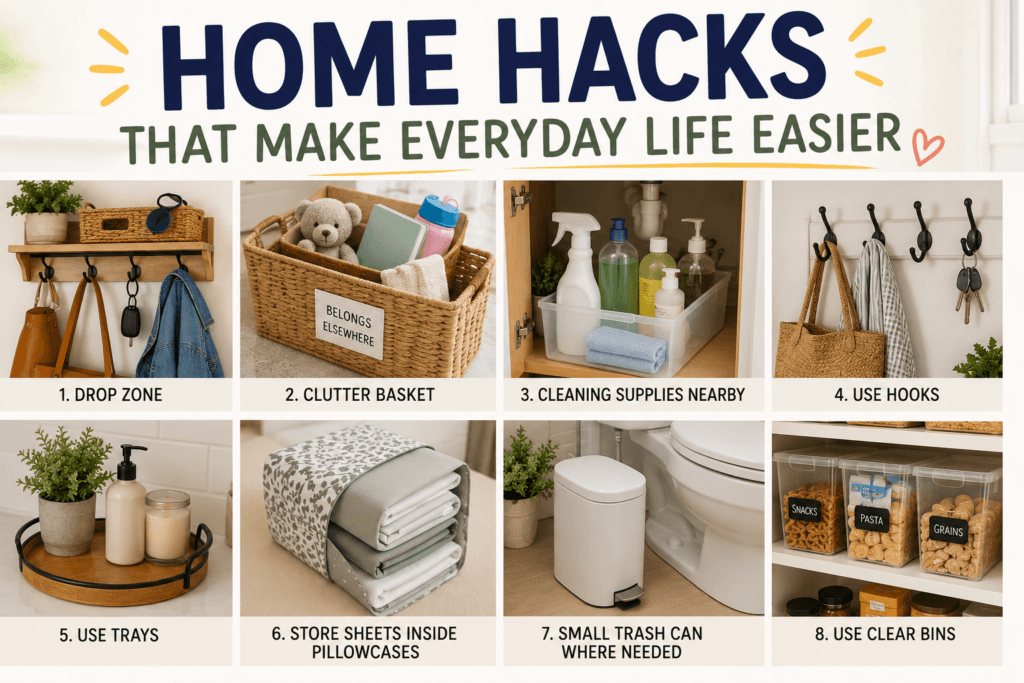
1. Create a Drop Zone Near the Door
Set up one small spot near the door for keys, wallets, sunglasses, mail, and daily grab-and-go items.
Why it works: most clutter starts where people enter the house. If there’s no obvious place to drop things, they land on the kitchen counter, dining table, or couch.
Example: In a small apartment, use a narrow wall shelf, a small bowl, and two hooks near the entry. In a family home, use a basket for each person if backpacks and school papers pile up.
Small warning: Don’t make the drop zone too big. If it has too much space, it can turn into a junk station.
2. Use a Basket for “Belongs Elsewhere” Clutter
Keep one basket in the living room or hallway for items that belong in another room.
Why it works: instead of walking back and forth all day, you collect misplaced items in one place and put them away later.
Example: Toys, socks, books, chargers, and random cups can go into the basket during a quick reset. At night, take five minutes to empty it.
Small warning: The basket is temporary. If it stays full for a week, it becomes clutter with handles.
3. Keep Cleaning Supplies Where the Mess Happens
Store basic cleaning supplies close to the area where you use them.
Why it works: if cleaning feels inconvenient, you’re less likely to do quick wipe-downs.
Example: Keep bathroom cleaner and a microfiber cloth under the bathroom sink. Keep a small dustpan near the kitchen or laundry area.
Small warning: If you have kids or pets, keep cleaners safely stored and out of reach. Always follow product labels and use ventilation when needed.
4. Add Hooks in High-Traffic Areas
Hooks are one of the easiest budget home hacks because they get things off floors and chairs.
Why it works: hanging storage is simple. People are more likely to use a hook than open a closet, find a hanger, and put something away perfectly.
Example: Add hooks for jackets near the door, towels in the bathroom, or reusable bags inside a pantry door.
Small warning: Renters should check lease rules before drilling. Adhesive hooks can work, but test them carefully and follow weight limits.
5. Use Trays to Control Counter Clutter
Put small loose items on a tray instead of letting them spread across the counter.
Why it works: a tray creates a boundary. The same items look more intentional when they’re grouped together.
Example: On a kitchen counter, use a tray for olive oil, salt, pepper, and a small utensil crock. In a bathroom, use one for lotion, perfume, and daily skincare.
Small warning: Don’t use trays as an excuse to keep everything out. If the tray is overflowing, it’s time to remove a few things.
6. Store Sheets Inside Matching Pillowcases
Fold a sheet set and store it inside one of its pillowcases.
Why it works: it keeps the whole set together, so you’re not digging through a linen closet looking for the matching pillowcase.
Example: This works especially well in older homes with small linen closets or apartments with only one hallway cabinet.
Small warning: Make sure the sheets are fully dry before storing them, or they can smell musty.
7. Put a Small Trash Can Where Trash Collects
If trash keeps showing up in the same spot, put a trash can there.
Why it works: sometimes clutter is just a missing container problem.
Example: If dryer lint and tags collect in the laundry room, add a tiny trash can. If tissues pile up near the bed during allergy season, add a small bin beside the nightstand.
Small warning: Empty small bins often. Tiny trash cans fill faster than you think.
8. Use Clear Bins for Deep Shelves
Deep shelves can hide things in the back. Clear bins help you pull items forward.
Why it works: instead of losing things behind other things, you can slide out the whole bin and see what’s inside.
Example: Use clear bins for pantry snacks, bathroom extras, kids’ craft supplies, or under-sink items.
Small warning: Measure first. A bin that’s too tall or too deep will make the shelf more annoying, not less.
9. Keep a Donation Bag in a Closet
Put one bag or box in a closet for items you’re ready to donate.
Why it works: decluttering is easier when you don’t have to make it a whole event.
Example: If a shirt doesn’t fit, a toy isn’t used anymore, or a kitchen item is a duplicate, put it straight into the donation bag.
Small warning: Don’t let donation bags sit forever. When the bag is full, put it in your car or schedule a drop-off.
10. Make a Simple Charging Station
Pick one place for chargers, cables, power banks, and devices.
Why it works: cords spread fast. A charging station keeps them from taking over every outlet.
Example: Use a small basket near an outlet in the kitchen, office, or bedroom. Label cables if your family always mixes them up.
Small warning: Don’t cover power strips with fabric or pile cords under heavy items. Keep cords in good condition and avoid overloading outlets.
11. Use Lazy Susans in Awkward Cabinets
A lazy Susan can make hard-to-reach cabinet corners more useful.
Why it works: instead of knocking over bottles to reach the one in the back, you spin the tray.
Example: Use one for oils and vinegars in the kitchen, cleaning sprays under the sink, or hair products in a bathroom cabinet.
Small warning: Don’t overload it with tall, unstable bottles. They can tip when you spin it.
12. Add Labels Only Where They Help
Labels are useful, but not everything needs one.
Why it works: labels help when containers hide what’s inside or when multiple people use the same space.
Example: Label bins for batteries, medicine extras, winter gear, pet supplies, or school supplies.
Small warning: Too many labels can make a home feel like a storage room. Use them where they solve confusion.
13. Keep a Five-Minute Reset Routine
Choose a quick daily reset that takes five minutes or less.
Why it works: small messes are easier to fix before they turn into weekend jobs.
Example: After dinner, wipe the counter, load dishes, toss trash, and put away anything that doesn’t belong in the kitchen.
Small warning: Keep it short. If your “quick reset” turns into 30 minutes, you won’t want to do it tomorrow.
14. Store Extra Bags Inside One Bag
Reusable bags, plastic bags, and tote bags can get messy fast.
Why it works: putting bags inside one larger bag keeps them contained and easy to grab.
Example: Hang one large tote in the pantry or coat closet and fold smaller bags inside it.
Small warning: Don’t save every bag forever. Keep a reasonable amount and recycle extras when possible.
15. Use Tension Rods for Small Storage Problems
Tension rods can create simple storage without drilling.
Why it works: they’re adjustable, removable, and useful in tight spaces.
Example: Use a tension rod under the sink to hang spray bottles, in a cabinet to separate cutting boards, or in a closet for lightweight scarves.
Small warning: Don’t use tension rods for heavy items. They can slip if overloaded.
16. Keep a Basic Tool Kit Easy to Reach
A small tool kit can save a lot of frustration.
Why it works: when tools are scattered around the house, tiny repairs get delayed.
Example: Keep a hammer, screwdriver, measuring tape, pliers, small level, flashlight, and extra batteries in one box.
Small warning: Store sharp tools safely, especially in homes with kids.
17. Use Washable Mats in Messy Zones
Put washable mats where dirt, water, or crumbs show up often.
Why it works: mats protect the floor and are easier to clean than the whole area.
Example: Use one by the front door, under a pet bowl, near the kitchen sink, or in a laundry area.
Small warning: Make sure mats have a safe backing so they don’t slide, especially on hard floors.
18. Make Bathroom Backups Visible
Keep extra toilet paper, soap, toothpaste, and shampoo easy to see.
Why it works: if backups are hidden, you’ll forget you have them or run out at the worst time.
Example: Use one bathroom bin labeled “extras” or place extra toilet paper in a simple basket near the toilet.
Small warning: Don’t store too many products in a humid bathroom. Some items do better in a dry closet.
19. Keep a “Last One” Shopping List
When you open the last of something, add it to a list right away.
Why it works: it prevents those annoying moments when you realize you’re out of trash bags, dish soap, or coffee filters.
Example: Keep a notepad on the fridge or use a shared phone note for household basics.
Small warning: This only works if everyone uses it. Keep the list simple.
20. Use Vertical Space Before Buying Furniture
Before buying another shelf or cabinet, look up.
Why it works: walls, doors, and tall spaces often have unused storage potential.
Example: Add over-the-door storage in a closet, wall hooks in a laundry room, or a shelf above a desk.
Small warning: Renters should check lease rules before mounting shelves. Use removable options when needed.
21. Reset One Surface Every Night
Pick one surface and clear it before bed.
Why it works: one clean surface can make the whole room feel better in the morning.
Example: Clear the kitchen counter, coffee table, bathroom vanity, or dining table. You don’t have to clean the whole house.
Small warning: Don’t choose the hardest surface every night. Start with the one that bothers you most.
Common Mistakes to Avoid
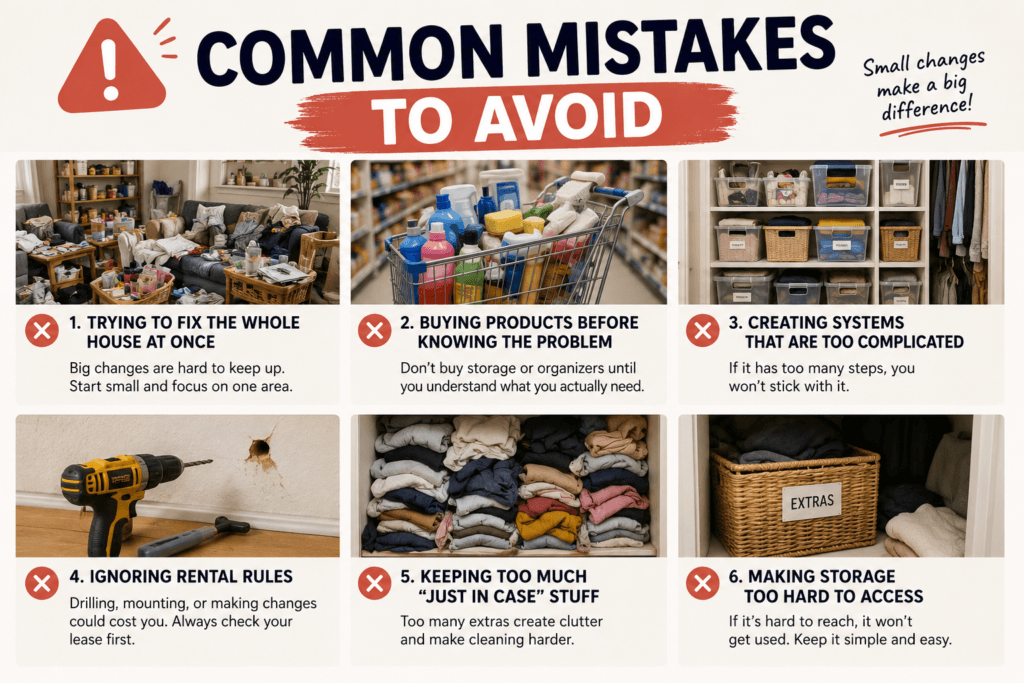
Trying to Fix the Whole House at Once
Big home resets sound nice, but they’re easy to abandon halfway through. Pick one problem area first.
Buying Products Before Knowing the Problem
A lot of easy home improvement tips don’t require buying anything. Sort, remove, and rearrange first. Then buy only what actually helps.
Creating Systems That Are Too Complicated
If a system takes too many steps, people won’t use it. Hooks, baskets, trays, and simple labels usually work better than anything too fancy.
Ignoring Rental Rules
For renters, always check lease rules before drilling holes, mounting shelves, changing fixtures, or using adhesive products that might damage paint.
Keeping Too Much “Just in Case” Stuff
Some backups are useful. Too many backups become clutter. Keep what you realistically use.
Making Storage Too Hidden
If everyday items are hard to reach, they won’t get put away. Keep daily-use items visible or easy to access.
Quick Checklist: Easy Home Hacks
Use this list when your home feels harder to manage than it should:
- Add a drop zone near the entry
- Put hooks where items pile up
- Use trays for counter clutter
- Keep a clutter basket for misplaced items
- Store cleaning supplies near the mess
- Use clear bins for deep shelves
- Keep a donation bag ready
- Create one charging station
- Add small trash cans where needed
- Use vertical space before buying furniture
- Keep backups visible
- Reset one surface at night
Conclusion
The best home hacks make everyday life feel a little less messy, a little less rushed, and a little easier to manage.
You don’t need a perfect home. You just need a few small systems that match how your home actually works. A basket where clutter collects. A hook where jackets land. A tray where bottles spread out. A quick reset before bed.
Small changes like that don’t look dramatic, but they make a real difference. And those are usually the home tips and tricks worth keeping.
Read more home hacks here.