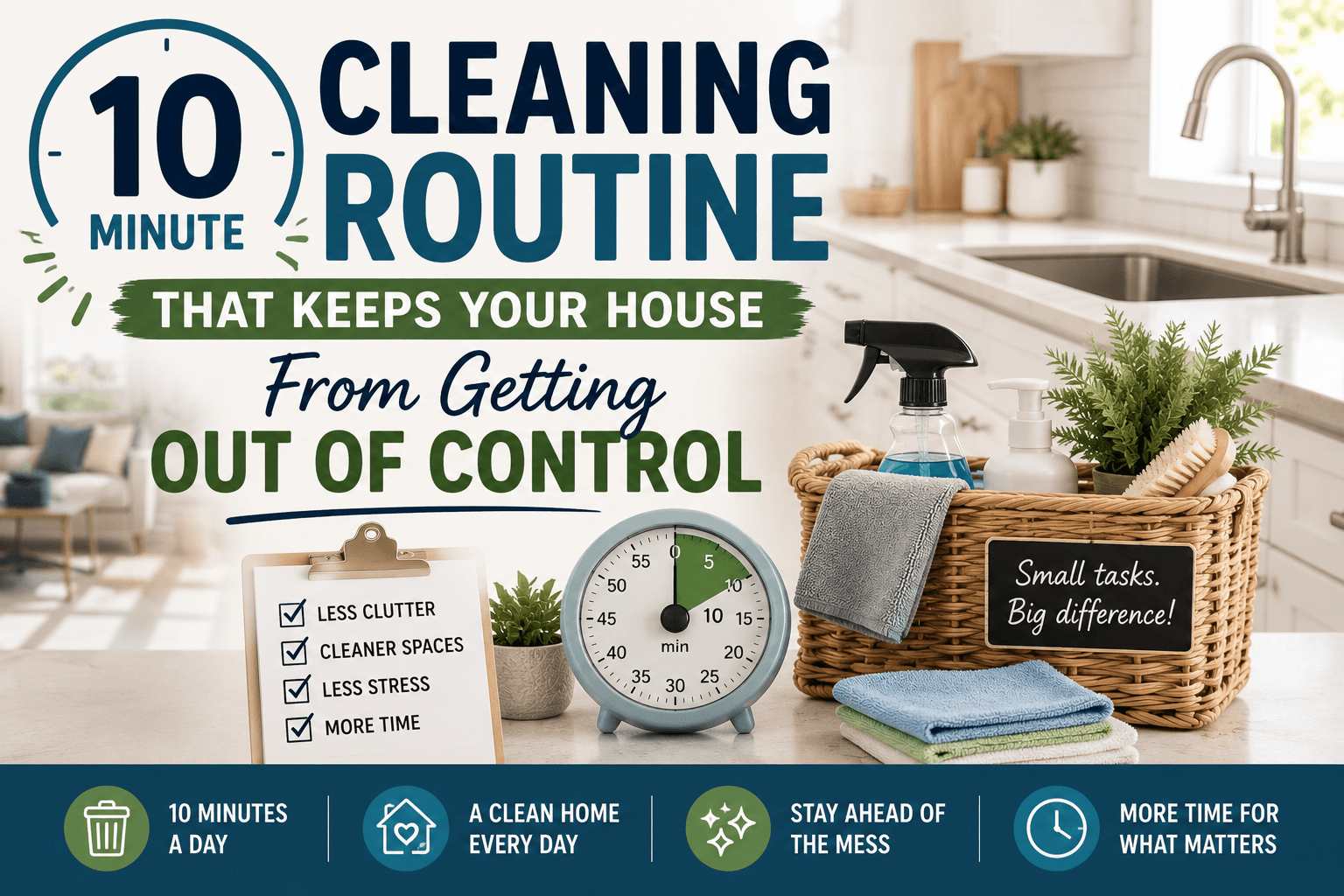
10-Minute Cleaning Routine That Keeps Your House From Getting Out of Control
A clean house doesn’t always come from big weekend cleaning sessions. Sometimes it comes from doing a few small things before the mess has time to spread.
That’s where a 10-minute cleaning routine helps. It’s not about deep cleaning every room or pretending your home will look perfect all the time. It’s about stopping the daily clutter, dishes, crumbs, and random piles from taking over.
This kind of routine works well for busy parents, renters, apartment dwellers, older homes, and regular family houses where life keeps happening. Shoes come in. Mail piles up. Counters get sticky. The bathroom sink somehow gets toothpaste on it again.
The goal is simple: spend 10 minutes doing the things that make your home feel cleaner fast, so you don’t have to constantly start from zero.
Table of Contents
10-Minute Cleaning Routine for a Home That Feels More Manageable
Before getting into the steps, set one rule: this is not a deep clean.
You’re not scrubbing baseboards, organizing closets, cleaning the oven, or sorting every drawer. You’re doing a quick daily reset. That’s what makes it easy enough to repeat.
Set a timer for 10 minutes if that helps. When the timer ends, stop. The point is to build a cleaning habit that feels doable, not another chore that eats the whole evening.
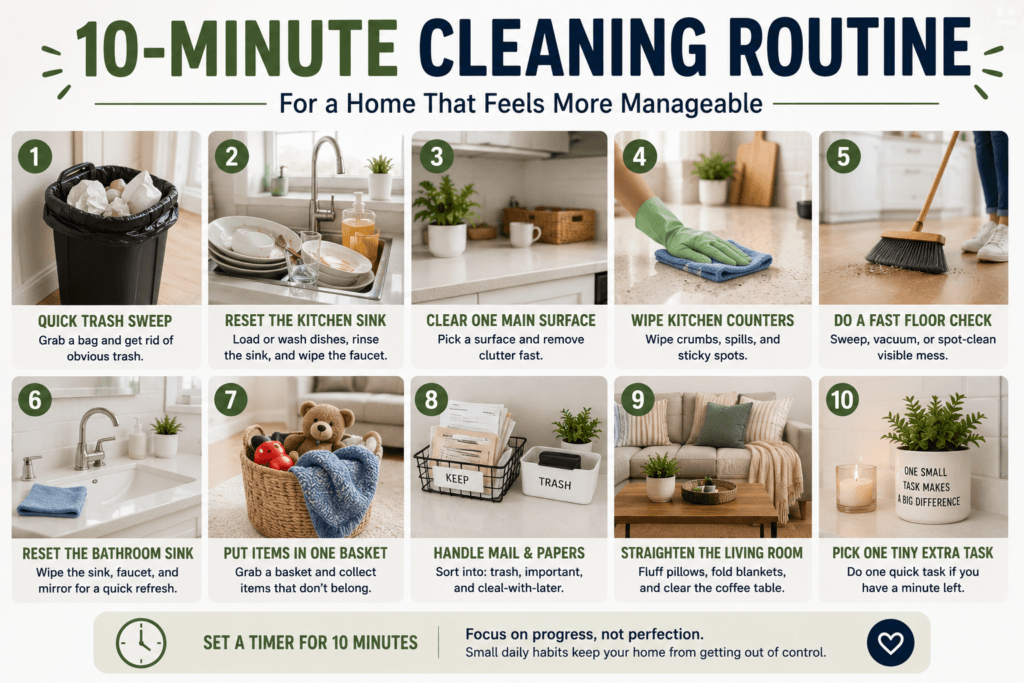
1. Start With a Quick Trash Sweep
Walk through the main areas with a trash bag or small bin.
Pick up obvious trash: food wrappers, tissues, junk mail, empty bottles, old receipts, snack packaging, and anything that clearly needs to go.
Why it works: trash makes a room feel messy even when the actual cleaning isn’t that bad. Removing it first gives you a fast visual win.
Example: In a small apartment, one coffee cup, a takeout bag, and a few wrappers can make the whole living area feel dirty. Tossing those first changes the room quickly.
Small warning: Don’t start sorting drawers, reading old papers, or organizing receipts. Trash only. Keep moving.
2. Reset the Kitchen Sink
The kitchen sink is one of those spots that can make the whole kitchen feel clean or chaotic.
Load the dishwasher, wash a few dishes, or at least stack dirty dishes neatly if you can’t finish them all. Then rinse the sink and wipe the faucet.
Why it works: dishes are one of the biggest “mess signals” in a home. Even a partial reset makes the kitchen feel more under control.
Example: If dinner dishes are too much to finish, load plates and cups first, then soak pans. That still looks better than everything spread across the counter.
Small warning: Don’t let “I can’t finish all the dishes” stop you from doing any dishes. Partial progress counts.
3. Clear One Main Surface
Pick one surface that makes the biggest difference.
Good choices include:
- Kitchen counter
- Dining table
- Coffee table
- Bathroom vanity
- Entryway table
Why it works: flat surfaces collect clutter fast. Clearing just one surface makes a room feel calmer right away.
Example: In a busy family home, the dining table might collect school papers, toys, snack bowls, and mail. Put dishes in the sink, papers in one pile, toys in a basket, and trash in the bag.
Small warning: Don’t try to perfectly organize every item during this step. Move fast and give things a temporary place if needed.
4. Wipe Kitchen Counters
Use a damp cloth or all-purpose cleaner to wipe the main kitchen counter areas.
Focus on crumbs, sticky spots, and food prep areas.
Why it works: kitchen counters are used constantly. A quick wipe makes the kitchen look and feel cleaner, even if you didn’t mop or deep clean appliances.
Example: After breakfast or dinner, wipe around the coffee maker, stove area, and food prep space. Those spots usually show the most mess.
Small warning: Always follow product labels and test cleaners on a hidden area first, especially on stone, wood, painted surfaces, or older counters. Don’t mix cleaners.
5. Do a Fast Floor Check
You don’t need to mop the whole house every day.
Look for visible crumbs, pet hair, dirt near the entryway, or sticky kitchen spots. Sweep, vacuum, or spot-clean only where needed.
Why it works: floors make a big difference in how clean a house feels. A few crumbs can make the whole kitchen feel neglected.
Example: In an apartment, focus on the entryway, kitchen walkway, and area under the dining table. Those usually get dirty first.
Small warning: Use the right cleaner for your floor type. Too much water can damage wood, laminate, and some older flooring.
6. Reset the Bathroom Sink
A bathroom can feel cleaner fast if the sink and mirror are decent.
Wipe toothpaste marks, water spots, hair, soap drips, and the faucet. If there’s time, give the mirror a quick wipe too.
Why it works: bathroom mess is usually small but very noticeable. A clean sink makes the room feel fresher between deeper cleanings.
Example: In a rental bathroom with limited storage, put daily items back in a small tray or drawer after wiping the counter.
Small warning: Don’t spray cleaner directly near outlets, switches, or light fixtures. Spray the cloth instead.
7. Put Misplaced Items in One Basket
Grab a basket, tote, or empty laundry bin and collect items that don’t belong in the room.
Why it works: walking every item back to its proper place can waste time. A basket lets you clear clutter fast and put things away later.
Example: In the living room, collect toys, socks, chargers, books, cups, and random items that belong somewhere else.
Small warning: Empty the basket later. If the basket sits full for days, it just becomes portable clutter.
8. Handle Mail and Paper Clutter
Paper clutter can make a clean room look messy.
Do a quick sort: trash, important, and deal-with-later.
Why it works: mail and papers spread fast because they seem small. One pile becomes three piles before you notice.
Example: Toss junk mail right away, put bills or important papers in one tray, and move school papers to a folder or backpack.
Small warning: Don’t start a full paperwork session during a 10-minute cleaning routine. Just stop the spread.
9. Fluff, Fold, and Straighten the Living Room
Do a quick living room reset.
Fold blankets, fluff pillows, straighten the coffee table, and remove dishes or trash.
Why it works: soft items make a room look messy when they’re twisted, crushed, or thrown around. A quick straighten-up makes the space feel more put together.
Example: If your couch always has blankets, fold one over the arm or place it in a basket. Put pillows back where they belong.
Small warning: Don’t spend too much time styling. This is a reset, not a photo shoot.
10. Pick One Tiny Extra Task
If you still have a minute or two, do one small bonus job.
Pick something quick, like:
- Wipe light switches
- Empty one small trash can
- Clean the microwave handle
- Put shoes back on the rack
- Wipe the stove top
- Shake out the entry mat
Why it works: one tiny extra task each day keeps small messes from turning into annoying jobs.
Example: On Monday, wipe bathroom switches. Tuesday, clean the fridge handle. Wednesday, empty the bedroom trash. Small things add up.
Small warning: Keep it tiny. If the task takes more than two minutes, save it for a deeper cleaning day.
Common Cleaning Mistakes to Avoid
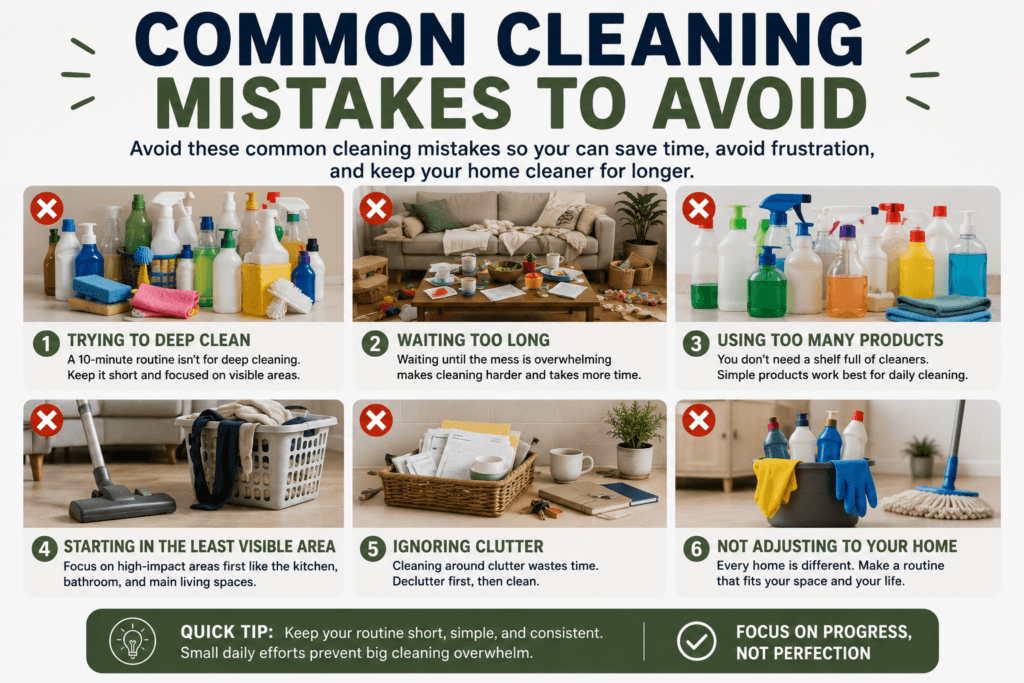
Trying to Deep Clean During a Quick Reset
A daily cleaning routine should be short. If you start scrubbing grout, organizing drawers, or cleaning the fridge, you’ll lose the habit fast.
Waiting Until the House Is Really Bad
Ten minutes works best when you do it before everything piles up. A quick daily reset is easier than a three-hour rescue mission.
Using Too Many Cleaning Products
You don’t need five sprays for a daily routine. A good all-purpose cleaner, microfiber cloth, broom, vacuum, and basic bathroom cleaner can handle most quick resets.
Always follow product labels, ventilate when needed, and never mix bleach with vinegar, ammonia, or other cleaners.
Starting With the Least Visible Area
Don’t spend your 10 minutes cleaning a closet shelf while the kitchen counter is covered. Start with what makes the home feel cleaner fastest.
Making the Routine Too Complicated
If your routine has 25 steps, you won’t do it. Keep it simple enough that you can do it tired.
Not Adjusting for Your Home
A studio apartment, older house, family home, and rental all need different routines. Focus on the mess that shows up most often in your space.
Quick Checklist: 10-Minute Cleaning Routine
Use this when you want a fast reset:
- Grab obvious trash
- Load or stack dishes
- Rinse and wipe the sink
- Clear one main surface
- Wipe kitchen counters
- Sweep or spot-clean visible floor mess
- Wipe bathroom sink
- Collect misplaced items in one basket
- Sort mail into trash, important, and later
- Fold blankets and straighten pillows
- Do one tiny bonus task if there’s time
Conclusion
A 10-minute cleaning routine won’t make your house perfect, but it can make it feel much easier to live in.
Start with the things that show the most: trash, dishes, counters, sinks, floors, paper clutter, and the living room reset. Do those regularly, and your home won’t feel like it’s constantly getting away from you.
The trick is keeping it simple. Ten minutes. Visible areas. Small wins. That’s enough to make a normal home feel a lot more manageable.
Find more interesting cleaning hacks here.