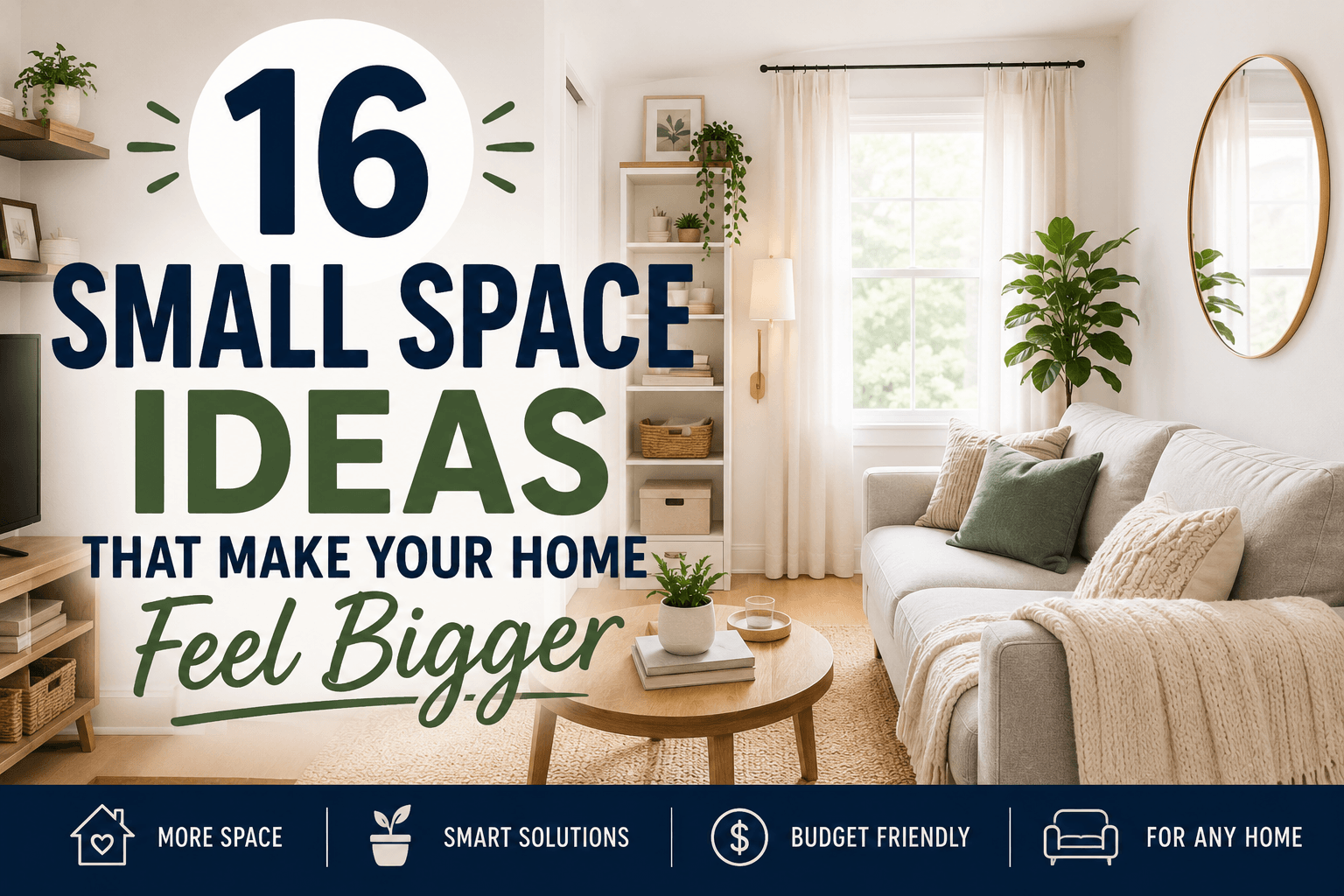
16 Small Space Ideas That Make Your Home Feel Bigger
Small homes can be cozy, but they can also feel crowded fast. One chair in the wrong spot, one overstuffed shelf, or one dark corner can make the whole room feel tighter than it really is.
That’s why good small space ideas are less about buying tiny furniture and more about using the space you already have better. A small apartment, rental, older home, or shared family space can feel bigger when it’s easier to move through, easier to clean, and less visually busy.
You don’t need a full makeover. You don’t need custom built-ins. And you definitely don’t need to throw out everything you own. Most small spaces just need better zones, smarter storage, lighter surfaces, and fewer things fighting for attention.
Here are 16 practical small space ideas that can make your home feel more open, useful, and calm without spending a lot.
Table of Contents
Small Space Ideas That Make Your Home Feel Bigger
Before adding storage or buying furniture, look at the room and ask: what is making this space feel smaller?
Sometimes it’s too much furniture. Sometimes it’s poor lighting. Sometimes it’s a pile of shoes by the door or a coffee table covered with random stuff. The best small space solutions fix the thing that makes daily life harder.
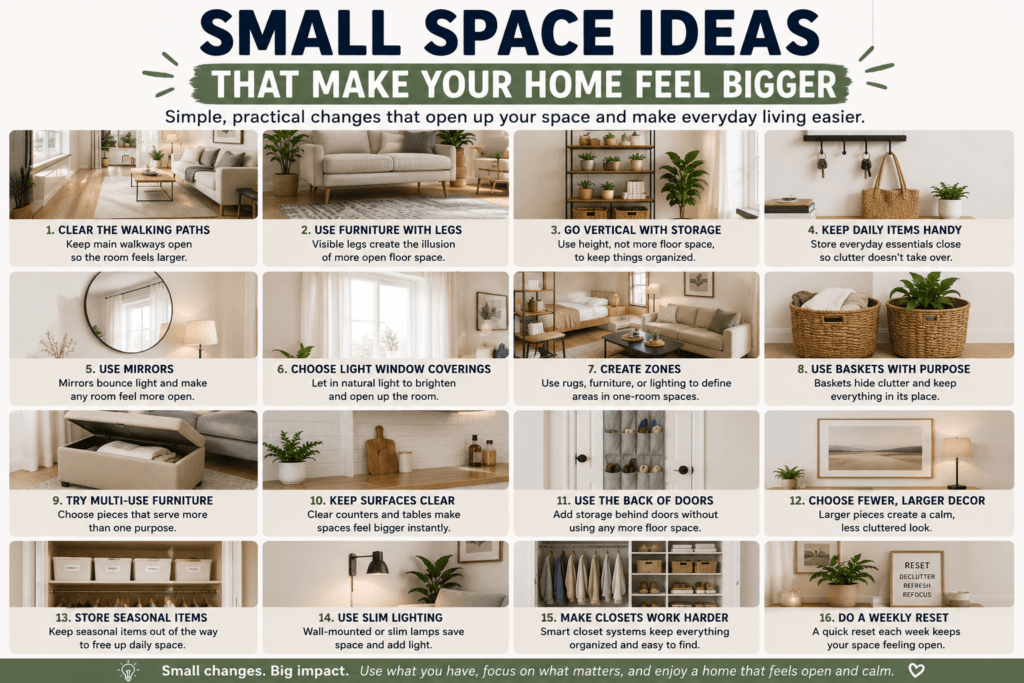
1. Clear the Walking Paths First
Start with the areas where people walk.
Move shoes, baskets, side tables, toys, cords, and furniture out of the main path through the room.
Why it works: when you can move easily through a space, it feels bigger. A blocked path makes even a decent-sized room feel cramped.
Example: In a small apartment living room, make sure there’s a clear path from the front door to the couch and kitchen. If a basket or chair is always in the way, it needs a better spot.
Small warning: Don’t push every piece of furniture against the wall just to open the middle. Sometimes a better layout matters more than empty floor space.
2. Use Furniture With Visible Legs
Furniture that sits off the floor can make a room feel lighter.
Look for sofas, chairs, TV stands, nightstands, and benches with legs instead of solid bases.
Why it works: when you can see more floor, the room feels more open.
Example: A small living room may feel less crowded with a raised TV stand instead of a bulky cabinet that goes all the way to the floor.
Small warning: If you need hidden storage, a solid cabinet may still be useful. Don’t choose style over function if you’re short on storage.
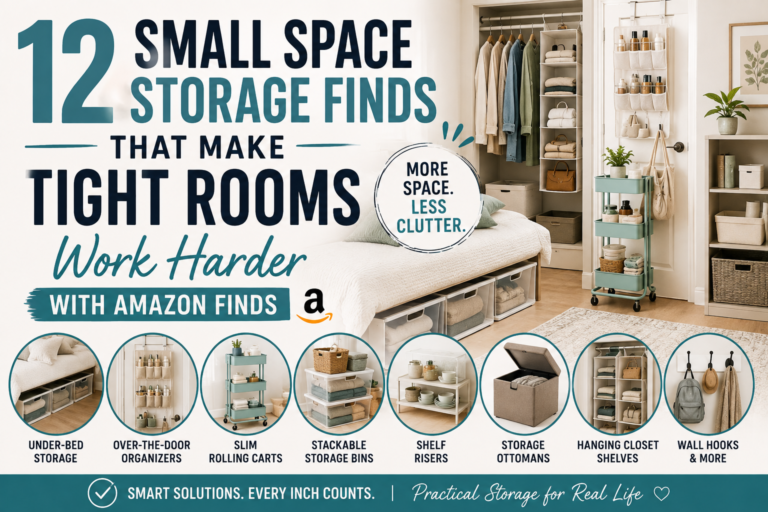
3. Choose Storage That Goes Vertical
Use height instead of spreading storage across the floor.
Try tall bookshelves, wall shelves, over-the-door organizers, stacked bins, or tall narrow cabinets.
Why it works: small rooms usually don’t have extra floor space, but walls are often underused.
Example: In a small bedroom, a tall narrow shelf can hold books, baskets, and extra items without taking up as much floor space as a wide dresser.
Small warning: Renters should check lease rules before mounting shelves. Tall furniture should be anchored safely, especially in homes with kids or pets.
4. Keep Daily Items Easy to Reach
Small spaces get messy fast when everyday items are hard to put away.
Keep keys, shoes, chargers, bags, cleaning supplies, and daily clothes in easy spots.
Why it works: if storage is too annoying to use, things end up on counters, floors, and chairs.
Example: In a studio apartment, use one small entry basket for keys and sunglasses, plus a simple shoe rack near the door.
Small warning: Don’t keep everything out “for convenience.” Only daily items should be easy-access. Extras need storage.
5. Use Mirrors to Bounce Light
Mirrors can make a room feel brighter and more open.
Place a mirror across from a window, near a dark hallway, or above a small console table.
Why it works: mirrors reflect light and create the feeling of more depth.
Example: In a narrow apartment entryway, a mirror above a slim table can make the area feel less closed in.
Small warning: Mount mirrors safely. Heavy mirrors need proper hardware. Renters should avoid drilling unless allowed.
6. Pick Lighter Curtains or Simple Window Coverings
Heavy curtains can make small rooms feel darker.
Try light-filtering curtains, simple panels, or blinds that let in natural light while still giving privacy.
Why it works: natural light makes small spaces feel less cramped.
Example: In a small bedroom, light curtains can soften the room without blocking too much daylight.
Small warning: If privacy is a concern, especially on a ground floor, choose curtains or shades that give coverage while still allowing some light.
7. Create Zones in One-Room Spaces
Small apartments and studios often need one room to do several jobs.
Use rugs, furniture placement, shelves, or lighting to create zones for sleeping, working, eating, and relaxing.
Why it works: zones make a multi-use space feel more organized and less chaotic.
Example: In a studio, a rug under the couch can define the living area, while a small desk lamp creates a work zone in a corner.
Small warning: Don’t divide the room with bulky furniture if it blocks light or walking space.
8. Use Baskets With a Real Purpose
Baskets can help small spaces, but only when they have a job.
Use them for blankets, toys, shoes, pet items, mail, or extra pillows.
Why it works: baskets hide visual clutter while adding texture.
Example: In a family living room, one basket for toys and one basket for blankets can make the room easier to reset at night.
Small warning: Too many baskets become clutter too. If every corner has a basket full of random stuff, the system isn’t working.
9. Try Furniture That Does Double Duty
Choose pieces that serve more than one purpose.
Think storage ottomans, benches with cubbies, nesting tables, sleeper sofas, or a desk that can also work as a vanity.
Why it works: double-duty furniture reduces the number of pieces you need.
Example: In a small apartment, a storage ottoman can hold blankets and also work as a coffee table or extra seat.
Small warning: Don’t buy multi-purpose furniture that doesn’t actually fit your life. A storage bench is only helpful if you’ll use the storage.
10. Keep Surfaces Mostly Clear
Flat surfaces collect clutter fast in small homes.
Try to keep counters, nightstands, dressers, and coffee tables mostly clear, with only a few useful or decorative items.
Why it works: clear surfaces make a room look calmer and easier to clean.
Example: On a tiny kitchen counter, keep only the coffee maker, a utensil crock, and maybe one tray. Store extras in cabinets if possible.
Small warning: Don’t make the space so empty that it becomes annoying to use. Keep what you actually need.
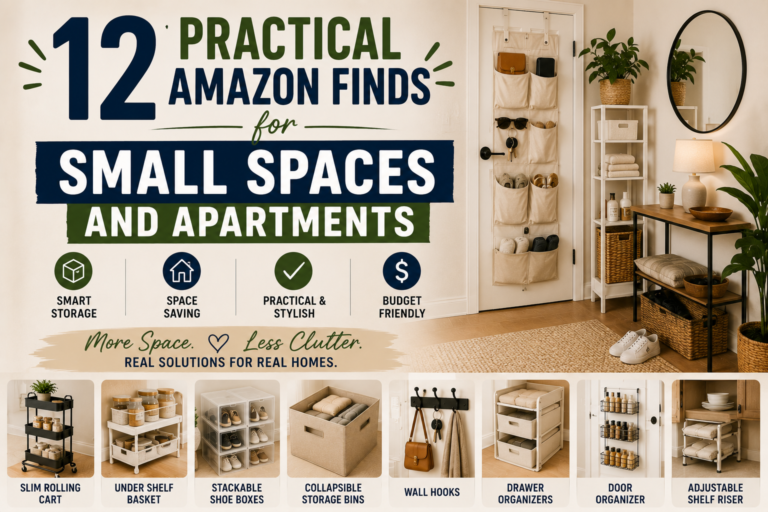
11. Use the Backs of Doors
Doors are useful storage space, especially in rentals.
Use over-the-door organizers for shoes, cleaning supplies, toiletries, accessories, pantry items, or kids’ items.
Why it works: door storage adds function without taking up floor space.
Example: In a small bathroom, an over-the-door organizer can hold hair tools, extra soap, lotion, and towels.
Small warning: Make sure the door still closes properly. Add felt pads if hooks scratch the door.
12. Choose Fewer, Larger Decor Pieces
Lots of tiny decor pieces can make a small room feel busy.
Choose fewer pieces with more impact: one larger mirror, one good lamp, one larger wall print, or one nice plant.
Why it works: small items create visual noise. Bigger simple pieces feel calmer.
Example: Instead of five tiny frames on a small wall, try one medium-sized print above a desk or couch.
Small warning: Don’t go too large for the wall or furniture. Scale still matters.
13. Store Seasonal Items Out of the Way
Seasonal items take up space you need for daily life.
Move winter coats, holiday decor, extra blankets, or summer gear to higher shelves, under-bed storage, or labeled bins.
Why it works: daily-use areas should hold daily-use items. Seasonal stuff doesn’t need prime space.
Example: In a small closet, put winter scarves and gloves in one bin on the top shelf during summer.
Small warning: Don’t store heavy bins overhead. Keep heavier items lower for safety.
14. Use Wall-Mounted or Slim Lighting
Small rooms need good lighting, but lamps can take up surface space.
Try slim floor lamps, plug-in wall sconces, battery lights, or clip-on lights.
Why it works: better lighting makes a room feel bigger and more comfortable without adding bulky furniture.
Example: In a small bedroom, a plug-in wall light beside the bed can free up space on a tiny nightstand.
Small warning: Renters should check rules before installing anything. Avoid running cords where people can trip.
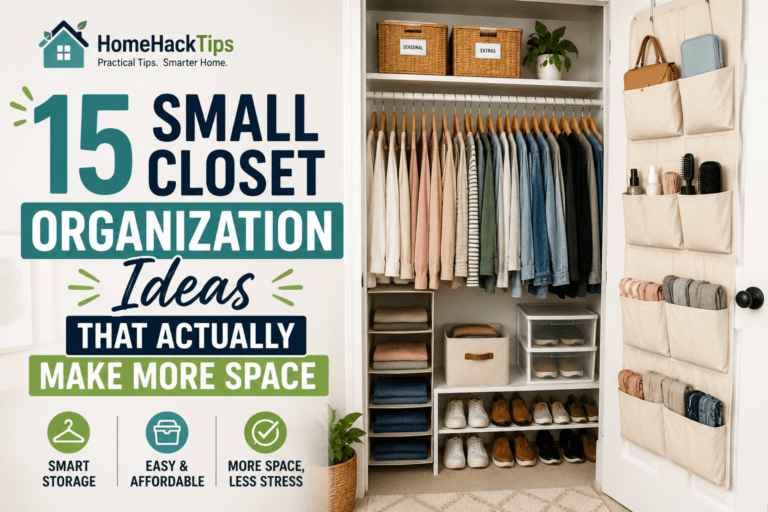
15. Make Closets Work Harder
Small spaces need closets that are easy to use.
Add shelf dividers, a second hanging rod, slim hangers, shoe storage, or bins for loose items.
Why it works: if the closet works well, fewer things end up sitting out in the room.
Example: In a small bedroom closet, use slim hangers and a small shoe rack to keep the floor from turning into a pile.
Small warning: Don’t buy closet organizers before decluttering. Organizing stuff you don’t use just wastes space.
16. Do a Weekly Small-Space Reset
Small spaces need regular resets because clutter shows quickly.
Spend 10–15 minutes once a week putting things back, clearing surfaces, emptying baskets, and removing items that don’t belong.
Why it works: small messes are easier to fix before they take over.
Example: On Sunday night, reset the entryway, coffee table, kitchen counter, and bedroom chair. Those spots usually collect the most stuff.
Small warning: Don’t turn the reset into a huge cleaning day. Keep it short so it feels doable.
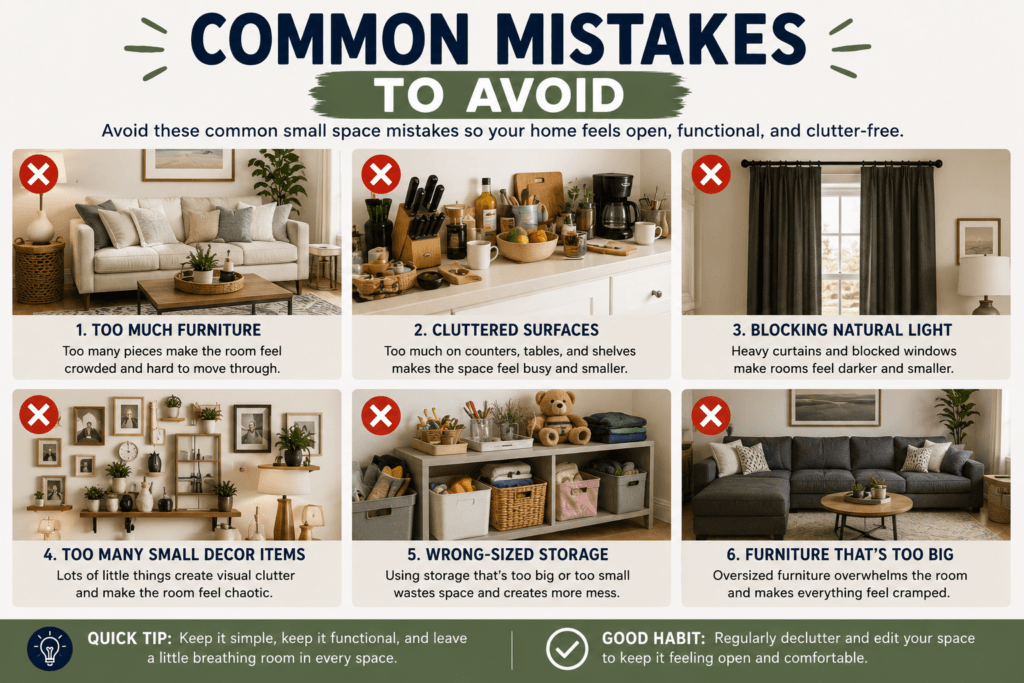
Common Mistakes to Avoid
Buying Storage Before Decluttering
Storage helps only after you remove what you don’t use. Otherwise, you’re just storing clutter more neatly.
Using Too Much Small Decor
Tiny items can make small rooms feel crowded. Choose fewer pieces that actually add warmth or function.
Blocking Natural Light
Dark rooms feel smaller. Avoid heavy curtains, tall furniture in front of windows, or cluttered windowsills.
Ignoring Walking Paths
If you’re always stepping around furniture or piles, the space will feel cramped no matter how nice it looks.
Keeping Daily Items Too Hidden
If something is used every day, make it easy to reach and easy to put away.
Buying Furniture That’s Too Big
Measure before buying. A couch, table, or shelf that almost fits can still make a room hard to use.
Quick Checklist: Small Space Reset
Use this when a room feels cramped:
- Clear the main walking path
- Remove items that don’t belong
- Open curtains or improve lighting
- Clear the biggest visible surface
- Use vertical storage where possible
- Keep daily items easy to reach
- Move seasonal items out of prime space
- Use baskets only for specific categories
- Check if furniture is too bulky
- Leave some breathing room on shelves and surfaces
Conclusion
Good small space ideas don’t have to be complicated. Most of the time, making a small home feel bigger comes down to clearer paths, better storage, more light, and fewer things sitting out.
Start with one room or one problem spot. Clear the floor, fix the lighting, use vertical space, and make daily items easier to put away.
A small home may never feel huge, and that’s okay. It just needs to feel easier to live in.