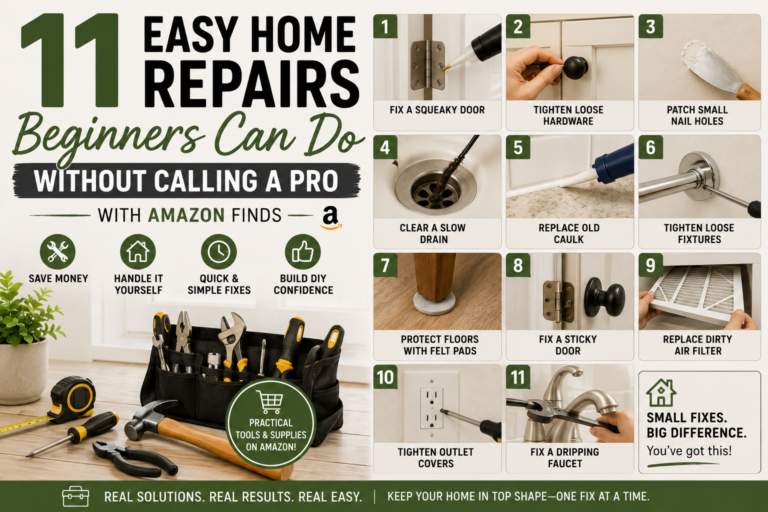

11 Easy Home Repairs Beginners Can Do Without Calling a Pro
Not every little home problem needs a professional. Some things are simple enough to fix with basic tools, a little patience, and a few minutes of focus.
These easy home repairs for beginners are the kinds of small fixes that make a house or apartment feel more cared for. A loose cabinet handle. A squeaky door. A wobbly chair. A clogged sink drain that just needs the obvious gunk removed. Nothing too scary, nothing that requires opening walls, and nothing that should put your safety at risk.
This is the kind of beginner DIY that actually builds confidence. You fix one small thing, then suddenly the next small thing feels less intimidating.
A quick safety note before starting: if a repair involves electrical wiring, gas lines, plumbing inside walls, roof work, structural damage, mold, major leaks, or anything that feels unsafe, stop and call a professional. For renters, always check your lease before drilling, replacing fixtures, or making changes that could affect your deposit.
Table of Contents
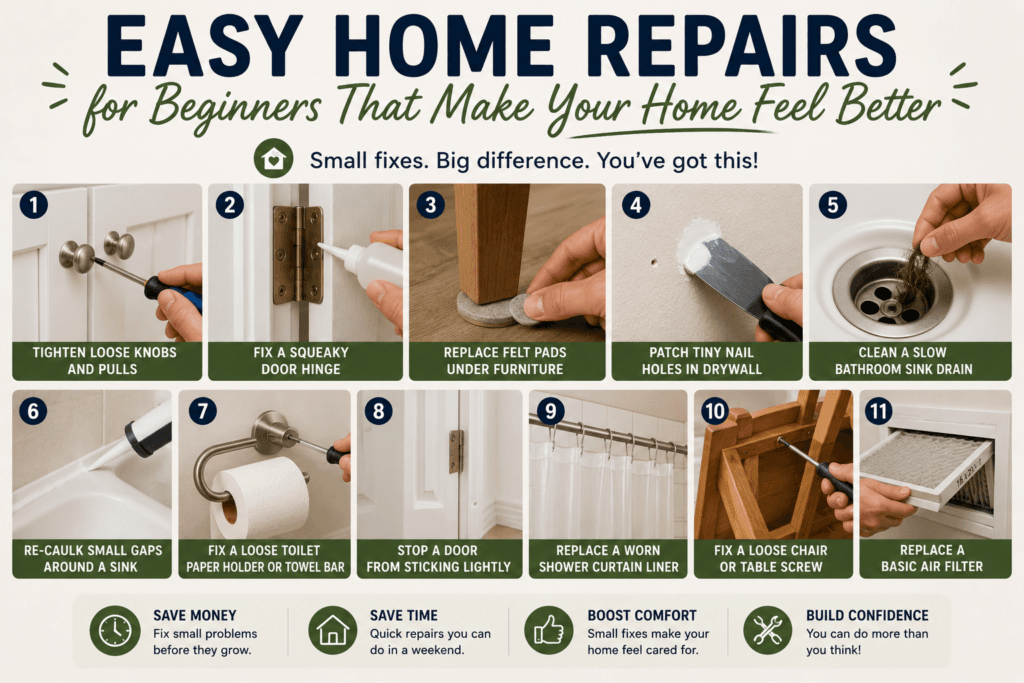
Easy Home Repairs for Beginners That Make Your Home Feel Better
The best beginner repairs are small, visible, and low-risk.
Don’t start with something complicated just because it looks impressive. Start with the small problem you notice every day. The loose handle you keep ignoring. The door that squeaks at night. The bathroom sink that drains slowly. These little fixes can make a normal home feel cleaner and easier to live in.
1. Tighten Loose Cabinet Knobs and Drawer Pulls
Check kitchen cabinets, bathroom vanities, dressers, nightstands, and storage furniture for loose knobs or handles.
Use a screwdriver to tighten the screws from the inside of the drawer or cabinet door.
Why it works: loose hardware makes cabinets feel old and annoying, even when nothing is really broken. Tightening it is one of the fastest easy DIY fixes.
Example: In an older kitchen, a drawer pull that wiggles every time you open it can make the whole cabinet feel cheap. A quick tighten may fix it in under a minute.
Small warning: Don’t overtighten. If the cabinet is particleboard or older wood, too much pressure can strip the hole.
2. Fix a Squeaky Door Hinge
A squeaky door is usually caused by friction in the hinge.
Apply a small amount of household lubricant to the hinge pin area. Open and close the door a few times, then wipe away extra product.
Why it works: lubricant reduces friction, which stops the hinge from making noise.
Example: Bedroom, bathroom, pantry, and laundry room doors are common squeaky spots because they get opened all day.
Small warning: Use only a small amount. Too much lubricant can drip down the door trim or onto the floor.
3. Replace Old Felt Pads Under Furniture
Flip chairs, stools, small tables, and furniture legs to check the pads underneath.
If they’re missing, dirty, flat, or peeling off, replace them with new felt pads.
Why it works: felt pads protect floors, reduce noise, and make furniture easier to move.
Example: In an apartment with hard floors, replacing old pads under dining chairs can reduce scraping sounds and help prevent marks.
Small warning: Clean the bottom of the furniture leg before sticking on a new pad. Dust and dirt can stop it from sticking well.
4. Patch Tiny Nail Holes in Drywall
Small nail holes from picture frames are usually easy to patch.
Use lightweight spackle, a putty knife or plastic card, and a small sanding sponge once it dries. If needed, touch up with matching paint.
Why it works: tiny holes make walls look unfinished, especially in hallways, bedrooms, or rental spaces.
Example: If you moved a picture frame and left three tiny holes behind, a quick patch can make the wall look much cleaner.
Small warning: Renters should check lease rules before patching or painting. Also, larger holes or damaged drywall may need a different repair method.
5. Clean a Slow Bathroom Sink Drain
If a bathroom sink drains slowly, the problem is often hair, soap residue, or buildup near the drain.
Remove visible hair and gunk from the drain area. A simple drain cleaning tool can help pull out hair near the top.
Why it works: slow drains often happen because buildup collects right where water needs to pass through.
Example: In a family bathroom, hair and toothpaste residue can slow the sink over time. Clearing the top of the drain may help quickly.
Small warning: Be careful with chemical drain cleaners. Follow labels exactly, use ventilation, and never mix drain cleaners with other products. If the clog is serious or keeps coming back, call a plumber or tell your landlord.
6. Re-Caulk Small Gaps Around a Sink
Old caulk around a bathroom or kitchen sink can crack, peel, or look dirty.
Remove loose old caulk, clean and dry the area, then apply a thin line of kitchen-and-bath caulk.
Why it works: fresh caulk creates a cleaner edge and helps keep water from getting into small gaps.
Example: Around a bathroom sink, replacing cracked caulk can make the whole vanity area look fresher.
Small warning: Don’t caulk over mold, soft drywall, or water damage. That only hides the problem. Use ventilation and follow the caulk label.
7. Fix a Loose Toilet Paper Holder or Towel Bar
Loose bathroom hardware is common, especially in rentals and older homes.
Check the small set screw underneath the holder or bracket. Sometimes it just needs tightening with a small screwdriver or Allen key.
Why it works: many bathroom holders get loose from daily use, not because they’re fully broken.
Example: If the toilet paper holder wiggles every time you use it, check for a tiny screw on the bottom before assuming it needs replacing.
Small warning: If the wall anchor is pulled out or the drywall is damaged, it may need a proper anchor repair. Renters should ask before drilling new holes.
8. Stop a Door From Sticking Lightly
If a door sticks a little, first check the hinges.
Tighten the hinge screws and see if the door sits better. Sometimes a loose hinge makes the door rub against the frame.
Why it works: doors can shift over time, especially in older homes or humid areas. Tightening hinge screws can improve the fit.
Example: A bedroom door that rubs near the top may just have a loose upper hinge.
Small warning: Don’t start sanding or cutting the door unless you know what you’re doing. If the sticking is serious, seasonal, or caused by swelling, it may need a better repair.
9. Replace a Worn Shower Curtain Liner
This isn’t a fancy repair, but it makes a bathroom feel much cleaner.
If the liner is stained, stiff, mildewed, or impossible to clean, replace it or wash it if the label allows.
Why it works: a dirty liner can make the whole bathroom feel gross, even after cleaning the sink and tub.
Example: In a small rental bathroom, a fresh white liner and clean shower curtain can make the room feel brighter right away.
Small warning: If there’s mold on walls, grout, or caulk, don’t ignore it. A new liner won’t fix a moisture problem.
10. Fix a Loose Chair or Table Screw
Check chairs, stools, small tables, and bed frames for loose screws or bolts.
Tighten them with the correct screwdriver, wrench, or Allen key.
Why it works: furniture loosens with regular use. Tightening it early can prevent wobbling from getting worse.
Example: A dining chair that wiggles slightly may just need the leg bolts tightened underneath.
Small warning: Don’t sit or stand on furniture that feels unstable. If tightening doesn’t help, the joint may need a real repair or replacement.
11. Replace a Basic Air Filter
If your home has a replaceable HVAC filter, check whether it needs changing.
Look at the filter size printed on the side, buy the same size, and follow the airflow arrow when installing.
Why it works: a clean filter helps airflow and keeps dust from building up as quickly.
Example: In a family home with pets, filters may get dirty faster than expected. Checking them regularly can help the house feel less dusty.
Small warning: Follow your HVAC system instructions. If you rent, ask your landlord or property manager who is responsible for filter replacement.
Common Mistakes to Avoid
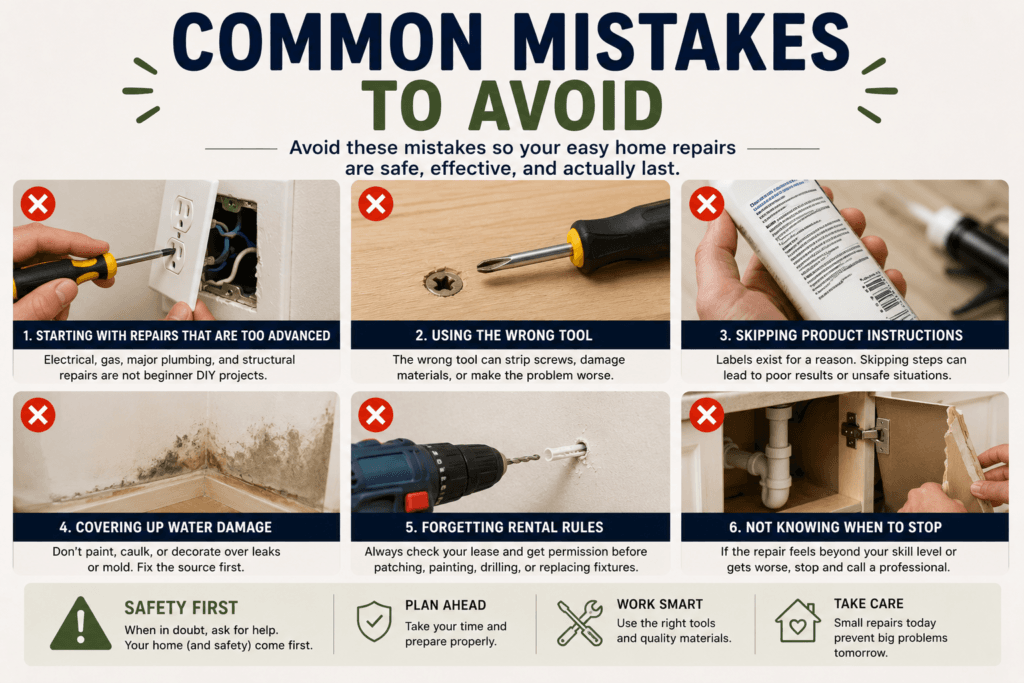
Starting With Repairs That Are Too Advanced
Don’t begin with electrical wiring, major plumbing, tile removal, structural repairs, or anything involving gas. Start small and safe.
Using the Wrong Tool
A screwdriver that doesn’t fit can strip screws. The wrong anchor can fail. The wrong caulk can peel. Match the tool and product to the job.
Skipping Product Instructions
Read labels for caulk, spackle, adhesives, lubricants, cleaners, and filters. A lot of small repair problems happen because people rush the instructions.
Covering Up Water Damage
Don’t paint, caulk, or decorate over leaks, mold, soft walls, or musty smells. Find the source first.
Forgetting Rental Rules
Renters should check lease rules before patching, painting, drilling, replacing hardware, or making changes to fixtures.
Not Knowing When to Stop
A good DIY habit is knowing when something is beyond a beginner repair. If the problem gets worse, stop and call someone qualified.
Quick Checklist: Beginner Home Repair Kit
A small repair kit can handle many basic jobs:
- Screwdriver set
- Allen keys
- Hammer
- Measuring tape
- Small level
- Pliers
- Utility knife
- Lightweight spackle
- Putty knife
- Sanding sponge
- Felt furniture pads
- Painter’s tape
- Flashlight
- Work gloves
- Safety glasses
Keep everything in one small box or bag so you’re not hunting for tools every time something gets loose.
Conclusion
These easy home repairs for beginners are small, practical fixes that can make a real home feel more comfortable and better cared for.
Start with the simple stuff. Tighten a handle. Quiet a squeaky door. Patch a tiny nail hole. Replace old felt pads. Clean a slow drain before it becomes a bigger headache.
You don’t need to become a professional. You just need a few basic skills, the right safety habits, and the confidence to fix the little things before they pile up.