

17 Budget Living Room Decor Ideas That Look Good Without Spending Much
A living room can feel unfinished for a lot of small reasons.
Maybe the couch looks plain. Maybe the coffee table is always messy. Maybe the walls feel empty, the lighting feels harsh, or the whole room just looks like furniture was placed there and nothing else happened after that.
That’s where budget living room decor ideas can help. You don’t need a new sofa, a designer rug, or a huge shopping trip to make your living room feel warmer and more put together. A few affordable changes can make a normal apartment, rental, older home, or family living room feel much better.
The trick is not buying random decor just because it’s cute. It’s choosing small updates that solve the reason the room feels off.
Here are 17 simple, realistic ways to decorate your living room on a budget.
Table of Contents
Budget Living Room Decor Ideas That Make a Room Feel Finished
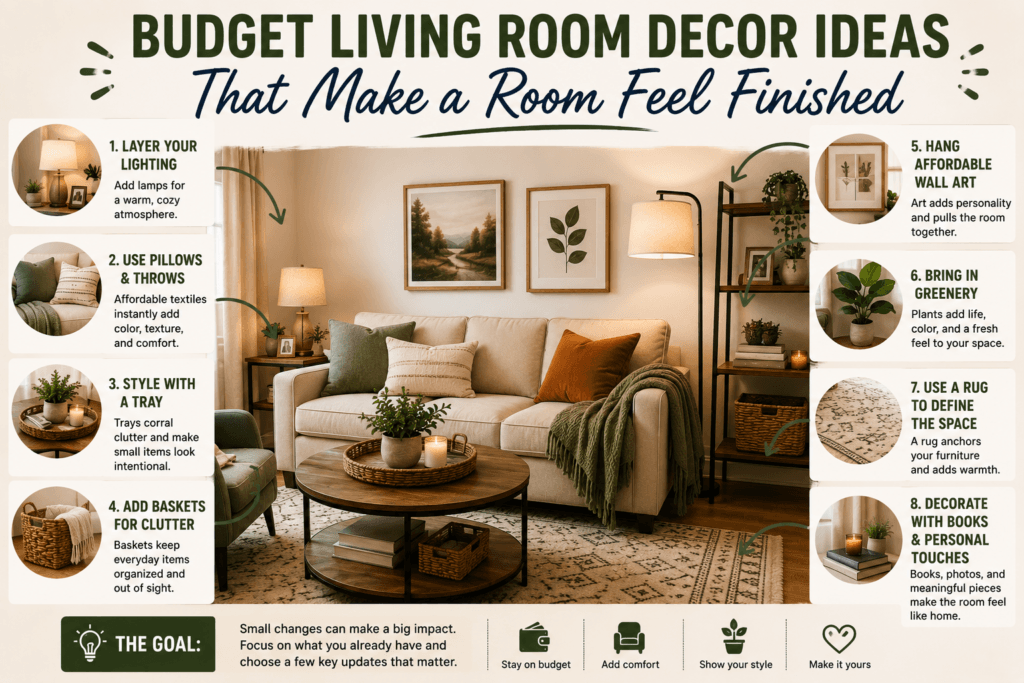
Before you buy anything, stand in the living room and look at what bothers you most.
Is it clutter? Empty walls? Bad lighting? Too many colors? A couch that looks flat? A rug that’s too small? Once you know the problem, budget decor gets easier. You’re not just buying stuff. You’re fixing the thing that makes the room feel unfinished.
1. Clear the Surfaces Before Adding Decor
Start with the coffee table, TV stand, side tables, and shelves.
Remove old cups, mail, remotes, chargers, toys, receipts, and random things that don’t belong there.
Why it works: decor looks better when it isn’t competing with clutter. A clean surface can make the whole room feel calmer before you spend a dollar.
Example: In a small apartment, a coffee table covered with mail, cups, and remotes can make the whole living area feel messy. Clear it first, then add one tray or one small plant.
Small warning: Don’t make the room so empty that it stops being useful. Keep what you use daily, but give it a cleaner home.
2. Use Pillow Covers to Change the Couch
Instead of buying new pillows, buy pillow covers that fit the inserts you already have.
Why it works: pillow covers are cheaper and easier to store than full pillows. They can change the look of the couch fast.
Example: A gray or beige couch can feel warmer with covers in olive green, cream, rust, navy, or soft brown.
Small warning: Measure your pillow inserts first. Covers that are too big look saggy, and covers that are too small are annoying to stuff.
3. Add One Cozy Throw Blanket
A throw blanket can make a couch or chair feel more inviting.
Choose something with texture, like knit, waffle, linen-look cotton, fleece, or a soft woven fabric.
Why it works: fabric adds warmth and makes a room feel lived-in without adding a lot of clutter.
Example: Fold a throw over the arm of the couch or place it in a basket beside the sofa.
Small warning: If you have pets or kids, choose a washable blanket. Pretty but high-maintenance decor gets old fast.
4. Use a Tray on the Coffee Table
A tray makes small items look intentional.
Use it for a candle, remote, small plant, coaster stack, or a book.
Why it works: a tray creates a boundary. The same items that looked messy before can suddenly look styled.
Example: On a family room coffee table, use a tray to hold remotes and coasters so they don’t spread everywhere.
Small warning: Don’t overload the tray. If it becomes a junk drawer without walls, clear it out.
5. Add a Lamp Instead of Relying on Overhead Light
Overhead lights can make a living room feel flat or harsh.
Add a table lamp, floor lamp, or plug-in wall light to soften the room.
Why it works: warm, layered lighting makes a space feel cozier, especially in the evening.
Example: In a rental living room, one floor lamp beside the couch can make the room feel much more comfortable at night.
Small warning: Don’t overload outlets or run cords under rugs. Use safe cord placement and the right bulb wattage.
6. Rearrange Furniture Before Buying Anything
Sometimes the room feels wrong because the layout is wrong.
Try moving the couch, chairs, side tables, or TV stand before spending money.
Why it works: a better layout can make the room feel bigger, easier to walk through, and more natural to use.
Example: In a narrow living room, pulling the couch slightly away from the wall or angling a chair can create a more comfortable conversation area.
Small warning: Keep walkways clear. A cozy layout still needs enough space to move around without bumping into furniture.
7. Use Baskets for Everyday Clutter
Living rooms collect blankets, toys, magazines, game controllers, pet items, and random things.
A basket can hide the daily mess while still keeping items easy to grab.
Why it works: baskets add texture and function at the same time.
Example: Put one large basket beside the couch for blankets, or one low basket near the TV for kids’ toys.
Small warning: Don’t buy five baskets before sorting. One useful basket is better than several baskets full of mystery clutter.
8. Hang Affordable Wall Art
Blank walls can make a living room feel unfinished.
Use printable art, thrifted frames, family photos, simple sketches, postcards, or inexpensive posters.
Why it works: wall art adds personality and makes the room feel more complete.
Example: Above a couch, use two or three larger frames instead of many tiny pieces. It usually looks cleaner and less busy.
Small warning: Renters should check lease rules before making holes. Use removable hanging strips when appropriate, but test carefully because they can still damage paint.
9. Add Curtains for Softness
Curtains can make a living room feel warmer, even if the windows already have blinds.
Hang curtains higher and wider than the window frame when possible.
Why it works: curtains soften the walls, frame the windows, and make the room feel more finished.
Example: In an apartment with plain blinds, simple cream or light beige curtains can make the living room feel less temporary.
Small warning: Renters should use no-drill curtain options or ask before installing rods. Also measure before buying panels.
10. Use a Rug to Define the Seating Area
A rug can help a living room feel grounded.
Even if the furniture is simple, a rug can make the seating area feel like one connected space.
Why it works: rugs add warmth, texture, color, and structure.
Example: In an open apartment, a rug under the front legs of the couch and chairs can separate the living room from the dining or kitchen area.
Small warning: A rug that’s too small can make the room feel awkward. Measure first, and use a rug pad if it slides.
11. Style Shelves With Fewer Items
Shelves often look messy because they have too many small things.
Remove some items and group what’s left. Use books, baskets, framed photos, plants, and one or two decorative pieces.
Why it works: empty space gives your decor room to breathe.
Example: On a TV stand shelf, use one basket for remotes or cords, a few books, and one plant instead of filling every inch.
Small warning: Don’t buy shelf decor just to fill space. Empty space is part of good styling.
12. Add Greenery, Real or Faux
Plants can make a living room feel fresher and more alive.
Use real plants if you like caring for them, or realistic faux greenery if your room has low light.
Why it works: greenery adds color and softness without needing a big decor budget.
Example: Put a small plant on a side table, a taller plant near a window, or faux stems in a vase on a shelf.
Small warning: Some plants are toxic to pets. Check before bringing real plants into a home with cats or dogs.
13. Repeat Two or Three Colors
A room feels more put together when colors repeat.
Pick two or three colors and use them in small ways around the room.
Why it works: repeated colors create a sense of connection, even if your furniture doesn’t match perfectly.
Example: If your pillows are green and cream, repeat green with a plant or artwork and cream with curtains or a throw blanket.
Small warning: Don’t make everything match exactly. A little variation makes the room feel more natural.
14. Use Books as Decor
Books are useful, affordable, and easy to style.
Stack them on a coffee table, shelf, or side table. Add a candle, plant, or small bowl on top if it makes sense.
Why it works: books add height, color, and personality without feeling like random filler.
Example: On a coffee table, stack two books under a small plant or candle to create a simple centerpiece.
Small warning: Don’t use books you never want anyone to touch if your home has kids, pets, or lots of guests.
15. Swap Small Hardware or Legs if Possible
Some furniture can look better with small changes.
You might swap drawer knobs, cabinet pulls, sofa legs, or TV stand handles.
Why it works: small hardware changes can update older furniture without replacing it.
Example: A plain TV stand can look newer with simple black or brass knobs.
Small warning: Measure before buying hardware. Renters should keep original parts if the furniture or built-in item belongs to the rental.
16. Make Cords Less Visible
Messy cords can make even a nicely decorated living room feel unfinished.
Use cord clips, cable sleeves, cord boxes, or baskets to hide or group cables.
Why it works: reducing cord clutter makes the TV area, side tables, and charging spots look cleaner.
Example: Use a cord box under the TV stand for power strips and a few clips to guide lamp cords behind furniture.
Small warning: Don’t cover cords with rugs or overload outlets. Keep electrical safety in mind.
17. Decorate With Things You Already Own
Before shopping, look around your home.
You may already have baskets, books, trays, blankets, vases, frames, candles, bowls, or jars that can be used in the living room.
Why it works: moving items around can refresh a room without spending anything.
Example: A basket from a bedroom closet might work better as blanket storage in the living room. A framed print from a hallway might look better above the couch.
Small warning: Don’t move clutter from one room to another and call it decorating. Choose items that actually improve the space.
Common Mistakes to Avoid
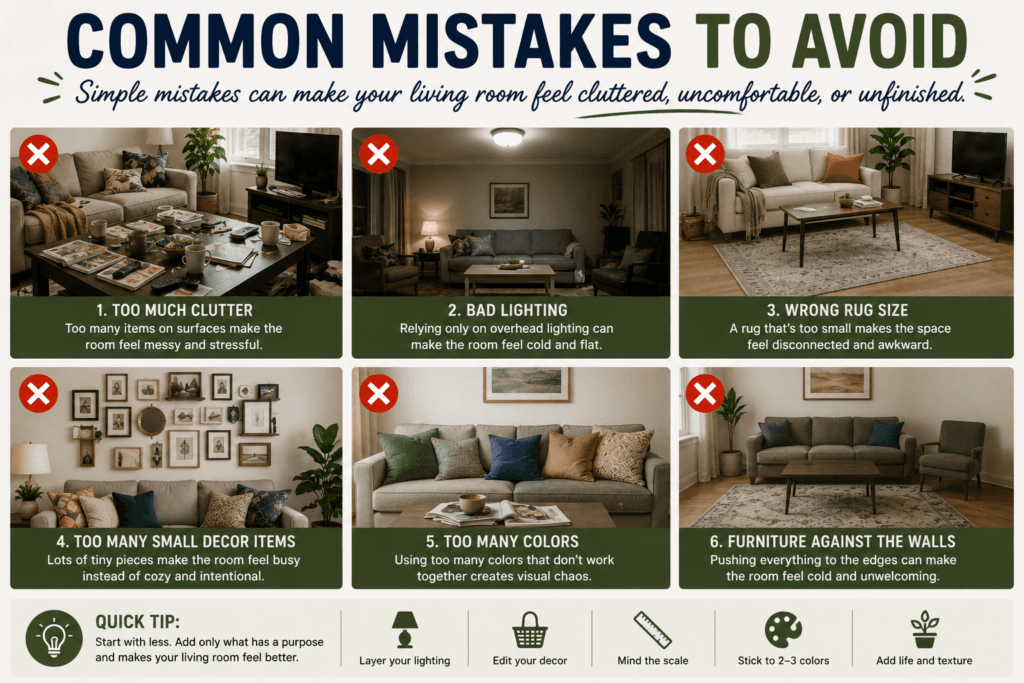
Buying Too Many Small Decor Pieces
Lots of tiny decor items can make the room feel busy. A few larger, useful pieces usually look better.
Ignoring Lighting
If the lighting is harsh, more decor won’t fix the room. Try lamps and warmer bulbs first.
Choosing Looks Over Real Life
A white rug, delicate throw, or glass table may look nice but may not work for kids, pets, or a high-use family room.
Forgetting Scale
A tiny frame over a large couch can look lost. A rug that’s too small can make the room feel unfinished. Measure before buying.
Copying a Room That Doesn’t Match Your Home
A big Pinterest living room may not work in a small apartment or rental. Use the idea, but adjust it for your real space.
Decorating Before Decluttering
If the room is already too full, adding more decor can make it worse. Clear first, then decorate.
Quick Checklist: Budget Living Room Refresh
Use this before buying anything new:
- Clear the coffee table and TV stand
- Remove items that don’t belong
- Add or adjust lighting
- Try rearranging furniture
- Choose two or three repeated colors
- Use pillow covers instead of new pillows
- Add one textured throw
- Use one tray for small items
- Add baskets only where clutter collects
- Check wall art scale
- Hide visible cords
- Measure before buying rugs or curtains
Conclusion
Good budget living room decor ideas don’t have to be complicated or expensive. Most of the time, a room feels better when it has less clutter, softer lighting, a few repeated colors, and decor that actually fits the way you live.
Start with one thing that bothers you most. The couch, the coffee table, the lighting, the walls, or the clutter. Fix that first.
A living room doesn’t need to look perfect. It just needs to feel comfortable, useful, and a little more put together than it did before.