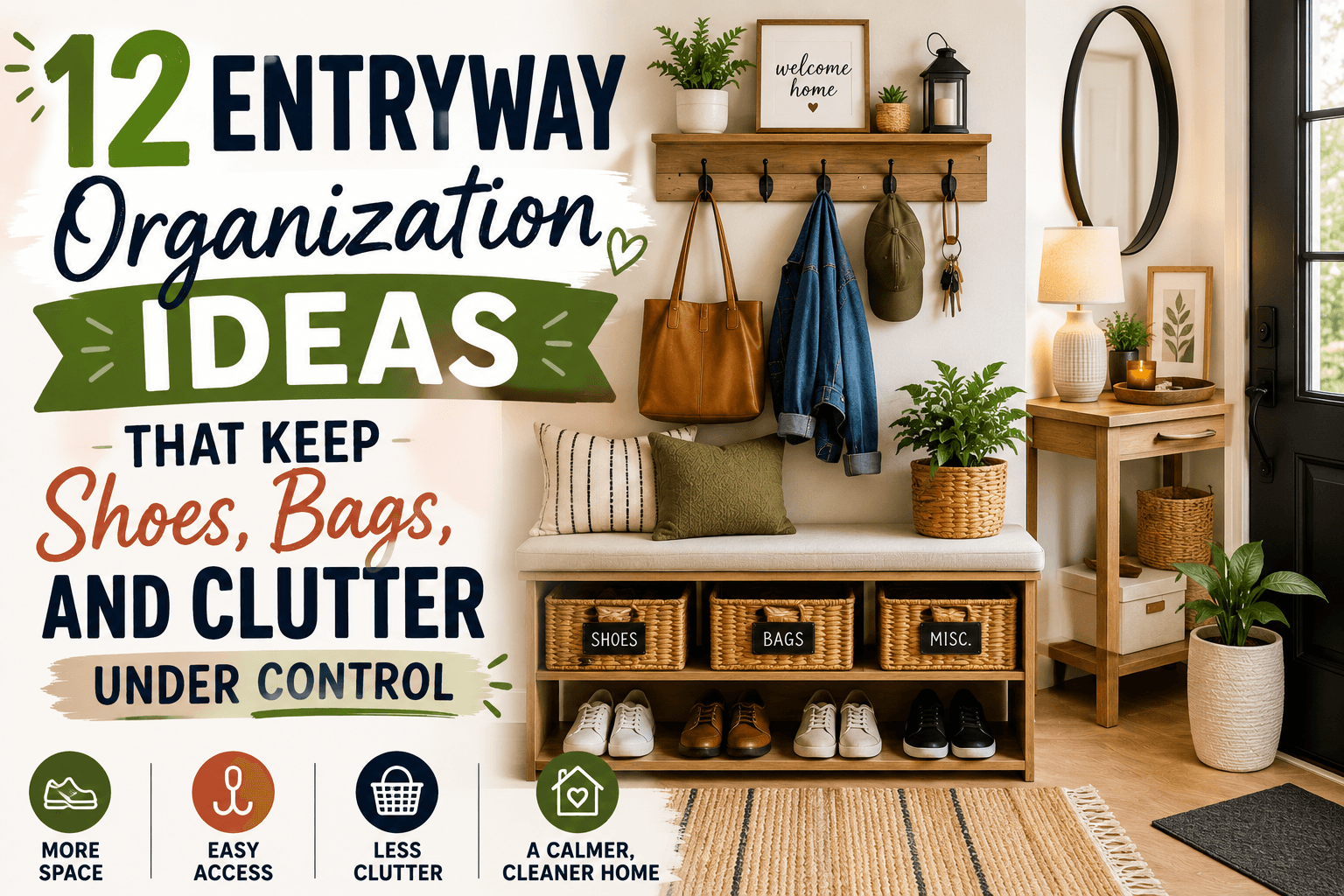
12 Entryway Organization Ideas That Keep Shoes, Bags, and Clutter Under Control
The entryway is one of those spots that gets messy before the rest of the house even has a chance.
Shoes land by the door. Keys disappear. Backpacks get dropped on the floor. Mail piles up on the nearest surface. And if you live in a small apartment or a busy family home, the entryway can start feeling crowded fast.
These entryway organization ideas are meant for real homes, not giant mudrooms with custom built-ins and perfect baskets. Maybe you have a tiny wall by the front door. Maybe your “entryway” is just the corner of your living room. Maybe you rent and can’t drill into anything. That’s normal.
The goal is simple: create a place for the stuff that already lands there, without buying a bunch of products you don’t actually need.
Table of Contents
Entryway Organization Ideas for Real Homes
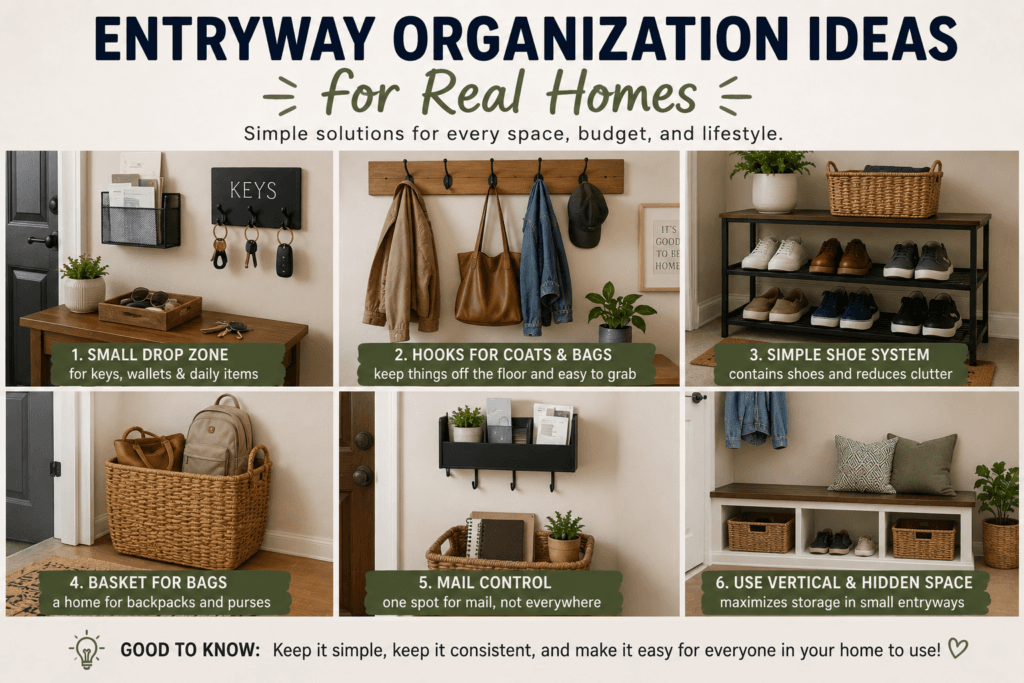
Before you start organizing, pay attention to what actually piles up near your door. That tells you what kind of entryway setup you need.
A home with three kids needs something different than a studio apartment. An older home with no coat closet needs a different plan than a house with a big hallway. Good organization is not about copying a picture. It’s about solving the daily mess.
1. Start by Figuring Out What Lands by the Door
Before buying hooks, bins, benches, or shelves, take one day to notice what actually collects near your entryway.
Why it works: you’ll organize the real problem instead of guessing. If shoes are the issue, you need shoe storage. If mail is the issue, you need a paper system. If bags are the issue, you need hooks or a basket.
Example: In a small apartment, the main problem might be two pairs of shoes, keys, and a purse. In a family home, it might be backpacks, jackets, sports gear, dog leashes, and school papers.
Small warning: Don’t skip this step and start shopping. That’s how people end up with cute baskets that don’t fit the actual clutter.
2. Add a Small Drop Zone for Keys and Wallets
Create one obvious spot for keys, wallets, sunglasses, and small daily items.
This could be:
- A small wall shelf
- A tray on a console table
- A bowl on a narrow cabinet
- A small basket near the door
Why it works: small items disappear when they don’t have a home. A drop zone gives them one place to land every time.
Example: If your entryway is just a wall beside the front door, add a small adhesive shelf or a narrow table with a tray. Keys go there. Wallet goes there. No more checking jacket pockets five minutes before leaving.
Small warning: Keep the drop zone small. If it’s too large, it can turn into a clutter station for receipts, mail, toys, and random screws nobody wants to identify.
3. Use Hooks Instead of a Crowded Coat Closet
Hooks are often easier than hangers, especially for busy homes.
Add hooks for jackets, hats, bags, umbrellas, or reusable shopping bags. If you rent, use removable hooks or an over-the-door rack if your lease doesn’t allow drilling.
Why it works: hooks are quick. People are more likely to hang a jacket on a hook than open a closet and use a hanger.
Example: In an older home with a tiny coat closet, a wall-mounted hook rail near the door can handle daily jackets while the closet holds less-used coats.
Small warning: Don’t overload hooks. Heavy bags or too many coats can pull hooks loose, especially adhesive ones. Follow weight limits.
4. Create a Simple Shoe System
Shoes are usually the biggest entryway problem.
Pick one system that matches your space: a small shoe rack, a basket, a tray, or a low shelf.
Why it works: shoes spread out when there’s no clear limit. A shoe system tells everyone how many pairs can live by the door.
Example: In a small apartment, a simple two-tier shoe rack may be enough. In a family home, use one basket or cubby per person if shoes get mixed together.
Small warning: Don’t try to store every shoe by the door. Keep only daily shoes there. Dress shoes, out-of-season shoes, and extras should live somewhere else.
5. Add a Basket for Bags and Backpacks
If bags always end up on the floor, give them a landing spot.
Use a large basket, a low bin, hooks, or a bench with open storage underneath.
Why it works: bags are bulky and awkward. If there’s no easy place to put them, they block walkways and make the whole entry feel messy.
Example: In a busy family home, place a sturdy basket beside the entry table for backpacks after school. In a rental, use freestanding storage instead of mounted hooks.
Small warning: Don’t let the basket become a storage hole. Empty old snacks, papers, and random items from bags regularly.
6. Control Mail Before It Spreads
Mail can take over an entryway fast.
Create one small mail spot, like a wall file, tray, or basket. Then sort it often.
Why it works: paper clutter looks messy quickly, even if the rest of the entryway is clean.
Example: Use a small tray labeled “mail” on your entry table. Junk mail gets tossed right away. Bills or important papers move to your desk or command center.
Small warning: Don’t use a deep basket for mail unless you sort it often. Deep baskets hide paper clutter until it becomes a bigger problem.
7. Use Vertical Space in Small Entryways
If your floor space is limited, go up.
Use wall hooks, narrow shelves, wall files, over-the-door organizers, or tall slim storage.
Why it works: small entryways usually don’t have much floor room, but walls and doors are often underused.
Example: In an apartment where the front door opens right into the living room, use a small wall shelf with hooks underneath. It gives you key storage, bag storage, and a place for sunglasses without using floor space.
Small warning: Renters should check lease rules before mounting anything. Removable hooks can help, but they can still damage paint if removed carelessly.
8. Make a Kid-Friendly Grab-and-Go Area
If you have kids, make the entryway easy for them to use.
Use low hooks, low baskets, or labeled bins. Keep school items at their height when possible.
Why it works: if kids can’t reach the system, they won’t use it. A lower setup makes it easier for them to put things away without help.
Example: Add two low hooks for backpacks and jackets, plus a small shoe basket underneath. Even a simple setup can reduce the after-school floor pile.
Small warning: Don’t make the system too complicated. Kids usually do better with “hook, basket, done” than with detailed sorting.
9. Use a Bench Only If It Solves a Real Problem
Entryway benches can be useful, but they’re not always necessary.
Use a bench if you need a place to sit while putting on shoes, or if it adds storage underneath.
Why it works: a bench can make the entryway more comfortable and provide hidden or open storage.
Example: In a narrow hallway, a slim bench with space underneath for shoes can work well. In a tiny apartment, a bench might take up too much room, so a small shoe rack may be better.
Small warning: Don’t buy a bench just because it looks nice. If it blocks the walkway or becomes a pile of coats, it’s not helping.
10. Add Hidden Storage for Seasonal Items
Seasonal entryway items need a place too.
Store winter hats, gloves, scarves, sunscreen, bug spray, or umbrellas in a small bin, drawer, or basket.
Why it works: seasonal items are useful, but they create clutter when they float around with no home.
Example: In winter, keep gloves and hats in a labeled basket near the door. In summer, swap that basket for sunscreen, sunglasses, and outdoor spray.
Small warning: Don’t keep too many seasonal extras by the door. Store backups in a closet and keep only what you use often in the entryway.
11. Keep Pet and Outdoor Items Together
If you have a dog or outdoor routine, keep those items near the door.
Use a small basket or hook area for leashes, waste bags, paw wipes, collars, and outdoor toys.
Why it works: it saves time when you’re trying to get out the door and keeps pet items from spreading across the house.
Example: Hang the leash on a hook and keep waste bags in a small basket underneath. If your dog comes in with muddy paws, keep a washable mat and old towel nearby.
Small warning: Don’t store treats or pet food where pets can reach them. Also keep cleaning wipes and sprays away from kids and animals.
12. Do a Two-Minute Entryway Reset
At the end of the day, spend two minutes resetting the entry.
Put shoes back, hang coats, toss junk mail, move random items to their real homes, and straighten baskets.
Why it works: the entryway gets used every day, so it needs quick maintenance. Two minutes is enough to stop the mess from building.
Example: Before bed, check the front door area. One pair of shoes per person stays. Extra shoes go back to bedrooms or closets.
Small warning: Don’t turn the reset into a full cleaning session. Keep it short so it feels easy enough to repeat.
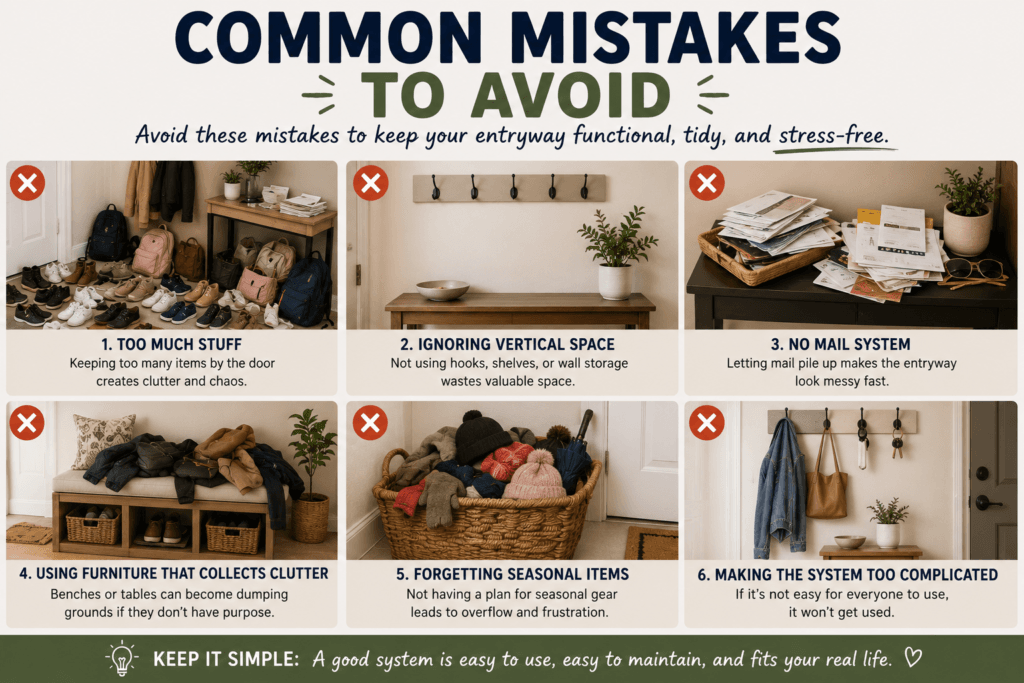
Common Mistakes to Avoid
Buying Storage Before Sorting
Don’t buy a bench, rack, or basket until you know what you need to store. Sort the entryway first, then choose storage that fits the real problem.
Keeping Too Many Shoes by the Door
A few daily pairs are fine. Ten pairs per person will make even a nice entryway look messy.
Making the System Too Complicated
If people have to open lids, sort by category, and line everything up perfectly, the system probably won’t last.
Ignoring the Wall
Small entryways often work better when you use vertical space. Hooks and slim shelves can do more than bulky furniture.
Forgetting About Mail
Paper clutter can ruin an otherwise organized entryway. Give mail one place to land and sort it often.
Not Checking Rental Rules
If you rent, check your lease before drilling, mounting shelves, or using strong adhesives. Removable options are usually safer, but they still need care.
Quick Checklist: Entryway Organization
Use this checklist when your entryway feels messy:
- Remove items that don’t belong near the door
- Keep only daily shoes in the entryway
- Add one small drop zone for keys
- Use hooks for jackets and bags
- Add a simple mail tray or wall file
- Use baskets only for specific items
- Store seasonal items in one small bin
- Keep pet items together
- Use wall space if the floor is tight
- Make kids’ storage easy to reach
- Do a two-minute reset at night
Conclusion
Good entryway organization ideas don’t have to be complicated. You just need a place for the things that already land by the door.
Start with shoes, keys, bags, and mail. Those are usually the biggest troublemakers. Add hooks, a simple shoe system, one mail spot, and a small drop zone. Keep it easy enough that people will actually use it.
A clean entryway won’t make the whole house perfect, but it does make coming home feel a little calmer. And honestly, that’s a pretty good place to start.
Read more smart organization tips here.