15 Household Hacks That Save Time Every Week
Some homes don’t need a huge makeover. They just need fewer little annoyances.
That’s where household hacks can really help. Not complicated systems. Not expensive gadgets. Just small changes that make everyday tasks faster, easier, and a little less frustrating.
Maybe mornings feel rushed because nobody can find keys. Maybe laundry always turns into a pile. Maybe the kitchen counter collects everything from mail to snacks to school papers. These are normal home problems, especially in apartments, rentals, older homes, and busy family houses.
The good news is that a few simple home tips and tricks can save time every week without making your home feel like a perfectly labeled showroom. The goal is not perfection. It’s making your daily routine easier to live with.
Table of Contents
Household Hacks That Make Daily Life Easier
The best household hacks solve problems that happen over and over.
If you’re always looking for keys, make a key spot. If laundry always ends up on the floor, change the laundry setup. If the bathroom counter gets messy every day, make the daily items easier to put away.
Start with the mess you see most often. That’s usually where the biggest time savings are.
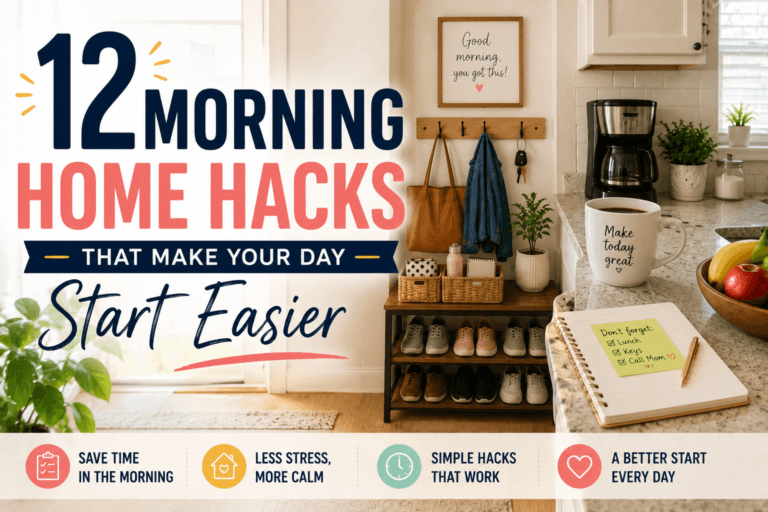
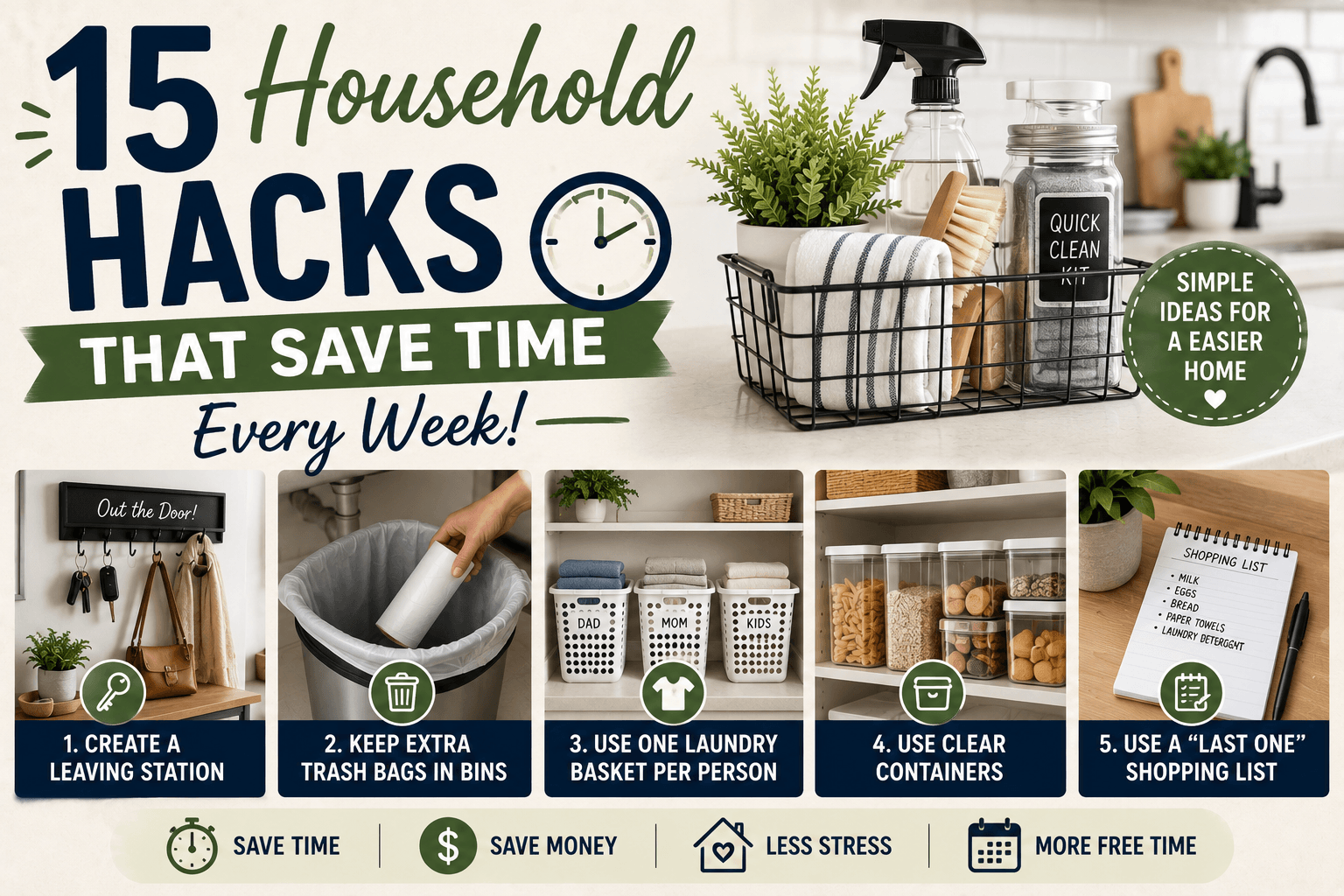
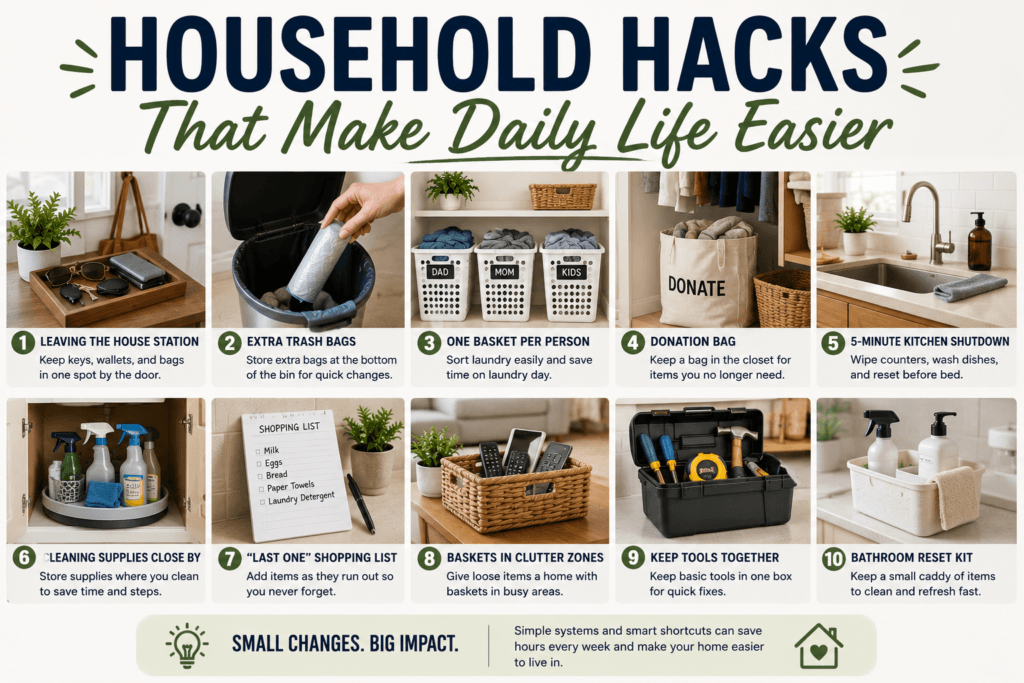
1. Make a “Leaving the House” Station
Create one small spot near the door for keys, wallets, sunglasses, reusable bags, and anything you need when you leave.
Why it works: mornings get harder when daily items are scattered around the house. A simple station keeps the important stuff together.
Example: In a small apartment, use a small tray on a narrow table and one hook for a bag. In a family home, add a basket for each person’s daily items.
Small warning: Don’t let this spot become a junk pile. Keep it only for things you actually grab when leaving.
2. Keep Backup Trash Bags in the Bottom of Bins
Put a few extra trash bags at the bottom of the trash can, under the current bag.
Why it works: when you take out the trash, the next bag is already there. It saves a small step, but small steps matter when you do them all the time.
Example: This works well in kitchen bins, bathroom bins, laundry room bins, and diaper pails.
Small warning: If your trash can gets wet or leaks, don’t store a whole roll of bags at the bottom. Just keep one or two extras there.
3. Use One Laundry Basket for Each Person
Instead of one giant mixed laundry pile, give each person a basket if you have the space.
Why it works: sorting becomes easier because clothes are already separated. It also makes it clearer where clean laundry should go.
Example: In a busy family home, each kid gets a small basket in or near their bedroom. Clean clothes can go back into that same basket for putting away.
Small warning: This only works if baskets don’t block walkways. In small apartments, one dark basket and one light basket may be more realistic.
4. Keep a Donation Bag in the Closet
Put one bag or box in your closet for clothes, toys, decor, or household items you’re ready to donate.
Why it works: decluttering is easier when you can do it in small moments instead of waiting for a big cleanout day.
Example: If you try on a shirt and know you don’t like it anymore, put it straight into the donation bag instead of hanging it back up.
Small warning: Don’t let donation bags sit forever. When the bag is full, move it to the car or schedule a drop-off.
5. Create a Five-Minute Kitchen Shutdown
At the end of the day, spend five minutes resetting the kitchen.
Do the basics:
- Load or stack dishes
- Wipe counters
- Rinse the sink
- Take out trash if needed
- Put food away
Why it works: mornings feel easier when the kitchen isn’t already messy.
Example: Even if you don’t wash every pan, clearing the counters and rinsing the sink makes the kitchen feel much better the next day.
Small warning: Don’t turn this into a full deep clean. Keep it short so you’ll actually repeat it.
6. Store Cleaning Supplies Where You Use Them
Keep basic cleaning supplies close to the mess.
Why it works: if you have to walk across the house to get a cleaner, you’re less likely to do quick wipe-downs.
Example: Keep a cloth and bathroom-safe cleaner under the bathroom sink. Keep a small broom or dustpan near the kitchen if crumbs are a daily issue.
Small warning: Store cleaners safely away from kids and pets. Always follow product labels, ventilate when needed, and don’t mix cleaning products.
7. Use a “Last One” Shopping List
When you open the last of something, add it to a list right away.
Why it works: it prevents those annoying moments when you realize you’re out of paper towels, dish soap, coffee filters, or trash bags.
Example: Keep a notepad on the fridge or use a shared phone note for household basics.
Small warning: Keep the list simple. If it becomes too detailed, people stop using it.
8. Put Small Baskets in Clutter Zones
Look for places where clutter naturally collects, then add a small basket.
Why it works: baskets give loose items a place to land, which makes quick resets easier.
Example: Put a basket near the stairs for items that need to go up, one in the living room for toys, or one near the entryway for hats and gloves.
Small warning: Baskets are not magic. Empty them regularly or they become hidden clutter.
9. Keep Everyday Tools in One Easy Spot
Create one small home tool kit for basic fixes.
Include a screwdriver, measuring tape, hammer, flashlight, batteries, tape, and a few wall hooks or screws.
Why it works: small repairs take longer when the tools are scattered.
Example: Tightening a loose cabinet handle or replacing batteries in a remote takes two minutes when everything is in one box.
Small warning: Store sharp tools safely, especially in homes with children.
10. Make a Quick Bathroom Reset Kit
Keep daily bathroom reset items together.
This might include a microfiber cloth, glass cleaner, toilet cleaner, extra hand soap, and a small trash bag roll.
Why it works: bathrooms get messy fast, but quick maintenance keeps them from feeling gross.
Example: In a guest bathroom, a two-minute reset before visitors arrive can make the sink, mirror, and toilet look much cleaner.
Small warning: Don’t store too many products under a tiny sink. Keep only what you use there.
11. Use Clear Containers for Repeat-Use Items
Use clear containers for things you reach for often, like batteries, medicine cabinet extras, craft supplies, snacks, or cords.
Why it works: you can see what you have without opening everything.
Example: In a pantry, clear containers for snack packs or baking items can stop you from buying duplicates.
Small warning: Don’t buy a full set of containers before sorting. Start with the messiest category first.
12. Keep a Simple Meal Backup Shelf
Create one small shelf or bin for easy backup meals.
This could include pasta, rice, canned soup, tuna, beans, sauce, or shelf-stable meal basics.
Why it works: busy nights are easier when you have a fallback that doesn’t require thinking.
Example: In a small apartment pantry, one bin labeled “easy dinner” can hold pasta, sauce, and canned vegetables.
Small warning: Check expiration dates occasionally. Backup food only helps if it’s still good.
13. Set Up a Paper Landing Zone
Paper clutter needs one place to go.
Use a tray, file holder, wall pocket, or basket for mail, school papers, bills, and forms.
Why it works: paper spreads quickly when it lands on every counter.
Example: Put a small tray near the entryway for mail. Junk mail gets tossed right away. Important papers move to a folder or desk once a week.
Small warning: Don’t use a deep basket unless you sort it often. Deep paper baskets become paper caves.
14. Use Hooks for Things That Never Get Put Away
Some items just don’t make it into drawers or closets.
Use hooks for bags, jackets, towels, hats, dog leashes, robes, or headphones.
Why it works: hooks are easier than hangers, drawers, or shelves. They match how people actually behave.
Example: If backpacks always land on the floor, add low hooks near the entry or bedroom door.
Small warning: Renters should check lease rules before drilling. Removable hooks can help, but follow the weight limit and removal instructions.
15. Reset One Room Before Bed
Pick one room to reset each night.
The kitchen, living room, or entryway usually gives the biggest payoff.
Why it works: waking up to one manageable space makes the whole day feel less chaotic.
Example: Before bed, clear the coffee table, fold blankets, put shoes back on the rack, and move cups to the kitchen.
Small warning: Don’t try to reset the whole house every night. That gets old fast. One room is enough.
Common Mistakes to Avoid
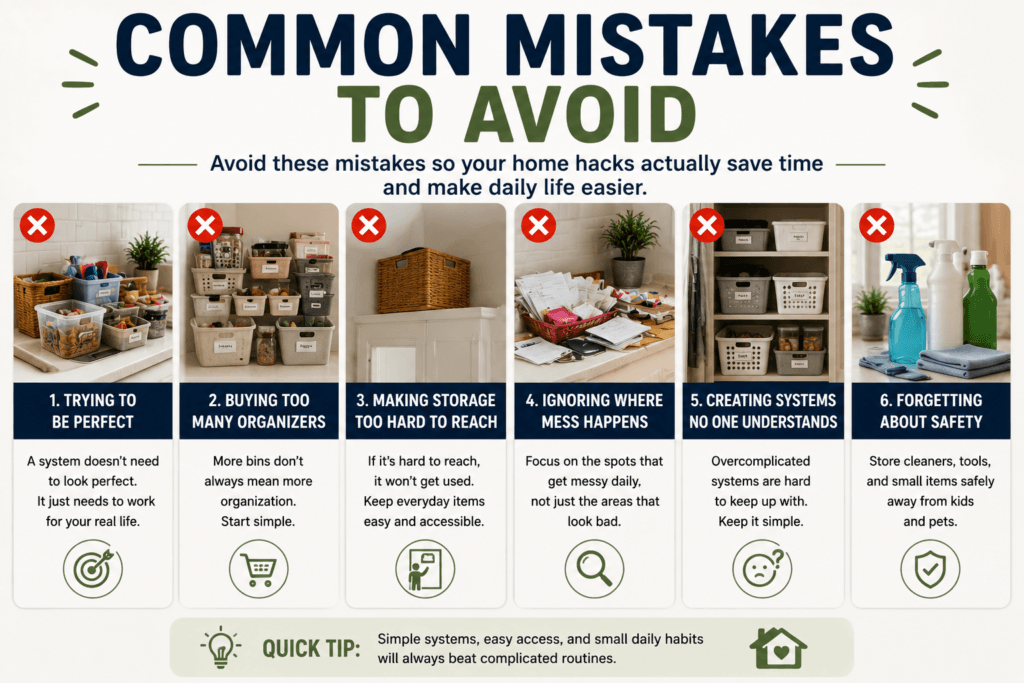
Trying to Create a Perfect System
A system doesn’t need to look perfect. It needs to be easy enough to use when you’re tired, busy, or in a rush.
Buying Too Many Organizers
More bins don’t always mean more organization. Sort first, then buy only what solves a real problem.
Making Storage Too Hard to Reach
If daily items are hard to reach, they won’t get put away. Keep everyday things simple and accessible.
Ignoring the Spots Where Mess Actually Happens
Don’t organize a closet if the real issue is the kitchen counter. Start where the daily frustration is.
Creating Systems Nobody Else Understands
If you live with other people, make systems obvious. Labels can help, but simple categories are better.
Forgetting About Safety
Keep cleaners, tools, cords, and small items away from kids and pets. For DIY or cleaning tasks, follow labels and use basic safety habits.
Quick Checklist: Time-Saving Household Hacks
Use this list when your home feels harder than it should:
- Create a leaving-the-house station
- Keep extra trash bags in bins
- Use a donation bag
- Build a five-minute kitchen shutdown
- Store cleaners near the mess
- Start a “last one” shopping list
- Add baskets to clutter zones
- Keep basic tools together
- Make a bathroom reset kit
- Use clear containers for repeat-use items
- Create a paper landing zone
- Add hooks where items pile up
- Reset one room before bed
Conclusion
Good household hacks don’t have to be clever just for the sake of being clever. They should save time, reduce mess, and make your home easier to live in.
Start with one daily problem. Keys, trash, laundry, dishes, mail, clutter, or cleaning supplies. Fix that one thing with a simple system, then move to the next.
Small changes are easier to keep. And in a normal home, that’s usually what makes the biggest difference.