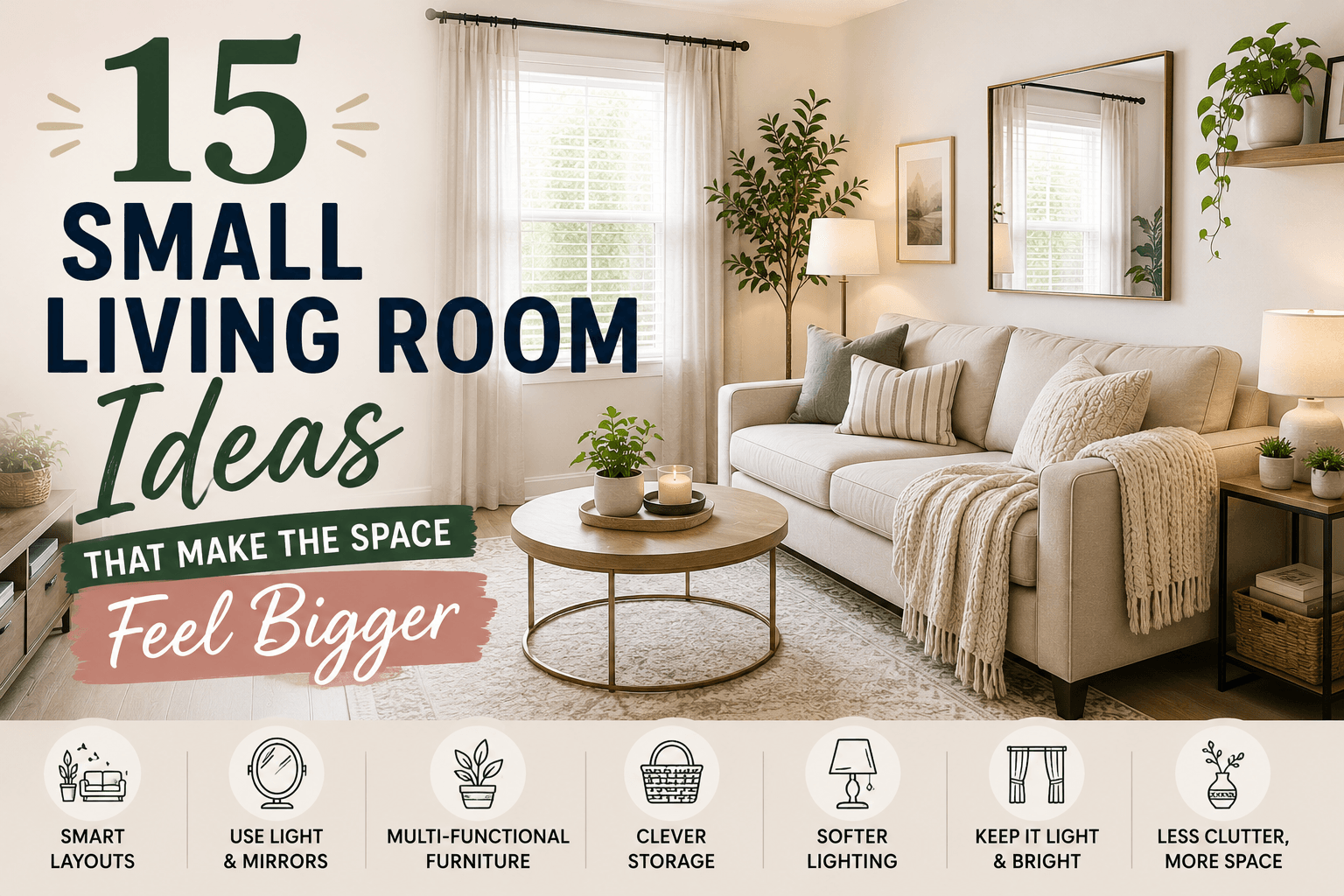
15 Small Living Room Ideas That Make the Space Feel Bigger
A small living room can feel crowded even when it’s not actually that full.
One bulky coffee table, a rug that’s too small, a dark corner, or a few piles on the TV stand can make the whole room feel tighter than it really is. This is one of those things you don’t always notice until the space is easier to move through.
That’s where good small living room ideas help. You don’t need a new couch or a full makeover. Most small living rooms just need better layout, less visual clutter, softer lighting, and storage that doesn’t take over the room.
These ideas work for apartments, rentals, older homes, small family rooms, and normal homes where the living room does too many jobs at once. The goal is simple: make the room feel bigger, calmer, and easier to actually live in.
Table of Contents
Small Living Room Ideas That Actually Make the Space Feel Bigger
Before buying anything new, look at how the room feels when you walk through it.
Can you move easily from the doorway to the couch? Is the coffee table always in the way? Are cords and remotes making the TV area look messy? Is one wall packed with little decor pieces?
A small living room usually doesn’t need more stuff. It needs the right stuff in the right places.
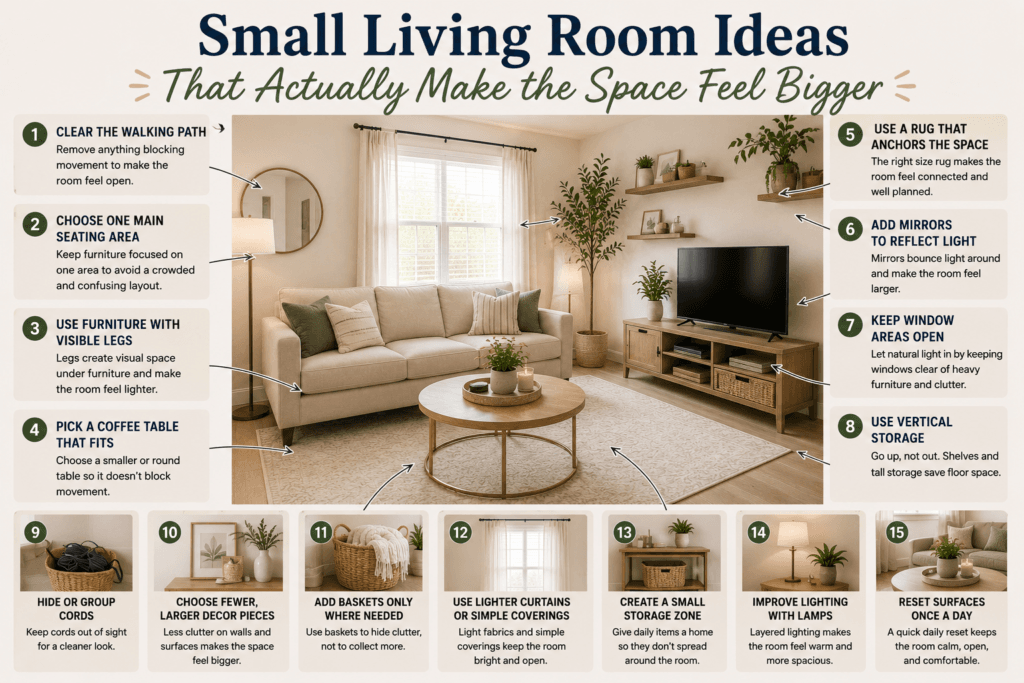
1. Clear the Walking Path First
Start with the path people use most.
Move shoes, baskets, side tables, toys, cords, ottomans, and anything else that blocks the main walkway.
Why it works: when you can move through a room easily, the space instantly feels larger and less frustrating.
Example: In a small apartment living room, keep a clear path from the front door to the couch and from the couch to the kitchen or hallway.
Small warning: Don’t push every piece of furniture against the walls just to open the middle. A clear path matters more than empty floor space that doesn’t feel useful.
2. Choose One Main Seating Area
Small living rooms can feel crowded when every seat is trying to face a different direction.
Pick the main purpose of the room: watching TV, talking, reading, or relaxing. Then arrange the seating around that.
Why it works: one clear seating area feels more intentional than random furniture pieces scattered around.
Example: Place the couch facing the TV, then add one small chair at an angle if there’s room. In a rental, this can make the room feel more finished without changing anything permanent.
Small warning: Don’t add extra chairs just because you feel like a living room “should” have them. If they block movement, skip them.
3. Use Furniture With Visible Legs
Furniture that sits off the floor can make a small room feel lighter.
Look for couches, chairs, TV stands, and side tables with legs instead of heavy bases.
Why it works: when more floor is visible, the room feels more open.
Example: A raised TV stand can feel less bulky than a solid cabinet that touches the floor from end to end.
Small warning: If you really need hidden storage, a closed cabinet may still be worth it. Function matters too.
4. Pick a Coffee Table That Fits the Room
A coffee table that’s too big can make a small living room feel cramped.
Try a smaller table, round table, nesting tables, storage ottoman, or even a slim bench.
Why it works: the right table gives you a place for drinks and remotes without blocking movement.
Example: In a narrow living room, a round coffee table can be easier to walk around than a large rectangular one with sharp corners.
Small warning: Don’t choose a tiny table that doesn’t work for your life. If you use the table daily, it still needs to be practical.
5. Use a Rug That Anchors the Space
A rug can make a small living room feel more connected.
Try to choose a rug large enough for at least the front legs of the couch and chair to sit on it.
Why it works: a rug helps define the seating area and makes the room feel planned.
Example: In a studio apartment, a rug under the couch area can separate the living space from the sleeping or dining area.
Small warning: A rug that’s too small can make the room feel choppy. Measure before buying, and use a rug pad if it slides.
6. Add Mirrors to Reflect Light
Mirrors can help a small living room feel brighter.
Place a mirror across from a window, near a dark corner, or above a console table.
Why it works: mirrors reflect light and add a sense of depth.
Example: In a small rental living room with one window, a mirror on the opposite wall can make the room feel less closed in.
Small warning: Heavy mirrors need safe mounting. Renters should check lease rules before drilling or use a leaning mirror where it won’t tip.
7. Keep Window Areas Open
Windows matter a lot in small spaces.
Avoid blocking them with tall furniture, cluttered shelves, or heavy curtains that stay closed all day.
Why it works: natural light makes a small living room feel bigger and cleaner.
Example: Move a tall bookshelf away from the window and use a lower table, plant stand, or nothing at all.
Small warning: If privacy is an issue, use light-filtering curtains or shades instead of leaving the window fully exposed.
8. Use Vertical Storage Instead of Wide Storage
When floor space is limited, go up instead of out.
Use tall bookshelves, wall shelves if allowed, leaning shelves, or narrow cabinets.
Why it works: vertical storage gives you more room without taking over the floor.
Example: A tall narrow shelf beside the couch can hold books, baskets, plants, and small items without needing a wide console.
Small warning: Renters should check lease rules before mounting shelves. Tall furniture should be stable, especially around kids or pets.
9. Hide or Group Cords
Cords can make a small living room feel messy even when it’s clean.
Use cord clips, cable sleeves, cord boxes, or baskets to keep cords together.
Why it works: visual clutter makes a room feel smaller. Clean cord management helps the TV area and side tables look calmer.
Example: Use a cord box near the TV stand for power strips and extra cables. Clip lamp cords behind furniture so they don’t hang everywhere.
Small warning: Don’t run cords under rugs or overload outlets. Keep safety first.
10. Choose Fewer, Larger Decor Pieces
Lots of tiny decor pieces can make a small living room feel busy.
Use fewer pieces with more impact: one larger print, one good lamp, one plant, one tray, or one basket.
Why it works: fewer items create less visual noise.
Example: Instead of ten tiny frames on one wall, use two medium frames above the couch.
Small warning: Large doesn’t mean oversized. Choose decor that fits the wall and furniture scale.
11. Add Baskets Only Where Clutter Collects
Baskets are helpful when they have a real job.
Use them for blankets, toys, pet items, game controllers, magazines, or things that need to go to another room.
Why it works: baskets hide daily clutter while adding texture.
Example: Put one basket beside the couch for throw blankets and one small basket under the TV stand for remotes or controllers.
Small warning: Too many baskets become clutter too. If every corner has a basket, the room may still feel crowded.
12. Use Lighter Curtains or Simple Window Coverings
Heavy curtains can make a small living room feel darker and smaller.
Try light-filtering curtains, simple panels, or blinds that let in natural light.
Why it works: lighter window treatments keep the room feeling open while still softening the space.
Example: In an apartment with basic blinds, add simple cream curtains for a warmer look without making the room feel heavy.
Small warning: Renters should use no-drill curtain options or ask before installing rods.
13. Create a Small Storage Zone for Daily Items
Living rooms collect daily items because people actually live there.
Create one small zone for remotes, chargers, books, blankets, toys, or work-from-home items.
Why it works: items are less likely to spread when they have one home.
Example: Use one side table drawer for remotes and chargers, or one basket for kids’ toys that get used daily.
Small warning: Don’t make the storage zone too big. If it holds everything, it becomes a junk zone.
14. Improve Lighting With Lamps
A small living room often feels worse when it only has one overhead light.
Add a floor lamp, table lamp, or plug-in wall light.
Why it works: layered lighting makes the room feel warmer and more comfortable, especially at night.
Example: Put a floor lamp next to the couch and a small lamp on a side table. This can make the room feel cozy without adding much clutter.
Small warning: Use the right bulb wattage and keep cords out of walkways.
15. Reset Surfaces Once a Day
Small living rooms show clutter quickly.
Once a day, clear the coffee table, TV stand, side tables, or couch area.
Why it works: a two-minute reset keeps the room from feeling crowded all the time.
Example: Before bed, toss wrappers, move cups to the kitchen, fold blankets, and put remotes back in one spot.
Small warning: Don’t turn this into a deep clean. Keep it short so it feels easy enough to repeat.
Common Mistakes to Avoid
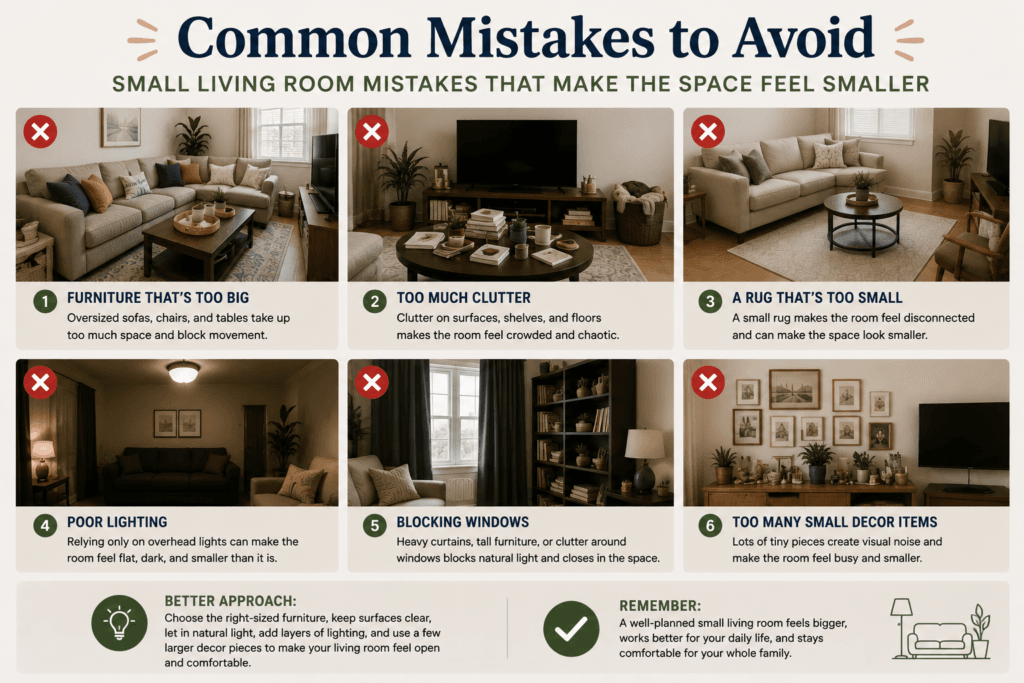
Buying Furniture That’s Too Big
Measure before buying. A couch or coffee table that almost fits can still make the room hard to use.
Blocking the Main Walkway
If you have to step around furniture every day, the room will always feel cramped.
Using Too Many Small Decor Pieces
Tiny frames, candles, vases, and random objects can create visual clutter. Use fewer pieces with more purpose.
Choosing a Rug That’s Too Small
A tiny rug can make the seating area look disconnected. Choose a rug that anchors the room when possible.
Ignoring Lighting
Poor lighting makes small spaces feel darker and more crowded. Lamps can make a huge difference.
Filling Every Surface
Coffee tables, shelves, TV stands, and side tables need breathing room. Empty space helps the room feel bigger.
Quick Checklist: Small Living Room Reset
Use this when your living room feels cramped:
- Clear the main walking path
- Remove items that don’t belong
- Check if furniture is too bulky
- Keep window areas open
- Add softer lighting
- Hide or group cords
- Use baskets only where needed
- Choose fewer decor pieces
- Make sure the rug fits the seating area
- Keep daily items in one zone
- Clear surfaces once a day
- Leave some empty space on shelves
Conclusion
Good small living room ideas are less about making the room perfect and more about making it easier to use.
Clear the walking path. Let in more light. Choose furniture that fits. Use fewer decor pieces. Give daily items one simple home. These small changes can make a tight living room feel bigger without a big budget.
A small living room may never feel huge, but it can feel comfortable, open, and much less crowded.