
12 Bedroom Cleaning Tips That Make the Room Feel Fresh Again
Bedrooms can get messy in a sneaky way.
At first, it’s just one cup on the nightstand, a few clothes on a chair, a blanket on the floor, and some dust on the dresser. Then suddenly the room feels heavy, stale, and harder to relax in.
That’s where simple bedroom cleaning tips can help. You don’t need to deep clean the whole room every time. Most bedrooms feel much better when you focus on the areas that create the biggest “messy room” feeling: the bed, floor, nightstand, laundry, dust, trash, and air.
These tips work for apartments, rentals, small bedrooms, shared bedrooms, older homes, and busy family homes where the bedroom is not always perfectly tidy.
The goal is not to make the room look staged. The goal is to make it feel fresher, calmer, and easier to rest in.
Table of Contents
Bedroom Cleaning Tips That Make a Big Difference Fast
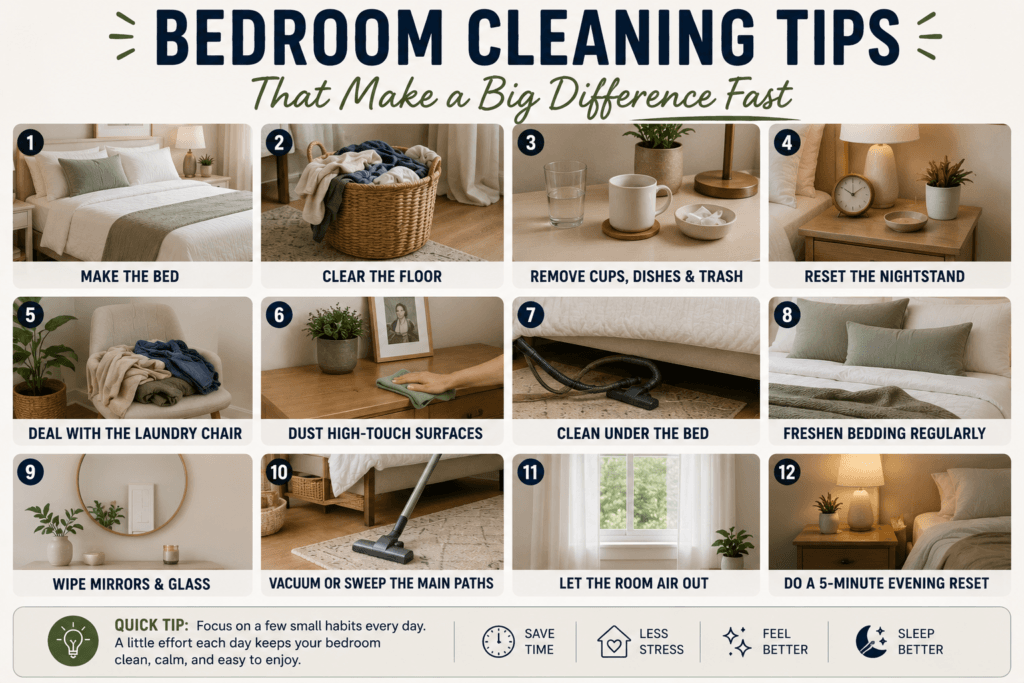
The best bedroom cleaning tips are simple because bedrooms usually don’t need complicated cleaning.
Most of the time, the room feels messy because too many visible items are sitting out. Clothes, cups, papers, chargers, shoes, and dust all add up. Start with the most visible areas first, then move to deeper cleaning when you have more time.
1. Start by Making the Bed
Making the bed is the fastest way to make a bedroom feel better.
Pull up the sheets, straighten the comforter, fluff the pillows, and remove anything that doesn’t belong on the bed.
Why it works: the bed is usually the largest thing in the room. When it looks neat, the whole bedroom feels more organized.
Example: In a small bedroom, a messy bed can make the entire room feel cluttered. A made bed gives the room a quick visual reset.
Small warning: Don’t overcomplicate it with too many decorative pillows if you hate moving them every night. Keep it realistic.
2. Clear the Floor First
A clean floor makes a bedroom feel bigger and easier to use.
Pick up clothes, shoes, bags, books, toys, baskets, and anything blocking the path around the bed.
Why it works: clutter on the floor makes the room feel chaotic and harder to clean.
Example: Clear the path from the door to the bed and from the bed to the closet first. That alone can make the room feel much more manageable.
Small warning: Don’t shove everything into the closet without sorting. That only moves the mess.
3. Remove Cups, Dishes, and Trash
Bedrooms collect little things that make the room feel stale.
Take out water glasses, coffee mugs, snack plates, wrappers, tissues, receipts, tags, and empty bottles.
Why it works: trash and dishes create both visual clutter and smells.
Example: Keep a small trash can near the bed or dresser if wrappers and tissues often pile up.
Small warning: Don’t leave food dishes in the bedroom overnight if you can avoid it. They can attract pests and make the room smell unpleasant.
4. Reset the Nightstand
Nightstands get messy because they hold everything you touch before sleep and after waking up.
Remove old cups, receipts, random medicine packaging, chargers you don’t use, jewelry, tissues, and extra books.
Why it works: a cleaner nightstand makes the room feel calmer right away.
Example: Keep only a lamp, charger, one book, a small dish, and maybe a glass of water.
Small warning: Don’t make it so empty that it stops being useful. The goal is practical, not perfect.
5. Deal With the Laundry Chair
Many bedrooms have a “laundry chair” or a corner where clothes pile up.
Sort clothes into three quick groups: clean, dirty, and re-wear.
Why it works: clothes are one of the biggest reasons bedrooms feel messy.
Example: Put dirty clothes in the hamper, clean clothes in drawers or the closet, and re-wear items on one hook or in one small basket.
Small warning: Don’t let the re-wear basket become a second laundry pile. Reset it every few days.
6. Dust High-Touch Surfaces
Dust the surfaces you notice most.
Focus on the nightstand, dresser, headboard, window ledge, shelves, lamps, and electronics.
Why it works: dust makes a bedroom feel dull and can make surfaces look dirty even when the room is tidy.
Example: Use a microfiber cloth on the dresser and nightstand once a week, especially if you have pets or windows open often.
Small warning: Dust before vacuuming or sweeping so anything that falls can be cleaned from the floor afterward.
7. Clean Under the Bed Lightly
You don’t need to deep clean under the bed every week, but it should not be forgotten forever.
Pull out visible dust, socks, shoes, wrappers, or random items.
Why it works: dust and clutter under the bed can make the room feel less fresh, even if the top of the room looks fine.
Example: Use a vacuum attachment, broom, or flat duster to reach under the bed.
Small warning: If you use under-bed storage, keep it in bins or bags so it doesn’t become hidden clutter.
8. Freshen Bedding Regularly
Bedding affects how clean a bedroom feels.
Wash sheets, pillowcases, and blankets on a regular schedule that works for your home.
Why it works: bedding collects sweat, skin oils, dust, pet hair, and everyday smells.
Example: Wash sheets weekly if possible, or at least keep a steady routine so the bed feels fresh.
Small warning: Follow fabric care labels. Heavy comforters, delicate blankets, and special fabrics may need different washing methods.
9. Wipe Mirrors and Glass
A spotted mirror can make a bedroom feel less clean.
Wipe mirrors, glass tabletops, framed glass, and dusty picture frames.
Why it works: fingerprints, dust, and streaks are easy to notice when light hits them.
Example: Spray glass cleaner on a cloth instead of directly on the mirror, especially near wood frames or electronics.
Small warning: Don’t overspray near outlets, lamps, or furniture finishes.
10. Vacuum or Sweep the Main Paths
You don’t always need to move every piece of furniture.
Start with the main walking paths, under the bed edge, around the dresser, and near the closet.
Why it works: floors collect dust, hair, lint, crumbs, and dirt from shoes and laundry.
Example: In a small apartment bedroom, vacuum the area around the bed and the closet path first.
Small warning: If you have rugs, use the right vacuum setting so you don’t damage fibers or pull threads.
11. Let the Room Air Out
Fresh air can make a bedroom feel cleaner even before you finish cleaning.
Open a window when weather allows, run a fan, or open the door to improve airflow.
Why it works: bedrooms can trap stale air, especially if doors stay closed overnight.
Example: Open the window for 10 minutes while you make the bed and clear surfaces.
Small warning: Be mindful of pollen, outdoor smoke, humidity, or extreme temperatures.
12. Do a Five-Minute Evening Reset
A short reset keeps bedroom mess from building up again.
Before bed, put laundry in the hamper, clear the nightstand, toss trash, and put obvious items back.
Why it works: small daily resets are easier than waiting until the room feels overwhelming.
Example: Set a five-minute timer and only focus on visible clutter. Stop when the timer ends.
Small warning: Don’t turn this into a full cleaning project every night. Keep it simple so you’ll actually do it.
Common Mistakes to Avoid
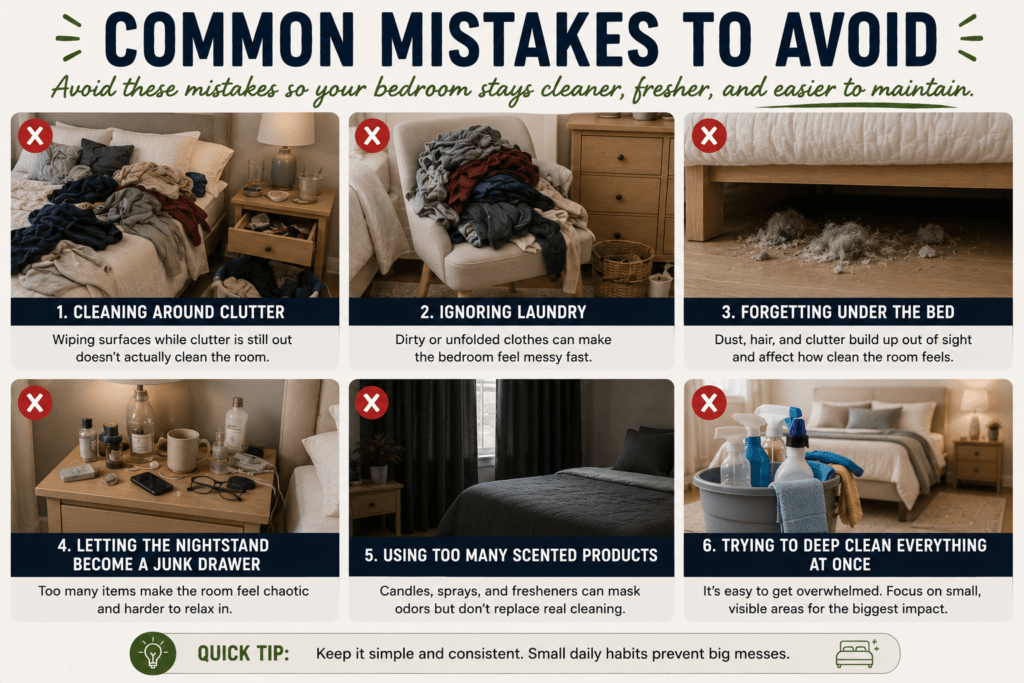
Cleaning Around Clutter
Wiping surfaces without moving clutter doesn’t help much. Clear first, then clean.
Ignoring Laundry
A bedroom can be clean but still feel messy if clothes are piled on a chair, floor, or bed.
Forgetting Under the Bed
Dust and random items under the bed can build up quickly, especially in small rooms.
Using Too Many Scented Products
Candles, sprays, and air fresheners can cover smells, but they don’t replace cleaning, laundry, and airflow.
Letting the Nightstand Become a Junk Drawer
A nightstand should help your routine, not hold every random item from the day.
Trying to Deep Clean Everything at Once
If you’re tired, start with the bed, floor, trash, and laundry. Those give the fastest results.
Quick Checklist: Bedroom Cleaning Reset
Use this when your bedroom needs to feel fresh again:
- Make the bed
- Clear the floor
- Take dishes to the kitchen
- Toss trash
- Reset the nightstand
- Sort clothes into clean, dirty, and re-wear
- Dust the dresser and nightstand
- Check under the bed
- Wipe mirrors
- Vacuum or sweep main paths
- Open a window if possible
- Do a five-minute evening reset
Conclusion
Good bedroom cleaning tips don’t need to be complicated. A bedroom feels fresher when the bed is made, the floor is clear, laundry is handled, trash is gone, and surfaces are dusted.
Start with what you can see first. Bed, floor, nightstand, laundry, and trash. Then handle deeper cleaning when you have more time.
Your bedroom doesn’t need to look perfect. It just needs to feel calm enough to rest in and easy enough to reset again tomorrow.