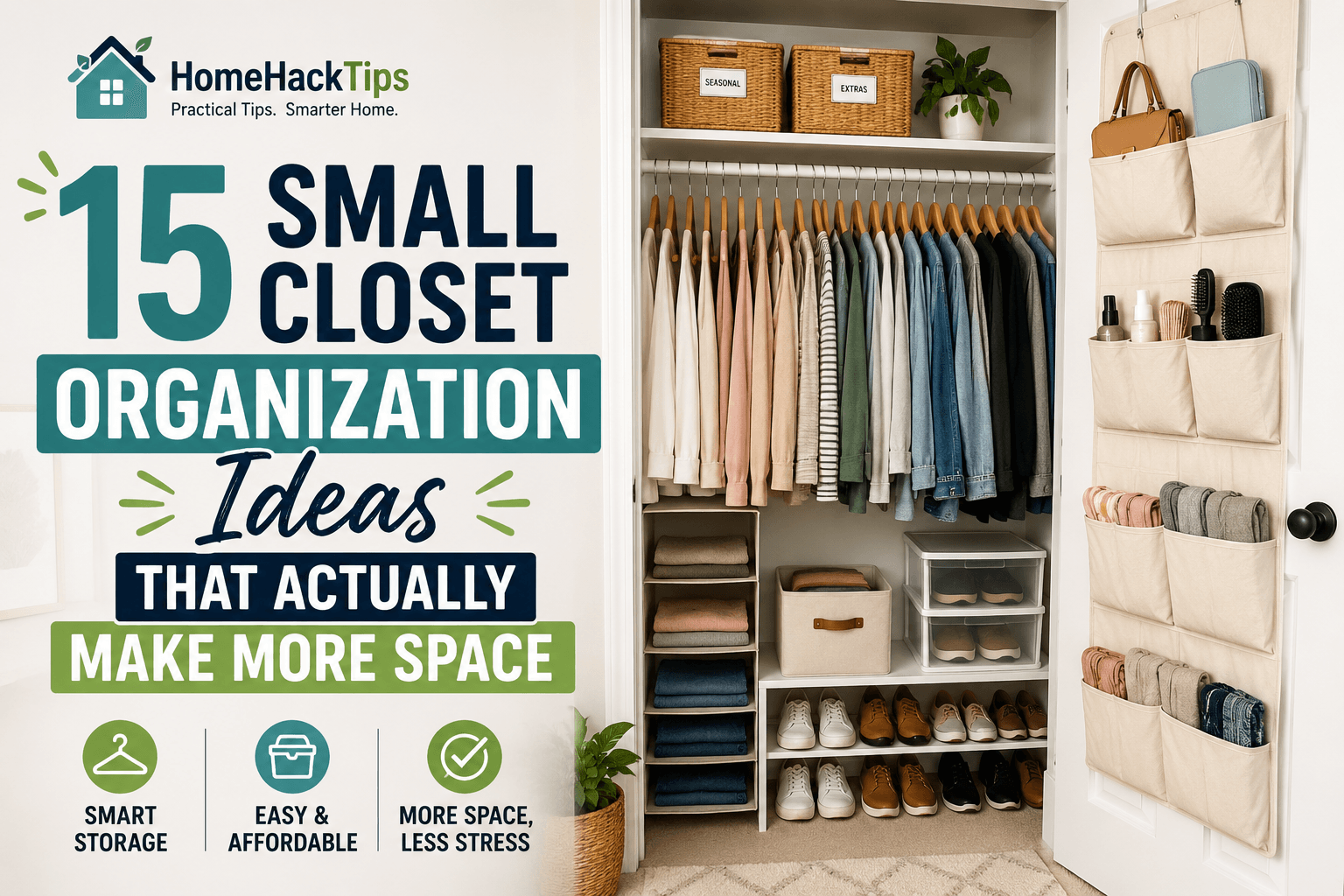
15 Small Closet Organization Ideas That Actually Make More Space
Small closets can make a normal amount of stuff feel like way too much stuff.
If you’re looking for small closet organization ideas, you probably don’t need someone telling you to build a custom closet system or buy a dozen matching containers. Most people just need practical ways to make the closet they already have work better.
Maybe it’s a tiny apartment closet with one hanging rod. Maybe it’s an older home with weird shelves and no real storage plan. Or maybe it’s a family closet that somehow holds coats, shoes, backpacks, cleaning supplies, and random things nobody wants to deal with.
The good news is, a small closet can feel a lot bigger when you use the space in a smarter way. Not perfect. Just smarter.
Table of Contents
Small Closet Organization Ideas That Actually Create More Space
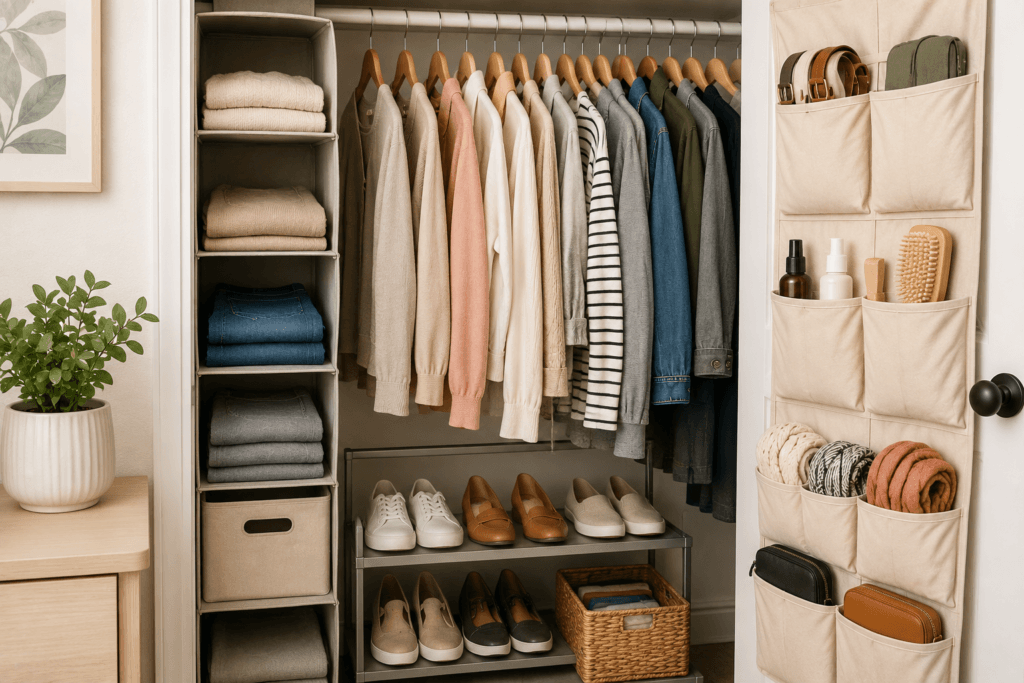
Before you buy anything, take a few minutes to look at what your closet is actually doing right now. Is it holding clothes? Shoes? Cleaning supplies? Holiday stuff? A little bit of everything?
That matters because the best closet organization tips are not just about making a closet look nice. They’re about making it easier to use every day.
1. Start With a Quick Closet Reset
Take everything out that’s easy to remove. You don’t have to empty the whole closet if that feels overwhelming. Start with the floor, the top shelf, or one side of the hanging rod.
Why it works: small closets get messy fast because there’s no extra space to hide the mess. A quick reset lets you see what you’re actually working with.
Example: In an apartment closet, you might find shoes, tote bags, old jackets, umbrellas, and random boxes all sitting on the floor. Just clearing the floor can make the closet feel twice as usable.
Small warning: Don’t start this at 10 p.m. unless you’re okay with sleeping next to a pile of clothes. Pick one section if you’re short on time.
2. Remove Anything That Doesn’t Belong
Small closet storage works best when the closet has a clear job.
Pull out anything that doesn’t make sense in that space. This might include old paperwork, broken bags, empty boxes, random decor, or things you forgot were even there.
Why it works: a small closet can’t be a backup storage unit for the whole house. Every random item steals space from things you actually use.
Example: If your bedroom closet is packed with gift bags, old electronics, and extra bedding, your clothes are going to feel squeezed. Move those items to a better spot if you have one.
Small warning: In a rental or shared home, don’t throw away someone else’s stuff without asking. Make a “check later” box instead.
3. Use Matching Hangers If You Can
You don’t need expensive velvet hangers, but using the same type of hanger can help.
Mixed hangers take up uneven space. Big plastic hangers, wire hangers, and bulky wooden hangers all sit differently. That makes clothes bunch together.
Why it works: matching hangers create a cleaner line and often free up a little extra room on the rod.
Example: In a small bedroom closet, switching from thick plastic hangers to slim hangers can make shirts slide more easily and reduce that jammed-in feeling.
Small warning: Don’t buy new hangers if your current ones work fine and you’re on a tight budget. Start by removing broken or bulky hangers first.
4. Add a Second Hanging Rod
If your closet has one high hanging rod and a lot of empty space underneath, a second rod can help.
Use a hanging rod extender or tension-style rod if it fits your closet setup. This works best for shorter items like shirts, folded pants, kids’ clothes, and skirts.
Why it works: it turns unused lower space into real hanging space.
Example: In a kid’s closet, one lower rod can double the hanging room because children’s clothes are short. In an adult closet, use the top rod for shirts and the lower rod for pants folded over hangers.
Small warning: Renters should check lease rules before drilling or installing anything permanent. Choose removable options when possible.
5. Use Shelf Dividers for Stacks
Closet shelves can become messy fast, especially with sweaters, jeans, towels, or bags.
Shelf dividers help keep stacks from falling sideways. They also create little zones without needing a bunch of bins.
Why it works: stacked items stay neater when they have a boundary.
Example: In an older home with one long closet shelf, shelf dividers can separate sweaters, purses, and extra blankets so they don’t become one big leaning pile.
Small warning: Don’t stack too high. If you need to pull from the bottom, the whole pile may collapse anyway.
6. Store Out-of-Season Items Higher Up
Use the top shelf for things you don’t need every day.
This could include winter hats in summer, swimsuits in winter, extra blankets, seasonal shoes, or dressy items you rarely wear.
Why it works: easy-to-reach space should be saved for daily items. High shelves are better for occasional storage.
Example: In a small apartment closet, put winter scarves and gloves in one labeled bin on the top shelf during summer. That keeps your everyday clothes from fighting for space.
Small warning: Don’t store heavy bins overhead. It’s annoying and unsafe to pull down a heavy box from above your head.
7. Use the Back of the Closet Door
The back of the door is often wasted space.
A simple over-the-door organizer can hold shoes, scarves, belts, cleaning cloths, accessories, or kids’ small items.
Why it works: it creates storage without taking up shelf, rod, or floor space.
Example: For apartment closet organization, an over-the-door shoe organizer can hold rolled leggings, socks, sandals, hats, or small handbags.
Small warning: Make sure the organizer doesn’t stop the door from closing. Also check if over-door hooks scratch the paint or trim.
8. Try Slim Bins for Loose Items
Bins can help, but only when they have a clear purpose.
Use slim bins for small loose items like belts, winter accessories, small purses, workout gear, or extra toiletries.
Why it works: loose items spread out and make a closet look messier than it is. A bin gives them one place to land.
Example: In a hallway closet, use one small bin for gloves, one for dog-walking items, and one for reusable shopping bags.
Small warning: Don’t buy too many bins before sorting. That’s one of the easiest ways to spend money and still have a messy closet.
9. Keep Shoes Low and Simple
Shoes are one of the biggest reasons small closets feel crowded.
Use the floor, a low shoe rack, or clear shoe boxes if you already have them. Keep everyday shoes easiest to grab.
Why it works: shoes need structure. Without it, they spread across the floor and block the rest of the closet.
Example: In a busy family home, a low two-tier shoe rack can keep school shoes, sneakers, and sandals from becoming a pile by the door.
Small warning: Don’t store dirty or wet shoes directly against clothes, bags, or clean linens. Let them dry first.
10. File-Fold Small Clothing Items
File-folding means folding items so they stand upright instead of stacking flat.
This works well for T-shirts, leggings, workout clothes, pajamas, and kids’ clothes.
Why it works: you can see everything at once instead of digging through a stack and messing it up.
Example: If your closet has fabric drawers or small baskets, file-fold T-shirts so you can pull one out without destroying the whole drawer.
Small warning: This works best for casual clothes. Bulky sweaters may still be better stacked on a shelf.
11. Use Vertical Space on the Floor
If your closet floor has unused height, add vertical storage.
A small shelving unit, stackable shoe rack, or cube organizer can help turn floor space into layers.
Why it works: small closets usually have more height than width. Using vertical space helps you store more without spreading outward.
Example: In a coat closet, a narrow shelf at the bottom can hold shoes below and hats or bags above.
Small warning: Measure first. A shelf that almost fits is still a shelf that doesn’t fit.
12. Group Items by Daily Use
Put the things you use most often at eye level or within easy reach.
Rarely used items can go higher, lower, or farther back.
Why it works: if daily items are hard to reach, the closet gets messy because you’re always digging.
Example: In a work closet, keep weekday clothes in the center, weekend clothes to one side, and special occasion items farther back.
Small warning: Don’t organize only by color if it makes your closet harder to use. Pretty is nice, but useful matters more.
13. Label Only What Needs Labeling
Labels can help, but you don’t need to label every single thing.
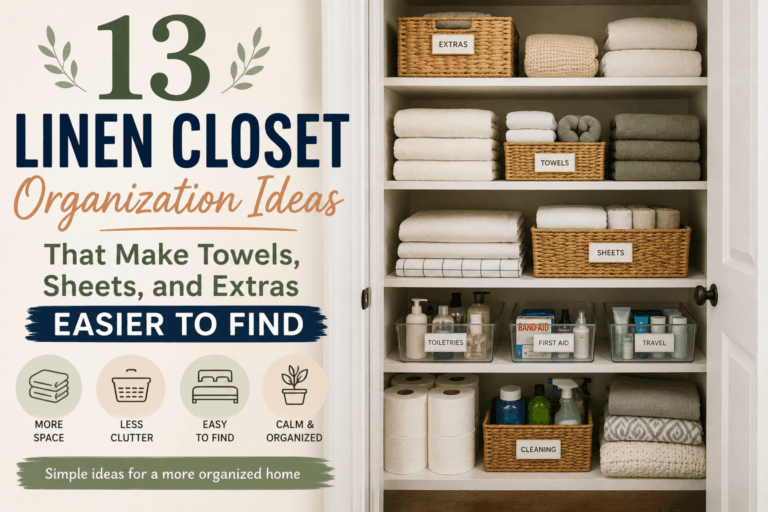
Label bins that hold items you might forget about, like “winter gear,” “guest linens,” “travel bags,” or “extra toiletries.”
Why it works: labels stop you from opening every bin when you’re looking for one thing.
Example: In a linen closet, labeling one bin “medicine cabinet extras” and another “travel-size items” can save a lot of searching.
Small warning: If a bin is clear and obvious, skip the label. Too many labels can feel like extra work.
14. Leave a Little Breathing Room
This might sound simple, but it matters.
Try not to fill every inch of the closet. Leave a small amount of open space on the rod, shelf, or floor.
Why it works: when a closet is packed full, every small mess becomes a bigger mess. Breathing room makes it easier to put things away.
Example: If you buy a new jacket, try to remove or relocate one old item. That keeps the closet from slowly getting tighter every month.
Small warning: If your closet is already overflowing, don’t skip decluttering and try to solve everything with storage products.
15. Do a 10-Minute Weekly Reset
Small closets need quick maintenance.
Once a week, spend 10 minutes putting shoes back, fixing hangers, refolding messy stacks, and removing anything that doesn’t belong.
Why it works: small messes are easy to fix. Big closet disasters take much longer.
Example: Sunday night can be a good time to reset a bedroom closet before the workweek starts. Just enough to make Monday morning easier.
Small warning: Don’t turn the weekly reset into a full closet cleanout. Keep it short so you’ll actually do it again.
Common Mistakes to Avoid
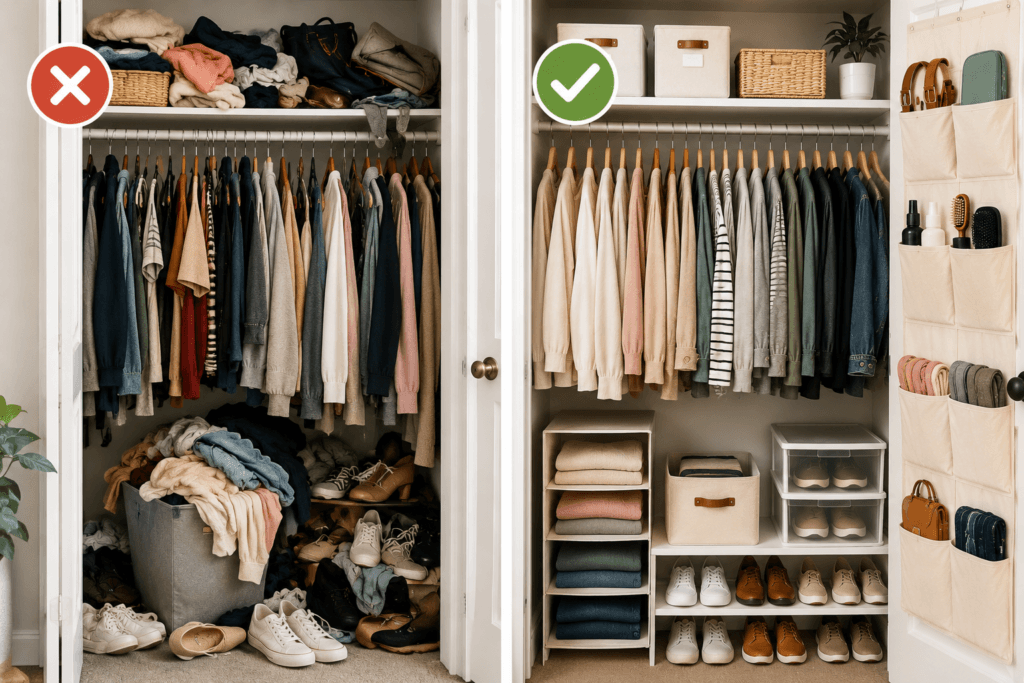
Buying Organizers Before Decluttering
This is probably the most common mistake. Organizers don’t create space if they’re just holding things you don’t use.
Sort first. Buy later, only if you actually need something.
Keeping Too Many “Maybe” Items
A few maybe items are normal. A whole closet full of maybe items is a problem.
If you haven’t worn something in a long time because it doesn’t fit, doesn’t feel good, or doesn’t match your life anymore, it may be time to let it go.
Ignoring the Closet Door
The door can be useful storage, especially in apartments. Just don’t overload it so much that the door won’t close.
Stacking Everything Too High
Tall piles look nice for about one day. Then they tip over. Use shorter stacks or dividers.
Using Too Many Bins
Bins are helpful, but too many bins can hide clutter. If you have to open five containers to find one scarf, the system is too complicated.
Not Checking Rental Rules
If you rent, check your lease before drilling, mounting shelves, or changing closet hardware. Removable organizers are usually the safer choice.
Quick Checklist: Small Closet Organization
Use this quick checklist when your closet needs a reset:
- Remove obvious trash and empty boxes
- Take out items that don’t belong
- Group similar items together
- Move out-of-season items higher up
- Put daily items within easy reach
- Use the door if it makes sense
- Keep shoes low and contained
- Use slim bins only for loose items
- Avoid overstuffing shelves and rods
- Leave a little open space
- Do a 10-minute reset once a week
FAQ
What is the best way to organize a small closet?
The best way to organize a small closet is to remove what doesn’t belong, group similar items, use vertical space, and keep daily items easy to reach. Start simple before buying organizers.
How do I organize a small closet on a budget?
For budget closet organization, use what you already have first. Try extra baskets, simple bins, matching hangers, shelf dividers, or an over-the-door organizer. Don’t buy a full closet system unless you really need it.
How can I make a small closet hold more clothes?
Use slim hangers, add a second hanging rod if possible, fold small clothing items upright, and move out-of-season clothes to a higher shelf or separate storage area.
What are the best small closet storage ideas for apartments?
Good small closet storage ideas for apartments include over-the-door organizers, removable hanging shelves, slim bins, stackable shoe racks, and tension rods. Avoid anything permanent unless your lease allows it.
Should I organize my closet by color or category?
Category is usually more useful than color. Group work clothes, casual clothes, shoes, accessories, and seasonal items first. You can organize by color inside those groups if you like the look.
How often should I clean out a small closet?
Do a quick reset once a week and a bigger cleanout every few months. Small closets get crowded fast, so regular maintenance helps more than a once-a-year overhaul.
Conclusion
These small closet organization ideas are not about creating a perfect closet that looks like a store display. They’re about making your real closet easier to use.
Start by removing what doesn’t belong. Then use the space you already have: the door, the top shelf, the floor, and the vertical space between them. A few small changes can make a closet feel bigger without spending much money.
And honestly, this is one of those little home fixes you don’t notice until it’s done. Then suddenly getting dressed, grabbing shoes, or finding the extra blanket feels a lot less annoying.
See more organization tips here.