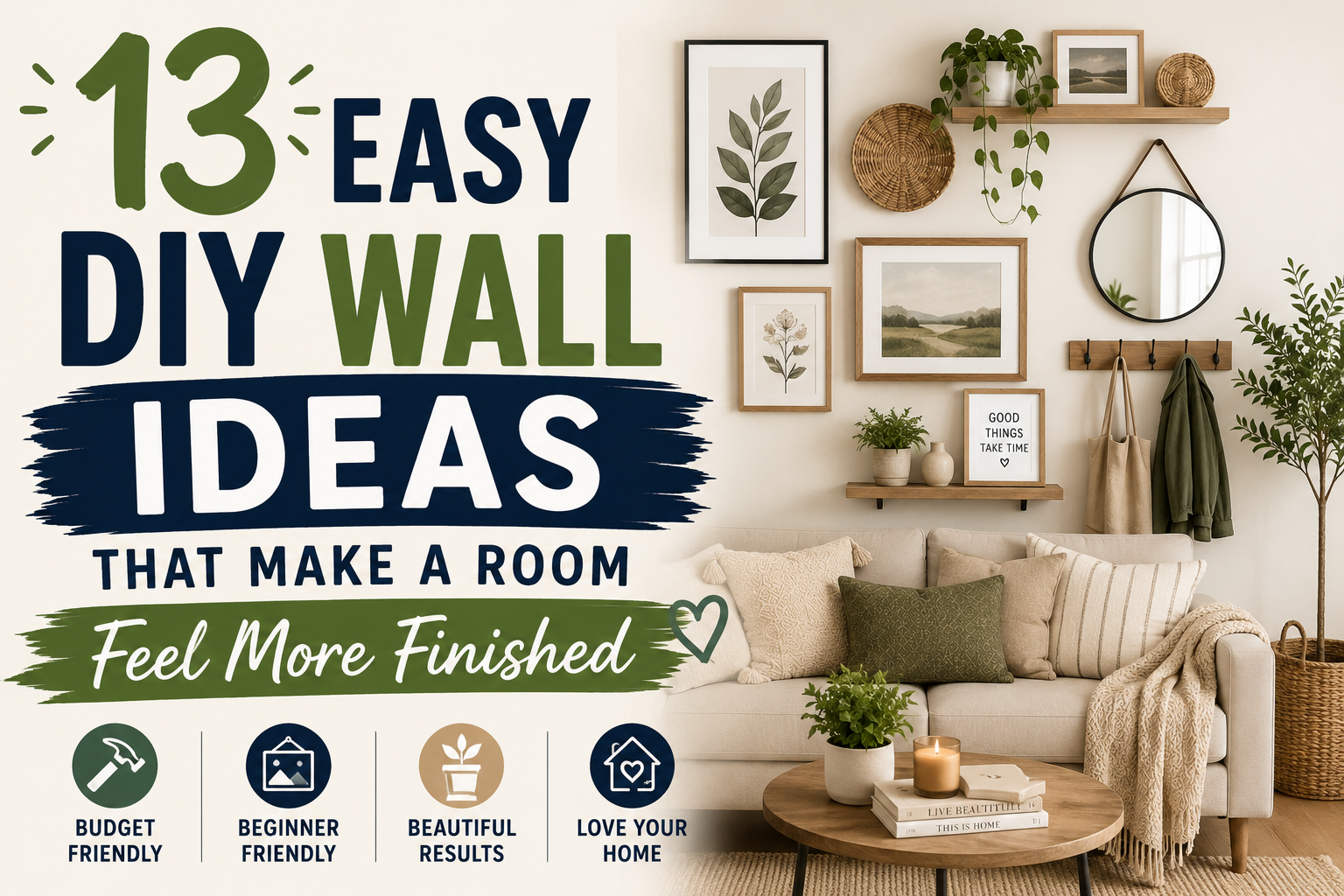
13 Easy DIY Wall Ideas That Make a Room Feel More Finished
Blank walls can make a room feel unfinished, even if the furniture is fine.
Maybe the living room feels empty. Maybe the bedroom looks plain. Maybe your entryway has nothing going on except coats and shoes. The good news is that you don’t need a full makeover to make walls look better.
These easy DIY wall ideas are beginner-friendly, budget-friendly, and realistic for normal homes, apartments, rentals, older houses, and busy family spaces. Some are temporary. Some are more permanent. Some need only basic tools and a little patience.
The goal is not to turn every wall into a big project. The goal is to choose one simple wall update that makes the room feel warmer, more personal, and more put together.
If you rent, check your lease before drilling, painting, using adhesive products, hanging heavy items, or applying peel-and-stick wallpaper. Even “removable” products can sometimes damage paint or drywall.
Table of Contents
Easy DIY Wall Ideas That Make a Big Difference
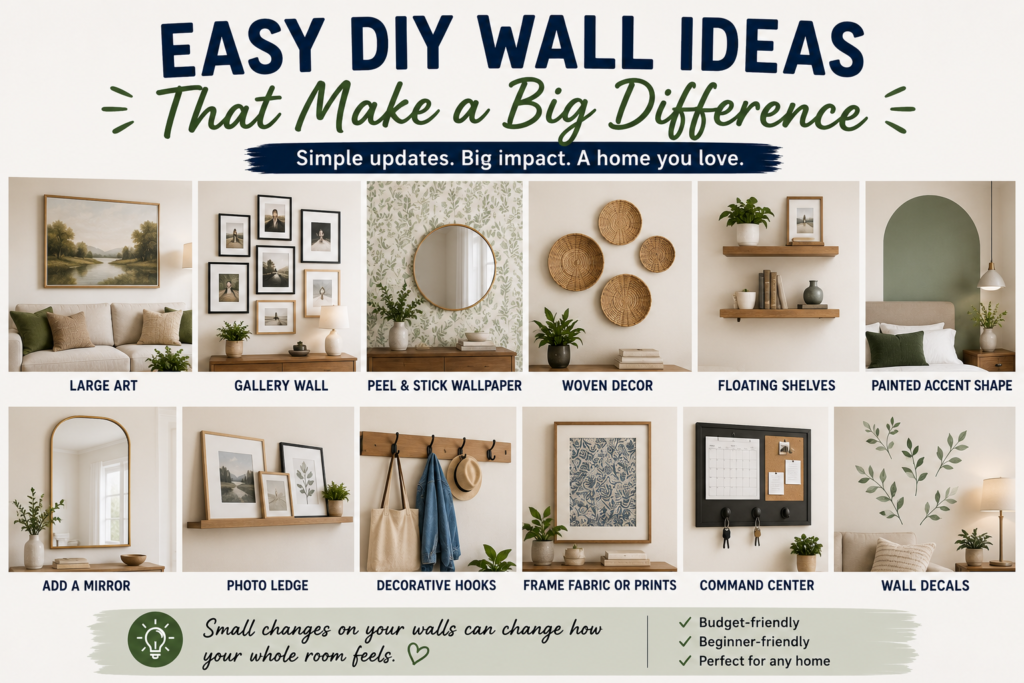
Before you start, look at the room and ask what the wall needs.
Does it need color? Texture? Storage? Personality? Better balance? A focal point?
A small bedroom may only need one mirror or one large print. A hallway may need a few hooks and a framed picture. A living room may feel better with a gallery wall or shelves.
Start small. One finished wall can make the whole room feel more intentional.
1. Start With One Wall, Not the Whole Room
Choose one wall to improve first.
Good options include the wall behind a couch, above a bed, near the entryway, behind a desk, or beside a dining table.
Why it works: one wall update feels manageable. It also gives the room a focal point without turning into a full renovation.
Example: In a small apartment living room, the wall above the couch may be the best place to start because it’s the first thing people notice.
Small warning: Don’t start three walls at once. Finish one area first, then decide if the room needs more.
2. Hang One Large Piece of Art
One large piece of art can make a room feel finished quickly.
It could be a framed print, canvas, poster, thrifted artwork, or printable art in a large frame.
Why it works: one larger piece usually looks cleaner than many tiny items scattered across the wall.
Example: Above a bed, one large landscape print or simple abstract piece can make the room feel calmer.
Small warning: Measure before hanging. Art that is too small can look lost, while art that is too large can overwhelm the space.
3. Create a Simple Gallery Wall
A gallery wall can add personality without needing expensive art.
Use family photos, printable art, thrifted frames, postcards, sketches, or simple black-and-white prints.
Why it works: a gallery wall fills blank space and makes the room feel more personal.
Example: In a hallway, use five to seven frames in similar colors for a clean, connected look.
Small warning: Lay the frames on the floor first before hanging. Random spacing can make the wall look messy.
4. Use Peel-and-Stick Wallpaper Carefully
Peel-and-stick wallpaper can make a wall look completely different.
Use it behind a desk, inside a closet, in a small entryway, behind open shelves, or on one accent wall.
Why it works: it adds pattern or color without traditional wallpaper paste.
Example: A small peel-and-stick wallpaper section behind a home office desk can make the area feel more designed.
Small warning: Test first. Peel-and-stick wallpaper can damage flat paint, textured walls, old paint, or humid areas.
5. Add Removable Wall Decals
Wall decals are useful for renters, kids’ rooms, nurseries, playrooms, and small accent areas.
Why it works: decals add personality without needing paint or big tools.
Example: Use small arch decals, stars, dots, botanical shapes, or simple line designs in a child’s bedroom.
Small warning: “Removable” does not always mean damage-free. Follow the instructions and test a small area.
6. Try a Painted Accent Shape
If you own your home or your rental allows painting, an accent shape can be easier than painting a full wall.
Try a painted arch, rectangle, circle, or half-wall behind furniture.
Why it works: a painted shape creates a focal point with less paint and less commitment than a whole-room color change.
Example: Paint a soft sage green arch behind a desk or reading chair to define the area.
Small warning: Use painter’s tape, protect floors, and test paint color first. Colors often look different once they’re on the wall.
7. Use Floating Shelves for Style and Storage
Floating shelves can make a wall useful and pretty.
Use them for books, plants, framed art, candles, baskets, or small everyday items.
Why it works: shelves add vertical storage and help fill wall space without large furniture.
Example: In a small bedroom, two narrow shelves above a dresser can hold plants, framed prints, and small storage boxes.
Small warning: Shelves must be installed safely. Renters should check lease rules before drilling, and heavy items need proper anchors.
8. Hang Lightweight Baskets or Woven Decor
Woven wall decor adds texture without making the room feel busy.
Use flat baskets, woven trays, macrame, or lightweight fabric pieces.
Why it works: texture makes a plain wall feel warmer, especially in neutral rooms.
Example: In a dining nook or bedroom, a small group of three woven baskets can add interest without bright colors.
Small warning: Keep the arrangement simple. Too many pieces can look cluttered.
9. Add a Mirror to Brighten the Room
A mirror can help a room feel bigger and brighter.
Place it across from a window, above a console table, near an entryway, or over a dresser.
Why it works: mirrors reflect light and make blank walls more useful.
Example: In a narrow hallway, a round mirror above a slim table can make the space feel more open.
Small warning: Heavy mirrors need safe mounting. If you rent, consider a leaning or freestanding mirror where it won’t tip.
10. Make a Simple Photo Ledge
A photo ledge is a narrow shelf that holds frames without committing to exact nail placement for every picture.
Why it works: you can swap photos and art whenever you want without rehanging the whole wall.
Example: Use a photo ledge in a hallway, above a couch, or in a bedroom to display layered frames.
Small warning: Ledges still need secure installation. Don’t overload them with heavy frames.
11. Use Hooks as Wall Decor and Storage
Hooks can be both useful and decorative.
Use them for hats, bags, jackets, towels, keys, aprons, or baskets.
Why it works: hooks make everyday items easier to grab while filling blank wall space.
Example: In an entryway, a row of hooks can hold daily bags and jackets while making the wall look more finished.
Small warning: Removable hooks have weight limits. Drilled hooks are stronger but may not be allowed in rentals.
12. Frame Fabric, Wallpaper Scraps, or Prints
You don’t need expensive art to fill a wall.
Frame a piece of fabric, wrapping paper, wallpaper sample, calendar page, greeting card, or printable design.
Why it works: framing simple materials makes them look more intentional.
Example: A pretty fabric scrap in a thrifted frame can work well in a bedroom or bathroom.
Small warning: Keep moisture in mind. Bathrooms may not be the best place for paper art unless it’s protected.
13. Add a Renter-Friendly Command Center
A command center can help organize daily life.
Use a wall calendar, small corkboard, magnetic board, mail holder, hooks, or clipboard system.
Why it works: it turns a wall into a useful spot for schedules, papers, keys, and reminders.
Example: In a rental kitchen or entryway, use a small freestanding board or removable hanging system for weekly notes and important papers.
Small warning: Don’t let the command center become a paper pile on the wall. Reset it weekly.
Common Mistakes to Avoid
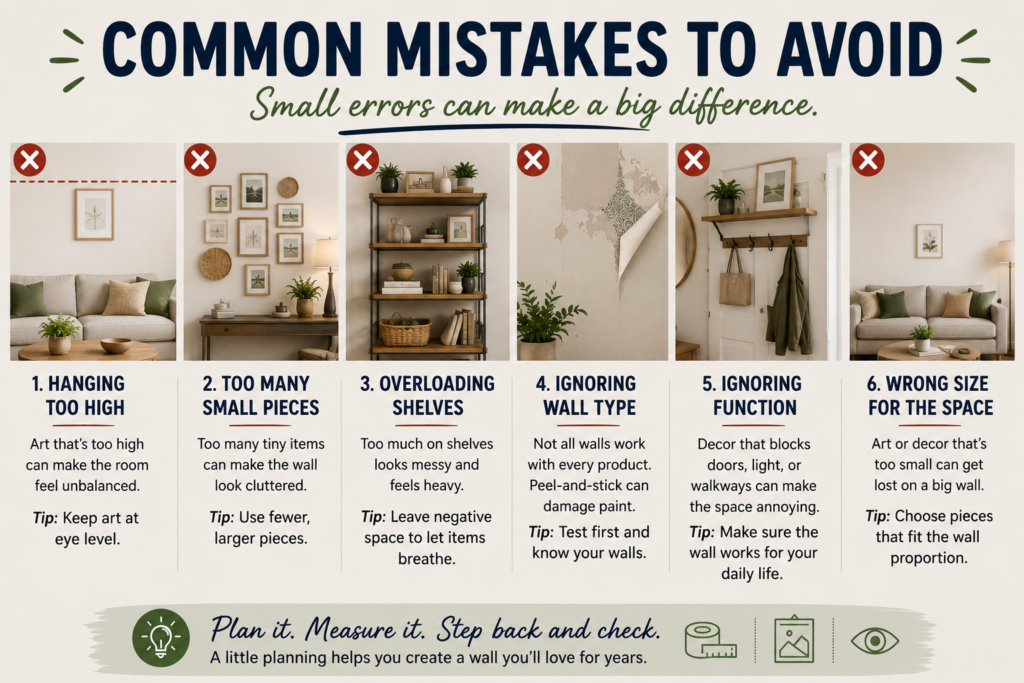
Starting Too Big
A full accent wall, big gallery wall, or shelf system can feel overwhelming. Start with one small area first.
Hanging Art Too High
Art often looks better at eye level or connected to the furniture below it. If it floats too high, the room can feel awkward.
Using Too Many Tiny Pieces
Lots of small items can make a wall feel cluttered. Try fewer, larger pieces for a cleaner look.
Ignoring Wall Type
Drywall, plaster, brick, tile, and textured walls all behave differently. Use the right hanging method for your wall.
Trusting Every “Removable” Product
Peel-and-stick wallpaper, decals, hooks, and strips can still damage paint. Test first and remove carefully.
Forgetting Function
A wall update should help the room feel better, not make it harder to use. Don’t add shelves, hooks, or decor where they block movement.
Quick Checklist: DIY Wall Update
Use this before starting:
- Pick one wall
- Decide if the wall needs art, storage, color, or texture
- Measure the space
- Check lease rules if you rent
- Test removable products first
- Choose lightweight options if unsure
- Lay out gallery walls before hanging
- Use the right hooks or anchors
- Keep decor simple
- Leave breathing room around pieces
- Avoid blocking doors, furniture, or walkways
- Step back and check the whole room
Conclusion
Good easy DIY wall ideas can make a room feel more finished without a major project.
Start with one wall. Add art, a mirror, shelves, hooks, texture, or a simple peel-and-stick accent if it makes sense for your home. Keep it practical, safe, and realistic for your space.
A blank wall doesn’t need to stay blank. With one thoughtful update, the whole room can feel warmer, more personal, and much more put together.