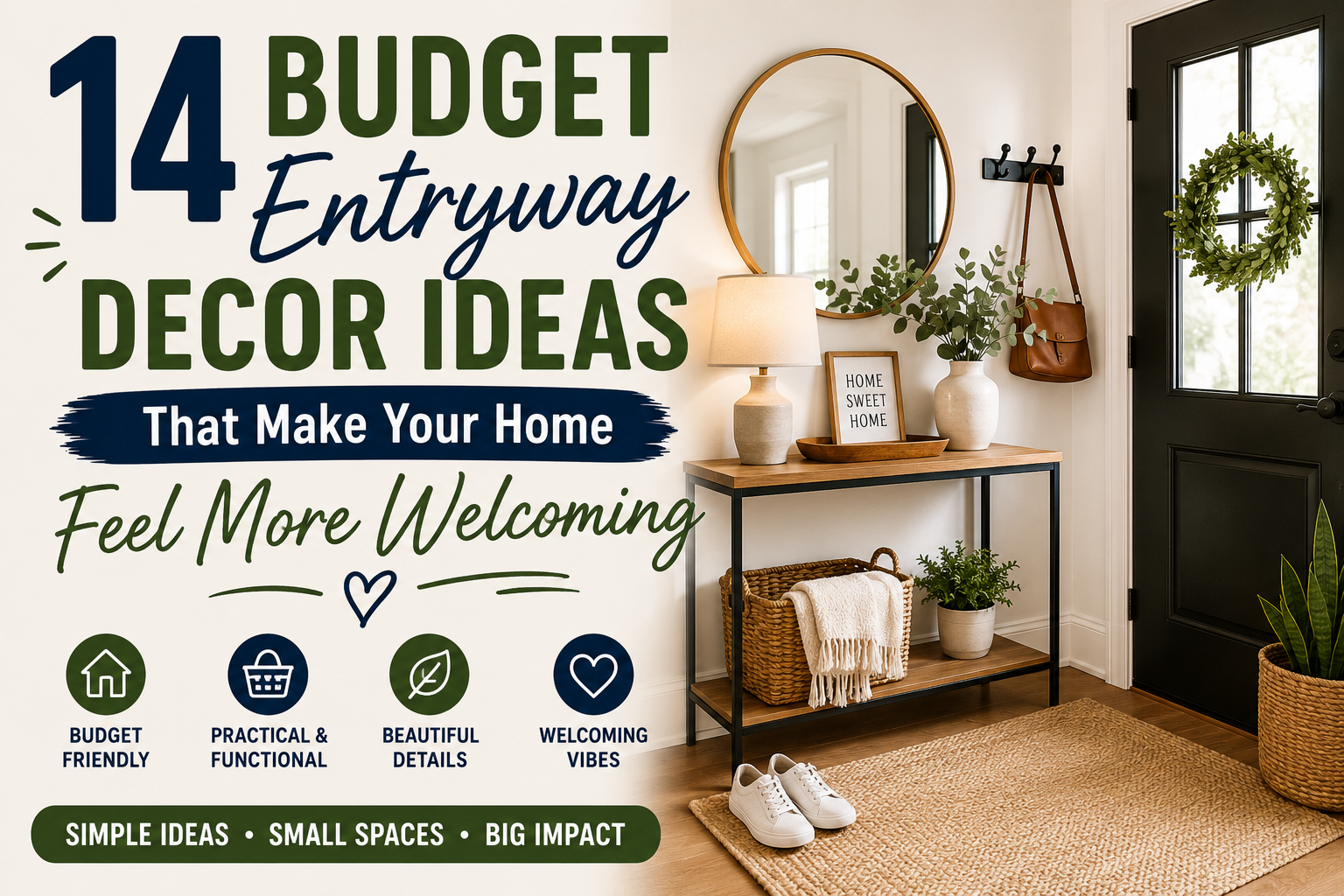
14 Budget Entryway Decor Ideas That Make Your Home Feel More Welcoming
Your entryway is the first thing you see when you walk in.
It’s also the place where shoes, keys, bags, mail, jackets, sunglasses, dog leashes, school papers, and random receipts seem to land all at once.
That’s why simple budget entryway decor ideas can make such a big difference. You don’t need a big foyer or expensive furniture. Even a small apartment entry, narrow hallway, or corner by the front door can feel more welcoming with a few practical changes.
The best entryway decor does two things at the same time: it looks nice and it helps control clutter.
These ideas work for rentals, apartments, older homes, small spaces, family homes, and homes without a “real” entryway. The goal is not to create a perfect magazine-style foyer. The goal is to make the first few steps into your home feel calmer, cleaner, and more useful.
Table of Contents
Budget Entryway Decor Ideas That Make the Space Feel Finished
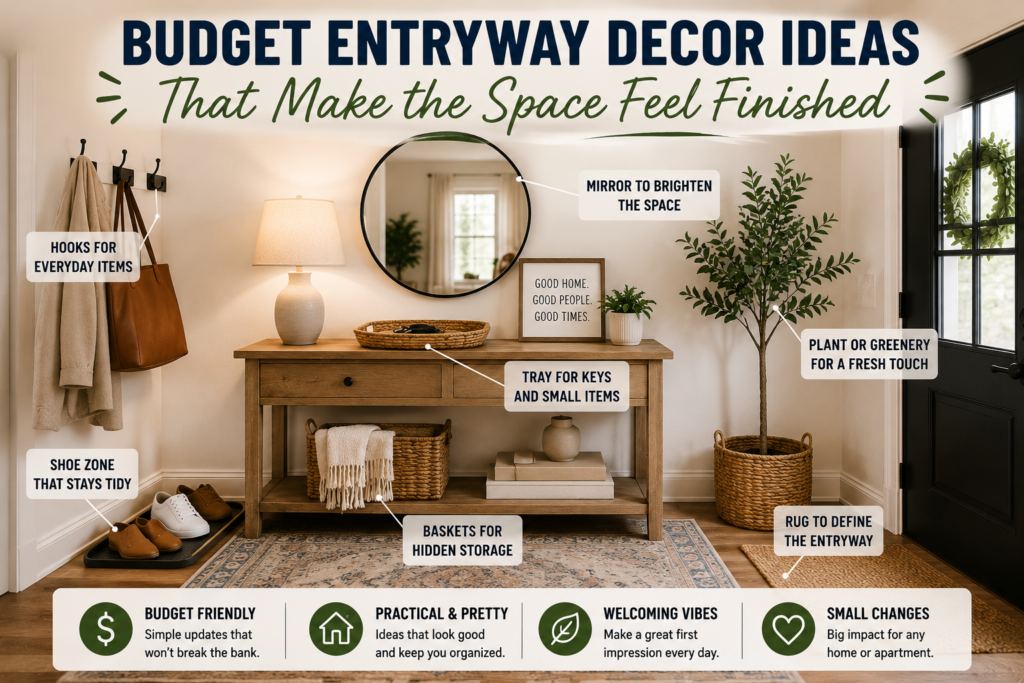
Before buying anything, look at what your entryway actually needs.
Does it need storage? Better lighting? A place for keys? A shoe solution? Something pretty on the wall? A small rug to define the space?
A good entryway does not need a lot of decor. It usually needs a few useful pieces that make the area feel intentional.
1. Start by Clearing the Floor
The fastest way to improve an entryway is to clear the floor.
Move extra shoes, bags, boxes, returns, old mail, umbrellas, and anything that doesn’t need to live by the door.
Why it works: entryways are usually small. When the floor is crowded, the whole area feels messy.
Example: In a small apartment, keep only the shoes you wear most often near the door. Move seasonal shoes, dress shoes, and extras to a closet or bedroom.
Small warning: Don’t just push everything into a nearby corner. Give daily items a simple home so the clutter doesn’t come back tomorrow.
2. Add a Small Entryway Table or Shelf
A small table, narrow console, floating shelf, or wall-mounted ledge can make an entryway feel more finished.
Why it works: it gives you a place for keys, mail, a lamp, a small plant, or a tray.
Example: If you don’t have room for a console table, use a small wall shelf or a slim nightstand-style table near the door.
Small warning: Renters should check lease rules before mounting shelves. If drilling is not allowed, use a freestanding option.
3. Use a Tray for Keys and Small Items
A tray is one of the easiest budget entryway decor ideas.
Use it for keys, sunglasses, wallets, lip balm, earbuds, or anything you grab before leaving.
Why it works: small items look neater when they are grouped together instead of scattered.
Example: Put a wooden tray on a console table with a small bowl for keys and a candle or plant beside it.
Small warning: Don’t let the tray become a junk drawer. Reset it once a week.
4. Add Hooks for Everyday Bags and Jackets
Hooks are useful and decorative.
Use them for jackets, bags, hats, dog leashes, reusable grocery bags, or kids’ school items.
Why it works: hooks keep daily items off the floor and make leaving the house easier.
Example: In a rental, use removable hooks if allowed, or a freestanding coat rack if you want to avoid wall damage.
Small warning: Removable hooks still have weight limits and can damage paint if removed incorrectly. Follow the instructions carefully.
5. Use Baskets for Hidden Storage
Baskets make an entryway feel warmer while hiding clutter.
Use them for shoes, scarves, gloves, umbrellas, pet supplies, kids’ items, or returns that need to leave the house.
Why it works: baskets look decorative but still do real work.
Example: Put one basket under a bench for shoes and one smaller basket on a shelf for keys, gloves, or dog leashes.
Small warning: Don’t use too many baskets. If every basket is full, the entryway will still feel crowded.
6. Add a Mirror to Brighten the Space
A mirror can make a small entryway feel bigger and brighter.
Place it above a console table, near the front door, or on a narrow wall.
Why it works: mirrors reflect light and give you a quick spot to check yourself before leaving.
Example: A round mirror above a small table can make even a plain apartment entry feel more styled.
Small warning: Heavy mirrors need safe mounting. Renters should use a leaning or freestanding mirror only where it won’t tip.
7. Use a Washable Rug or Runner
A rug helps define the entryway and catches dirt from shoes.
Choose a washable or easy-clean rug that fits the space.
Why it works: it adds warmth, texture, and function at the same time.
Example: In a narrow hallway entry, a runner can make the space feel more connected and less bare.
Small warning: Use a rug pad if the rug slides. Avoid thick rugs that block the door.
8. Add a Small Lamp if There Is an Outlet
Entryways often have harsh overhead lighting or no cozy lighting at all.
A small lamp can make the area feel warmer and more welcoming.
Why it works: softer lighting makes the first area of your home feel more inviting.
Example: Place a small lamp on an entry table with a tray and one framed print.
Small warning: Keep cords tucked away so nobody trips. Don’t overload outlets.
9. Style One Simple Wall Print
One piece of wall art can make an entryway feel intentional.
Choose a print, framed quote, family photo, landscape, botanical art, or simple abstract piece.
Why it works: blank walls can make an entryway feel unfinished, especially if the area has no furniture.
Example: Hang one medium-size framed print above a bench or entry table.
Small warning: Don’t use too many tiny frames in a small entryway. One larger piece often looks cleaner.
10. Bring in a Plant or Greenery
Plants make an entryway feel fresh.
Use a real plant if the light is right, or a good faux plant if the area is dark.
Why it works: greenery adds life and softness without needing much space.
Example: Place a small plant on a console table or a taller plant in a basket near the door.
Small warning: Some real plants are toxic to pets. Check before bringing new plants into a home with cats or dogs.
11. Create a Shoe Zone That Looks Tidy
Shoes are one of the biggest entryway problems.
Use a shoe tray, small rack, basket, bench shelf, or low cabinet.
Why it works: shoes look less messy when they have a clear boundary.
Example: A simple black or wood shoe rack under a bench can keep everyday shoes easy to grab without taking over the floor.
Small warning: Don’t store every pair of shoes by the door. Keep only daily shoes there.
12. Use a Bench if Space Allows
A bench makes an entryway feel more complete and useful.
It gives people a place to sit while putting on shoes and can also add storage underneath.
Why it works: a bench creates a natural drop zone and helps define the entry area.
Example: Use a small bench with baskets underneath for shoes, bags, or winter accessories.
Small warning: Measure before buying. A bench that is too deep can block the walkway.
13. Repeat Colors From Nearby Rooms
Your entryway will feel more connected if it uses colors from the rest of your home.
Repeat two or three colors from the living room, hallway, or kitchen.
Why it works: repeated colors make budget decor look more intentional.
Example: If your living room has cream, wood, and sage green, use a cream rug, wood table, and small green plant in the entryway.
Small warning: Don’t match everything exactly. A natural mix looks better than a perfect set.
14. Keep Decor Useful, Not Crowded
A small entryway can quickly become overdecorated.
Choose decor that either looks good, solves a problem, or both.
Why it works: useful decor keeps the space beautiful without making it harder to use.
Example: A mirror, tray, lamp, basket, and one plant may be enough for a small entryway.
Small warning: If decor blocks keys, bags, shoes, or the door, it’s too much.
Common Mistakes to Avoid
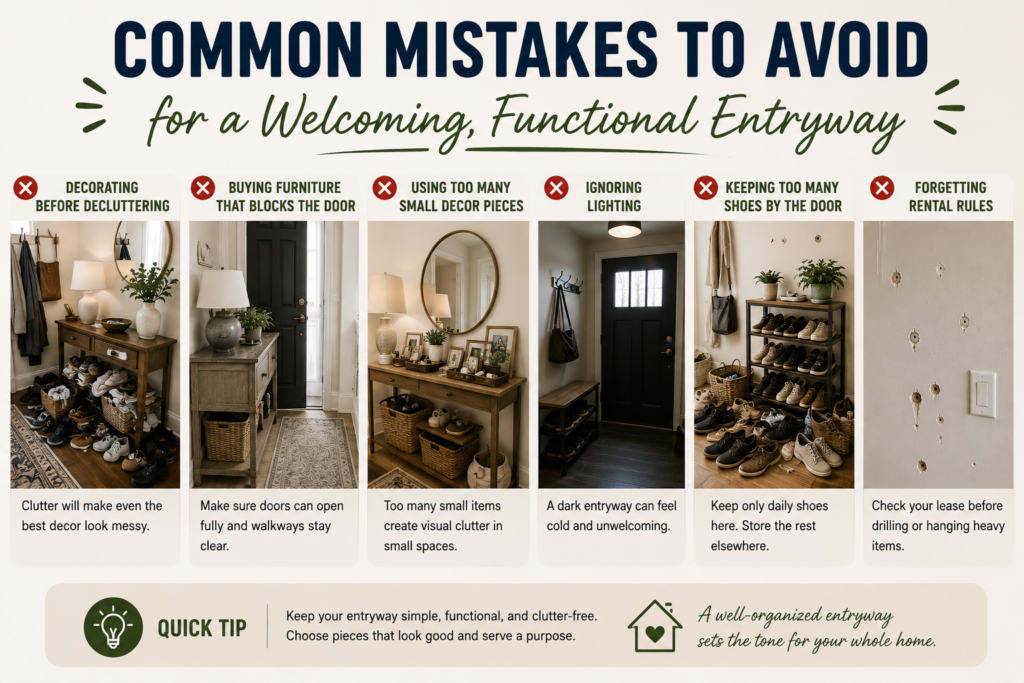
Decorating Before Decluttering
If the entryway is full of shoes, bags, and mail, decor will only add more visual clutter. Clear first.
Buying Furniture That Blocks the Door
A table, bench, or shoe rack should not make it harder to walk in or open the door fully.
Using Too Many Small Decor Pieces
Tiny frames, candles, bowls, and random objects can make a small entryway feel busy. Choose fewer pieces with purpose.
Ignoring Lighting
A dark entryway can feel cold and unwelcoming. A small lamp, better bulb, or mirror can help.
Keeping Too Many Shoes by the Door
Daily shoes can stay near the entry. The rest should live somewhere else if space is tight.
Forgetting Rental Rules
Renters should check lease rules before drilling, hanging heavy mirrors, installing shelves, or using adhesive hooks.
Quick Checklist: Budget Entryway Refresh
Use this before shopping:
- Clear the floor
- Remove shoes you don’t wear daily
- Add a tray for keys
- Use hooks for daily items
- Add baskets for hidden storage
- Choose one mirror or wall print
- Use a washable rug
- Add a lamp if possible
- Create a simple shoe zone
- Keep walkways clear
- Repeat colors from nearby rooms
- Avoid overcrowding surfaces
- Check lease rules if you rent
Conclusion
Good budget entryway decor ideas don’t need to be expensive or complicated.
Start with the basics: clear the floor, create a shoe zone, add hooks, use a tray, bring in a mirror or wall print, and make the lighting feel warmer.
Your entryway is a small space, but it has a big effect on how your home feels. With a few simple changes, it can feel cleaner, more welcoming, and much easier to use every day.