
13 Easy DIY Home Improvement Tips for Beginners
Not every home project needs a contractor, a garage full of tools, or three weekends of your life. Some of the best upgrades are small, simple, and easy to finish without turning your home upside down.
These easy DIY home improvement tips are for normal people in normal homes. Renters, apartment dwellers, busy parents, first-time homeowners, and anyone who wants their space to feel better without spending a fortune.
The goal isn’t to make your home look like a magazine. It’s to fix the little things that bother you every day. A loose cabinet knob. A dark corner. A scratched wall. A messy entryway. This is one of those things you don’t always notice until it’s fixed, and then suddenly the whole room feels better.
Before starting any DIY project, take your time, read product instructions, and use basic safety gear when needed. If a project involves electrical wiring, plumbing inside walls, structural changes, gas lines, or anything that feels unsafe, call a professional.
Table of Contents
Easy DIY Home Improvement Tips That Make a Real Difference
The best beginner DIY projects usually have three things in common: they’re affordable, low-risk, and easy to undo or adjust.
That’s especially important if you rent. Always check your lease before drilling, painting, changing fixtures, or using adhesive products on walls. Some landlords are relaxed. Some are not. It’s better to know before you end up paying for damage later.
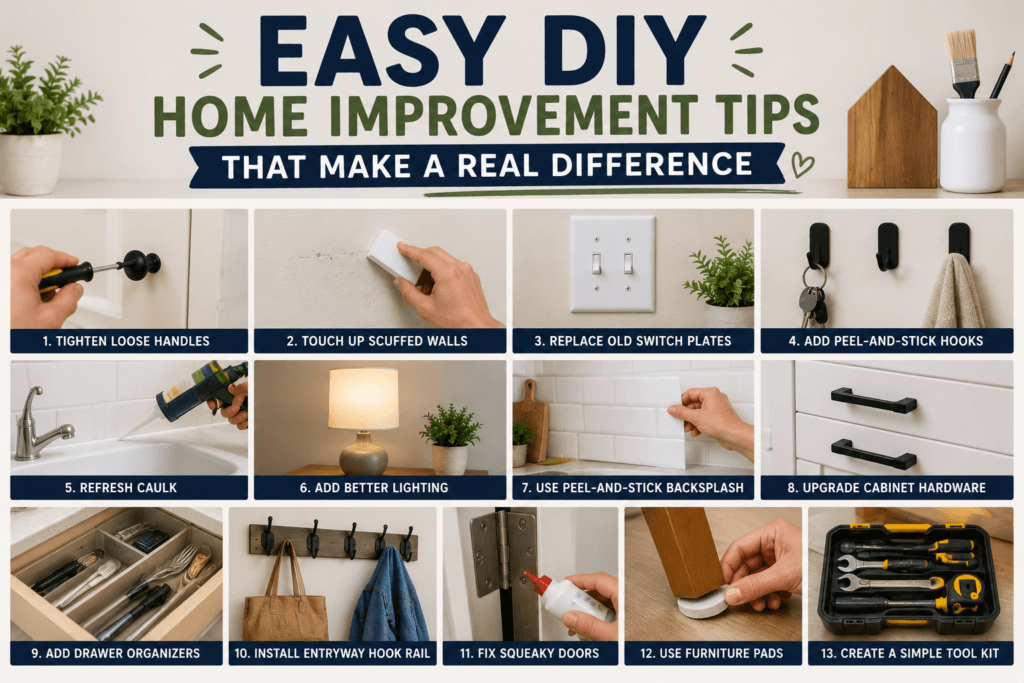
1. Tighten Loose Handles and Knobs
Start with the tiny things you touch every day.
Check cabinet knobs, drawer pulls, doorknobs, closet handles, and furniture handles. Tighten loose screws with a basic screwdriver.
Why it works: loose handles make a home feel older and more worn out than it really is. Tightening them takes minutes, but it makes daily use feel smoother.
Example: In an older kitchen, a drawer pull that wiggles every time you open it can make the whole cabinet feel cheap. A quick tighten may solve it.
Small warning: Don’t overtighten screws, especially on particleboard furniture or older cabinets. You can strip the hole or crack the material.
2. Touch Up Scuffed Walls
Wall scuffs make a room feel tired fast.
Use a magic eraser-style sponge for light marks, or use leftover paint for small touch-ups if you have the exact color. Clean the wall first so you’re not painting over dust or grease.
Why it works: walls take a lot of abuse from bags, chairs, kids, pets, and furniture. Fixing small marks makes the room feel fresher without repainting everything.
Example: In a hallway, scuffs near light switches and doorways are usually the first thing to clean or touch up.
Small warning: Test cleaning sponges on a hidden spot first. They can dull some paint finishes. Renters should ask before painting unless touch-ups are clearly allowed.
3. Replace Old Switch Plates
Old switch plates and outlet covers can make a clean room look dingy.
Replacing them is usually simple and affordable. Choose basic white covers for a clean look, or match the existing style in the room.
Why it works: switch plates collect fingerprints, paint edges, and yellowing over time. New ones make walls look cleaner.
Example: In a bathroom or kitchen, replacing stained switch plates can make the area around the wall feel instantly neater.
Small warning: Turn off power at the breaker if you’re working near outlets or anything electrical. If you’re unsure, don’t mess with electrical parts. Covers are simple, but safety still matters.
4. Add Peel-and-Stick Hooks
Hooks solve a lot of small home problems.
Use them for keys, towels, hats, dog leashes, reusable bags, or lightweight cleaning tools.
Why it works: hooks get things off counters, floors, chairs, and doorknobs. They make it easier to put things away without thinking too hard.
Example: In a small apartment entryway, two or three peel-and-stick hooks can create a mini drop zone for keys and bags.
Small warning: Follow the weight limit. Also, adhesive hooks can damage paint when removed, so renters should test carefully and check lease rules.
5. Refresh Caulk Around Sinks and Tubs
Old caulk can make a bathroom or kitchen look dirty even after cleaning.
If the caulk is cracked, peeling, or stained, removing and replacing it can make a big difference. Use caulk made for kitchens and bathrooms, and make sure the area is clean and dry before applying.
Why it works: fresh caulk creates a cleaner edge and helps keep water from getting into gaps.
Example: Around a bathroom sink, a thin line of new white caulk can make the whole vanity look cleaner.
Small warning: If you see mold, soft walls, water damage, or a musty smell, don’t just cover it with new caulk. Moisture problems need to be fixed first. Use ventilation and follow the product label.
6. Add Better Lighting in Dark Spots
A room can feel messy just because it’s dim.
Add battery puck lights, plug-in lamps, LED strips, or motion lights in dark closets, pantries, laundry corners, and under cabinets.
Why it works: better lighting makes spaces easier to use and easier to keep clean.
Example: In an older home with a dark hallway closet, a battery-powered motion light can make it much easier to find coats, shoes, or cleaning supplies.
Small warning: Don’t overload outlets with too many plug-in lights. For wired lighting changes, call an electrician.
7. Use Peel-and-Stick Backsplash Tiles
Peel-and-stick backsplash can freshen up a kitchen or laundry area without a full renovation.
Use it behind a stove, sink, coffee station, or laundry counter if the surface is smooth and clean.
Why it works: it adds color, texture, and a finished look without tile work.
Example: In a rental kitchen with plain white walls, a peel-and-stick backsplash behind the counter can make the space feel more intentional.
Small warning: Heat, moisture, and wall texture matter. Some peel-and-stick products don’t work well near high heat or on rough walls. Renters should check if removal may damage paint.
8. Upgrade Cabinet Hardware
Changing knobs and pulls can update cabinets without painting them.
Choose hardware that fits the existing holes if possible. That keeps the job simple and avoids drilling new holes.
Why it works: hardware is small, but it changes the feel of cabinets and furniture.
Example: Swapping dated brass knobs for simple black, nickel, or brushed metal pulls can make a bathroom vanity or kitchen cabinet look newer.
Small warning: Measure the hole spacing before buying pulls. Guessing can lead to a pile of hardware that doesn’t fit.
9. Add Simple Drawer Organizers
Drawers get messy because everything slides around.
Use simple dividers, small boxes, or adjustable organizers for junk drawers, kitchen tools, bathroom items, and office supplies.
Why it works: when items have sections, drawers stay usable longer.
Example: In a kitchen drawer, separate measuring spoons, clips, batteries, and pens so you don’t have to dig every time.
Small warning: Don’t buy organizers before sorting. Empty the drawer first, toss trash, remove duplicates, then measure.
10. Install a Basic Entryway Hook Rail
A hook rail can fix a messy entryway fast.
Use it for coats, backpacks, hats, bags, or dog leashes. If you rent, use a freestanding rack or heavy-duty removable hooks instead of drilling.
Why it works: entryways get messy because people need a fast place to drop things.
Example: In a busy family home, a row of hooks near the door can keep backpacks off the floor and jackets off dining chairs.
Small warning: If installing into a wall, use proper anchors or screw into studs. A hook rail loaded with coats can pull out of drywall if installed poorly.
11. Fix Squeaky Doors
A squeaky door can make a home feel more worn down than it is.
Apply a small amount of lubricant to the hinges, then open and close the door a few times. Wipe away extra.
Why it works: the sound is usually from friction in the hinge. A little lubricant can quiet it quickly.
Example: Bedroom, bathroom, and pantry doors are common squeak spots because they’re opened all day.
Small warning: Don’t use too much product. It can drip onto trim, floors, or carpets.
12. Use Furniture Pads to Protect Floors
Add felt pads under chairs, tables, stools, and furniture that gets moved often.
Why it works: pads reduce scratching and make furniture quieter to move.
Example: In an apartment with hard floors, felt pads under dining chairs can cut down on scraping sounds and floor marks.
Small warning: Check pads every few months. Dirt can stick to them and scratch floors anyway if they get gritty.
13. Create a Simple Tool Kit
A beginner DIY tool kit saves time and frustration.
You don’t need everything. Start with basics:
- Screwdriver set
- Hammer
- Tape measure
- Small level
- Pliers
- Utility knife
- Flashlight
- Painter’s tape
- Assorted screws and wall anchors
Why it works: small repairs are easier when the tools are in one place.
Example: Tightening a handle, hanging a small frame, measuring a shelf, or fixing a loose chair leg is much easier when you don’t have to search the whole house.
Small warning: Store sharp tools safely, especially if you have kids. Wear eye protection when drilling, cutting, or working overhead.
Common Mistakes to Avoid
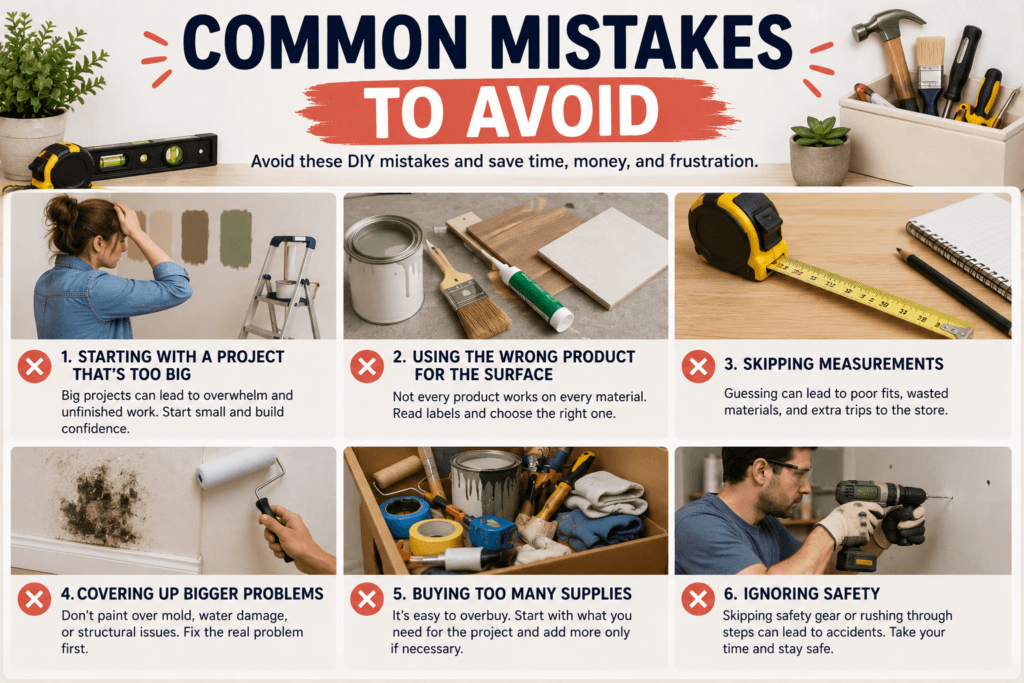
Starting With a Project That’s Too Big
Beginner DIY should build confidence. Don’t start with a full room makeover if you’ve never done smaller projects before.
Skipping Measurements
Measure twice before buying hardware, shelves, bins, backsplash panels, or anything that needs to fit a specific space.
Using the Wrong Product for the Surface
Not every adhesive, paint, caulk, or cleaner works on every material. Read labels and test first.
Ignoring Rental Rules
Renters should be careful with paint, drilling, adhesive wallpaper, peel-and-stick tiles, and mounted shelves. Check the lease first.
Covering Up Bigger Problems
Don’t cover water damage, mold, soft drywall, electrical issues, or structural cracks with cosmetic fixes. Those need proper repair.
Buying Too Many Supplies
It’s easy to buy more than you need. Start with one small project and only buy what helps finish that project.
Quick Checklist: Beginner DIY Home Improvement
Use this before starting a small home project:
- Pick one simple problem to fix
- Check lease rules if you rent
- Measure the space
- Read product labels
- Test cleaners or adhesives on a hidden area
- Use the right tools
- Wear safety gear when needed
- Keep kids and pets away from tools and wet products
- Stop if you find water, mold, electrical, or structural issues
- Clean up after the project so the space feels finished
Conclusion
These easy DIY home improvement tips are simple, budget-friendly ways to make your home feel better without taking on a huge project.
Start with the small things that bug you every day. Loose knobs. Dark corners. messy drawers. Old switch plates. A squeaky door. Those little fixes may not seem exciting, but they make a home feel more cared for.
And once you finish one small project, the next one feels a lot less intimidating.
Read more DIY home improvement tips here.